
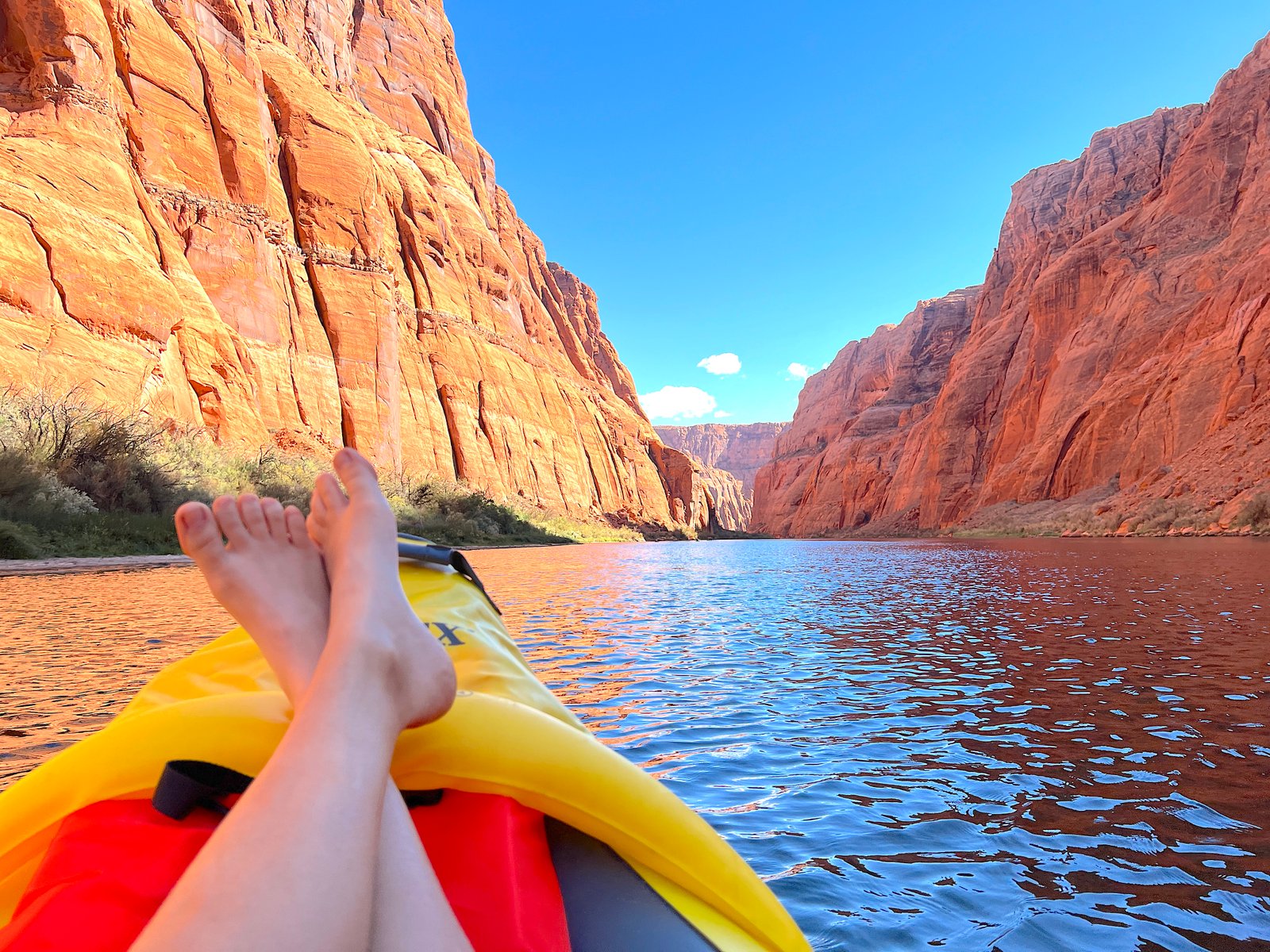
Experience Horseshoe Bend from a completely different perspective — the water. Kayaking the Colorado River beneath the iconic curve is one of the most memorable ways to explore Page, Arizona, with calm water, towering canyon walls, and nonstop red rock scenery surrounding you the entire way.
This family‑friendly day trip is perfect for anyone looking to pair adventure with the quiet beauty of the Southwest. Whether you’re visiting for the views, the photography, or the thrill of paddling through one of Arizona’s most famous landmarks, this route delivers.
In this guide, we’re sharing exactly how to kayak Horseshoe Bend on the Colorado River, the best time to go, what to bring, and all about our personal experience paddling this unforgettable stretch of canyon.
This post contains affiliate links, so we may earn a small commission when you make a purchase through links on our site at no additional cost to you.
About Kayaking Horseshoe Bend
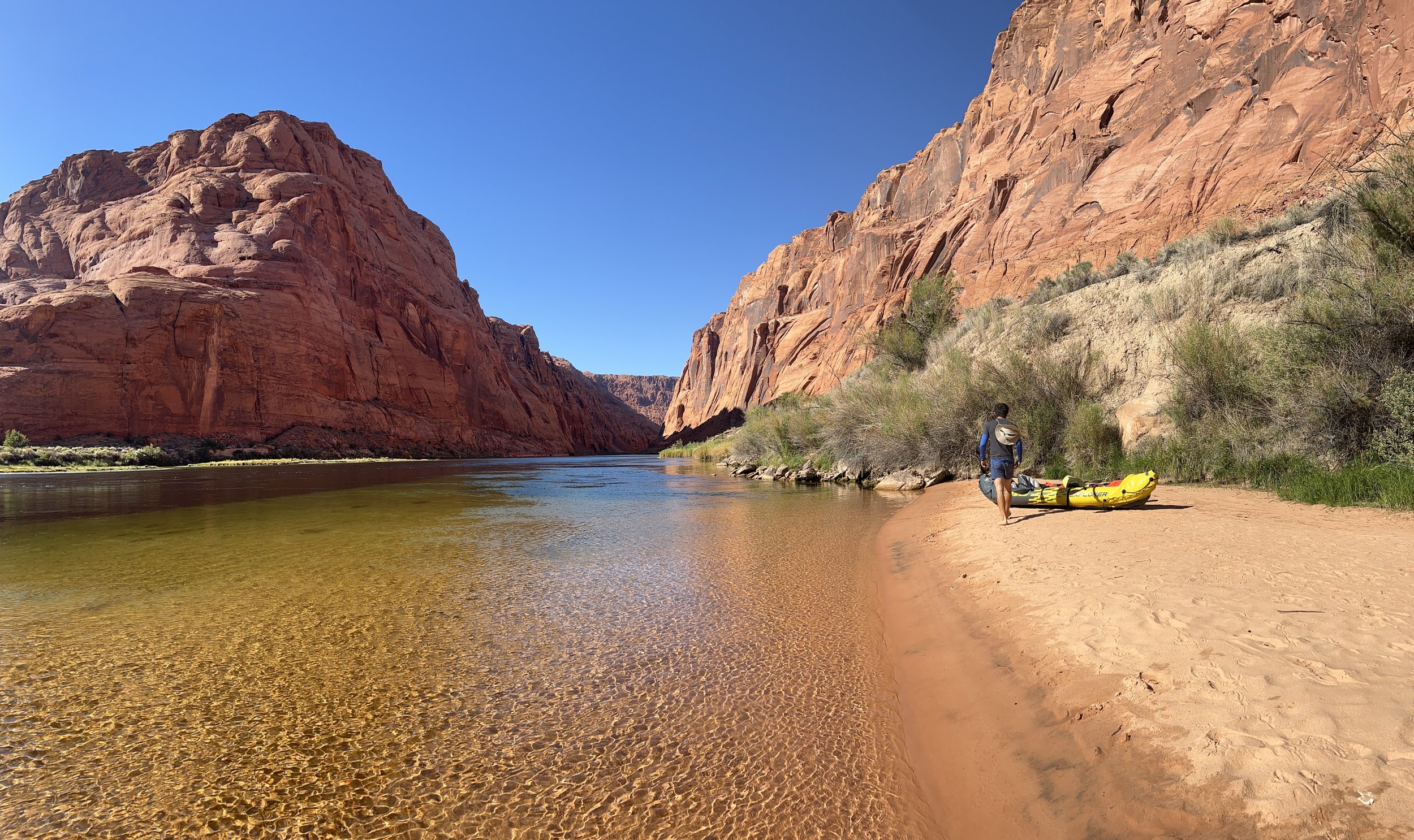
Kayaking Horseshoe Bend takes you along the calm, scenic stretch of the Colorado River that begins just below Glen Canyon Dam and winds through the famous curve before continuing down toward Lees Ferry. This section is open for paddling March through October, with backhaul trips starting as early as 6 a.m. and as late as 12:45 p.m.
Two main companies provide the backhaul taxi service upriver: Kayak the Colorado and Kayak Horseshoe Bend. Once dropped off near the Dam, you can paddle up to 15 miles downstream, explore short hiking trails along the canyon walls, or even camp overnight. Between Glen Canyon Dam and Lees Ferry, you’ll find eight vault toilets and five designated campgrounds located at river miles 14, 11, 9, 8, and 6.
As with all adventures in Glen Canyon, remember to pack in everything you need and pack out everything you bring to help preserve this incredible stretch of river.
Launch Point
All kayak trips on this stretch of the Colorado River begin at Lees Ferry, the only access point to the river between Glen Canyon Dam and the start of the Grand Canyon. This is where you’ll meet your backhaul boat, load your gear, and ride upriver to your chosen drop‑off point.
Lees Ferry is about one hour from Page, making it an easy and accessible day trip for most travelers. Downstream from Lees Ferry marks the official beginning of the Grand Canyon, and paddlers need a permit to continue past this point.
Backhaul Process
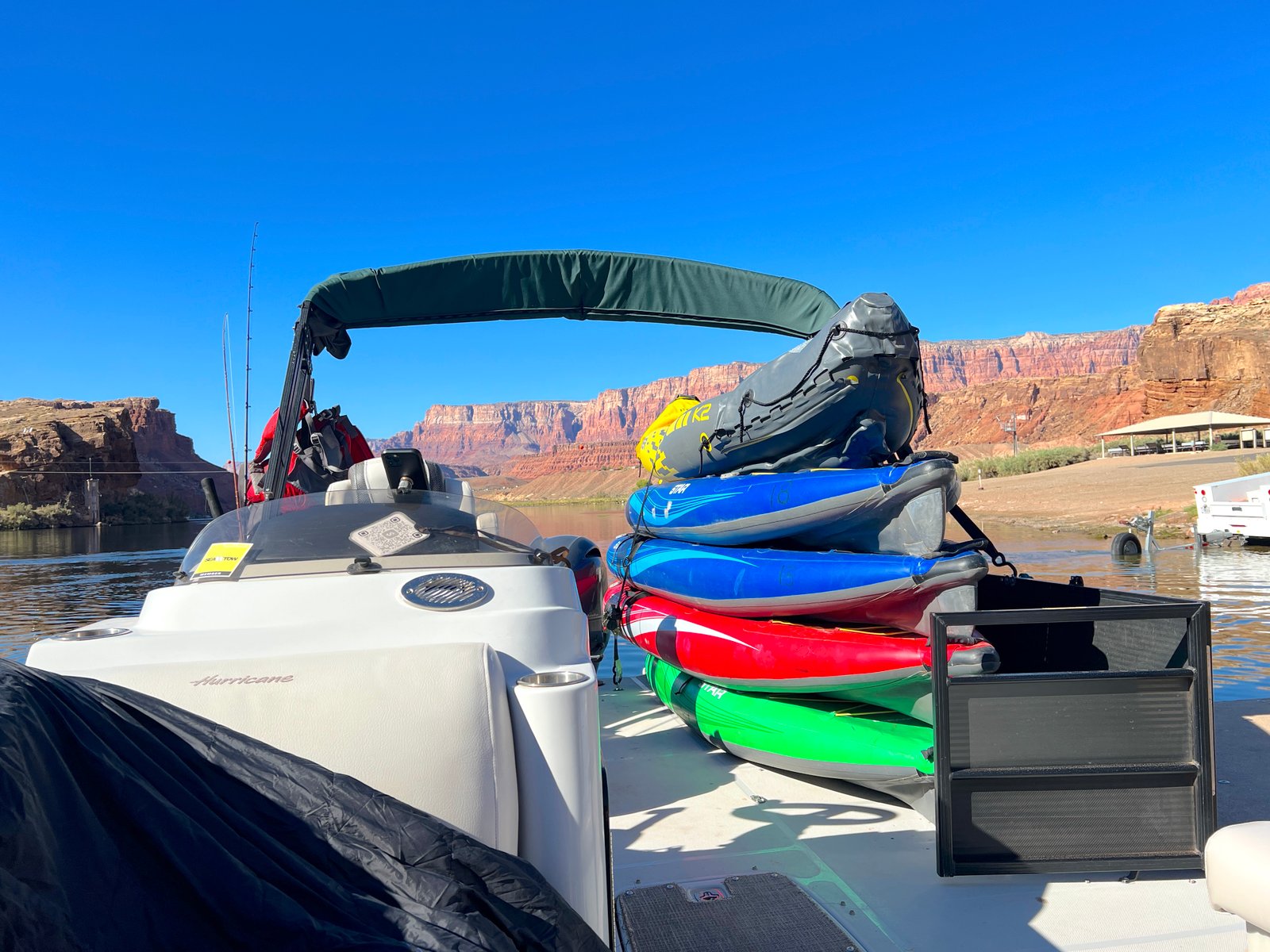
A backhaul taxi will transport you upriver to either Horseshoe Bend / Petroglyph Panel or Glen Canyon Dam, depending on the type of trip you choose. From your drop‑off point, you’ll paddle downstream with the current, winding through towering canyon walls and the iconic curve of Horseshoe Bend before returning to Lees Ferry.
Trip Options
Best Beginner Day Trip
- Start: Petroglyph Panel / Horseshoe Bend
- Distance: ~10 miles
- Time: 5–6 hours
Overnight or Experienced Trip
- Start: Glen Canyon Dam
- Distance: ~15 miles
- Time: 6–9 hours
If you’re unsure which route is best, ask your backhaul captain. They’re familiar with water conditions, weather, and pacing, and can recommend the right drop‑off based on your experience level and what you want to see.
Tip: The earlier you start, the better — morning light, calmer conditions, and fewer boats on the river.
Best Time to Kayak Horseshoe Bend
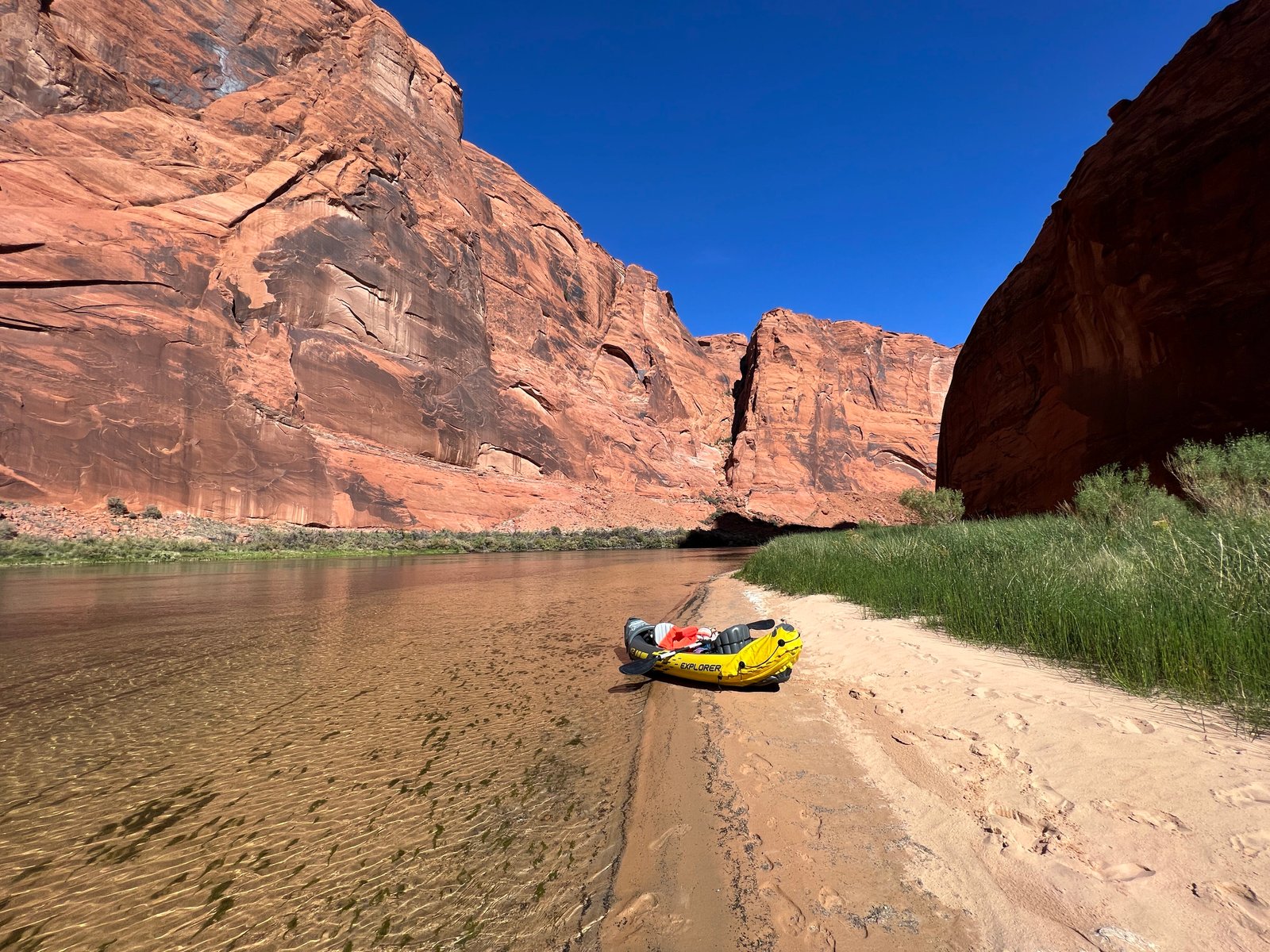
Kayaking Horseshoe Bend is possible March through October, but the experience changes a lot depending on the season and time of day. Because this stretch of the Colorado River is calm and protected by canyon walls, weather and lighting play a big role in how enjoyable your paddle will be.
Spring (March–May)
This is one of the best times to kayak. Temperatures are mild, crowds are lighter, and the canyon walls glow beautifully in the softer spring light. Water levels are usually stable, and mornings are especially calm.
Summer (June–August)
The most popular season — and the hottest. Expect high temperatures, stronger sun exposure, and more boat traffic. If you’re kayaking in summer, an early morning backhaul is ideal. You’ll avoid the worst heat and get the prettiest light inside the canyon.
Fall (September–October)
Another excellent time to visit. Days are warm but not extreme, crowds thin out, and the river feels peaceful. Fall mornings and late afternoons offer some of the best photography conditions.
Time of Day
No matter the season, starting early is always the best choice. Morning trips mean cooler temperatures, calmer water, fewer boats, and better lighting through the canyon. Afternoon trips are possible, but they can be hot and windy, especially in summer.
Wind & Weather
Wind can pick up in the afternoons, making paddling slower. Check the forecast before you go — even light winds can feel stronger inside the canyon.
What to Bring for Kayaking Horseshoe Bend
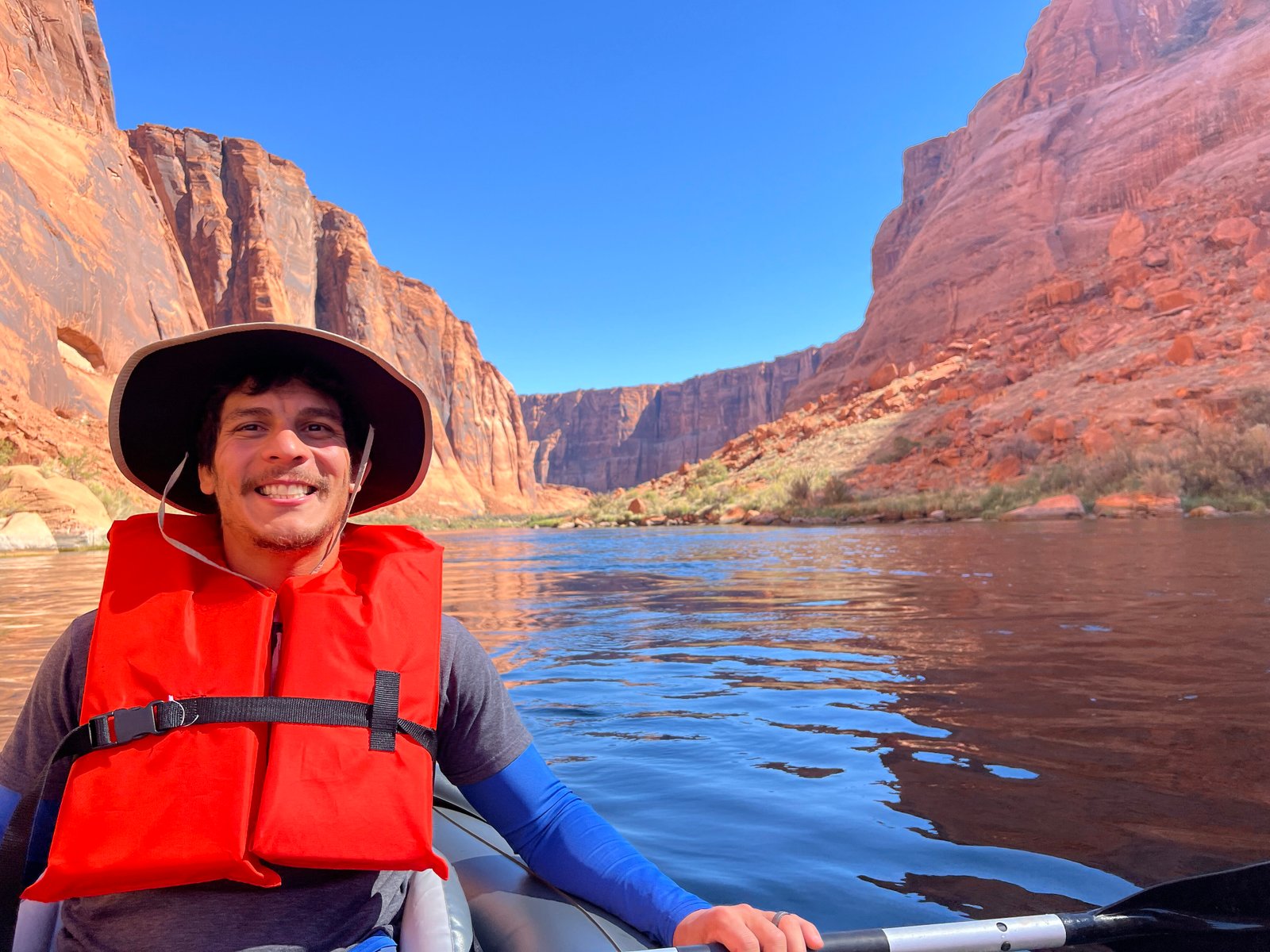
When renting a kayak from an outfitter, life jackets and paddles are included in your rental. If you’re bringing your own kayak, you are required to have a life jacket with you on the river.
Because this stretch of the Colorado River is calm, remote, and fully exposed to the elements, packing the right gear makes a huge difference in comfort and safety. Here’s what we recommend for a smooth and enjoyable day on the water.
Water & Hydration
Bring more water than you think you’ll need. The canyon traps heat, especially in summer, and there are no refill stations along the river. A hydration bladder or insulated bottles work best. We are big fans of Simple Modern insulated water bottles because they keep water cold for hours, even on the hottest of days. For longer days or warmer afternoons, adding electrolytes helps a lot — we personally use LMNT electrolyte packets and always keep a few in our daypack.
Sun Protection
Sun exposure is intense on the water. Pack a wide‑brim hat, sunglasses with a strap, reef‑safe sunscreen, and a lightweight long‑sleeve layer. The canyon walls offer shade at times, but not consistently.
Dry Bags
Use dry bags to keep phones, cameras, snacks, and extra layers protected. Even though the river is calm, splashes and paddle drips add up over a long day.
Footwear
Wear secure water shoes or sandals with good traction. You’ll be getting in and out of the kayak at sandy beaches, rocky edges, and trailheads.
Snacks & Lunch
There are plenty of places to pull off and enjoy a break. Pack easy, high‑energy snacks and a simple lunch—there are no services once you’re on the river.
Layers
Mornings can be cool, especially early in the season. Bring a light jacket or fleece you can store in a dry bag once the day warms up.
Camera Gear
This is one of the most photogenic stretches of the Colorado River. A waterproof phone case or small dry bag for your camera is helpful, especially when paddling through Horseshoe Bend.
Small First Aid Kit
Include basics like bandages, ibuprofen, blister care, and electrolytes. The canyon is remote, and it’s good to be prepared.
Trash Bag
Pack out everything you bring. A simple zip‑top bag or small dry sack works well for keeping trash contained.
Optional Overnight Gear
If you’re camping, bring your tent, sleeping bag, pad, cooking gear, and extra water. Campgrounds are primitive, and you must be fully self‑sufficient.
Amenities at Lees Ferry
Lees Ferry has a 54‑site campground that operates on a first‑come, first‑served basis. There are no hookups, but the campground offers potable water and a dump station, making it a convenient overnight option for kayakers and road‑trippers. Campsites are $20 per night, and a National Park Pass is required to enter the area.
The surrounding area also has several popular hiking trails, including Cathedral Wash, Spencer Trail, the Historic River District, and the Lonely Dell Ranch Historic Site. If you’re planning to stay the night or explore beyond your kayak trip, this is one of the best places to base yourself in the Glen Canyon area.
Safety Tips For Kayaking Horseshoe Bend
Even though this stretch of the Colorado River is calm and beginner‑friendly, it’s still a remote canyon environment with changing conditions. A few simple precautions make the trip safer and more enjoyable.
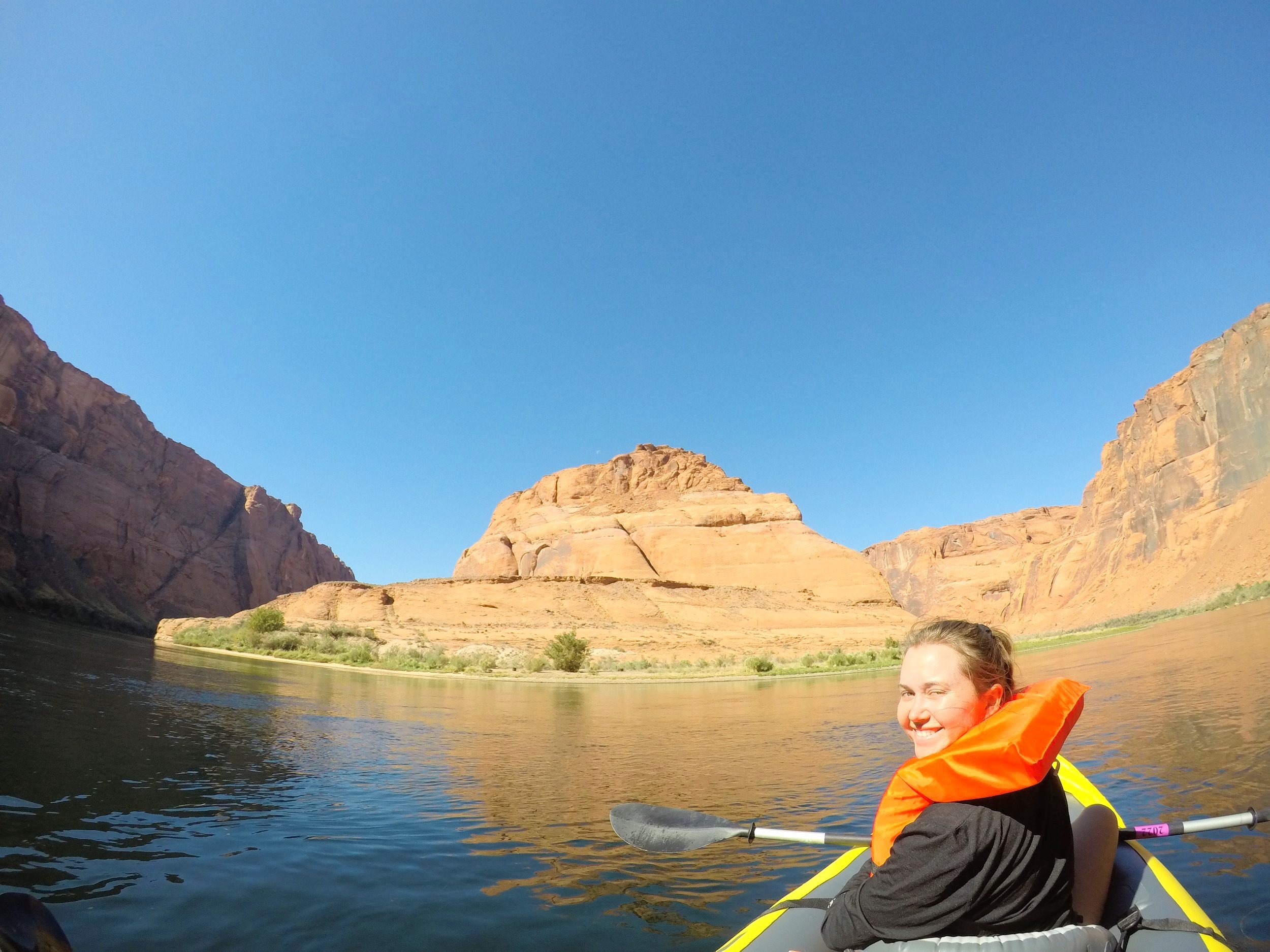
- Wear Your Life Jacket – Outfitters provide life jackets, and they’re required if you bring your own kayak. Keep it on while paddling—currents are gentle, but the river is deep and cold year‑round.
- Start Early – Morning trips avoid heat, wind, and boat traffic. Afternoon winds can slow your pace and make paddling more tiring.
- Watch for Motorized Boats – This section of the river allows motorized backhaul boats. Stay aware of your surroundings, give them space, and paddle closer to the shoreline when they pass.
- Know Your Drop‑Off Point – Confirm with your captain whether you’re being dropped at Horseshoe Bend/Petroglyph Panel or Glen Canyon Dam. Distances and timing vary, and cell service is limited once you’re on the river.
- Stay Hydrated – Heat builds quickly inside the canyon, even on mild days. Drink consistently and take breaks in shaded areas when possible.
- Protect Your Gear – Use dry bags for phones, cameras, and essentials. Even calm water leads to splashes, and sandy beaches can be rough on electronics.
- Check the Weather – Wind and storms can develop quickly. If strong winds are forecast, choose an earlier backhaul or a shorter route.
- Know Your Exit Point – All trips end at Lees Ferry. Make sure you recognize the boat ramp and stay river right as you approach—it’s easy to float past if you’re distracted.
- Respect Wildlife – You may see bighorn sheep, birds, and fish along the river. Keep your distance and avoid feeding wildlife.
- Pack Out Everything – There are no trash cans along the river. Bring a small bag to pack out all waste and help preserve this protected stretch of canyon.
Our Experience Kayaking Horseshoe Bend
Our adventure on the Colorado River started at Lees Ferry, where we arrived about 30 minutes before our departure time. We parked in the day‑use area, left our National Park Pass on the dash, and inflated our kayak before heading down to the dock to meet the captain of our backhaul taxi.
Both backhaul companies pick up kayakers from the same dock, so make sure you remember which outfitter you booked with. When the captain arrives, they’ll call out names and confirm departure times before loading everyone onto the boat for the ride upriver.
From the dock, the process is simple and relaxed. You hand off your gear, climb aboard, and enjoy a scenic ride through the canyon as the captain takes you to your drop‑off point. It’s a beautiful way to start the day and gives you a preview of the red rock walls you’ll be paddling beneath on the way back to Lees Ferry.
If you rent a kayak, it will already be loaded onto the backhaul boat. If you’re bringing your own, the captain will help secure it and strap it down before departure. Once everyone is settled, you’ll find several blankets available to use—something we were grateful for, because the 30–45 minute ride upriver can get surprisingly chilly inside the shaded canyon.
Before leaving the dock, we talked with the captain about which drop‑off point would be best for us. Based on our experience level and what we wanted to see, he recommended mile 10, right at the start of Horseshoe Bend. Other kayakers on our boat were doing an overnight trip, so we rode all the way to Glen Canyon Dam to drop them off first.
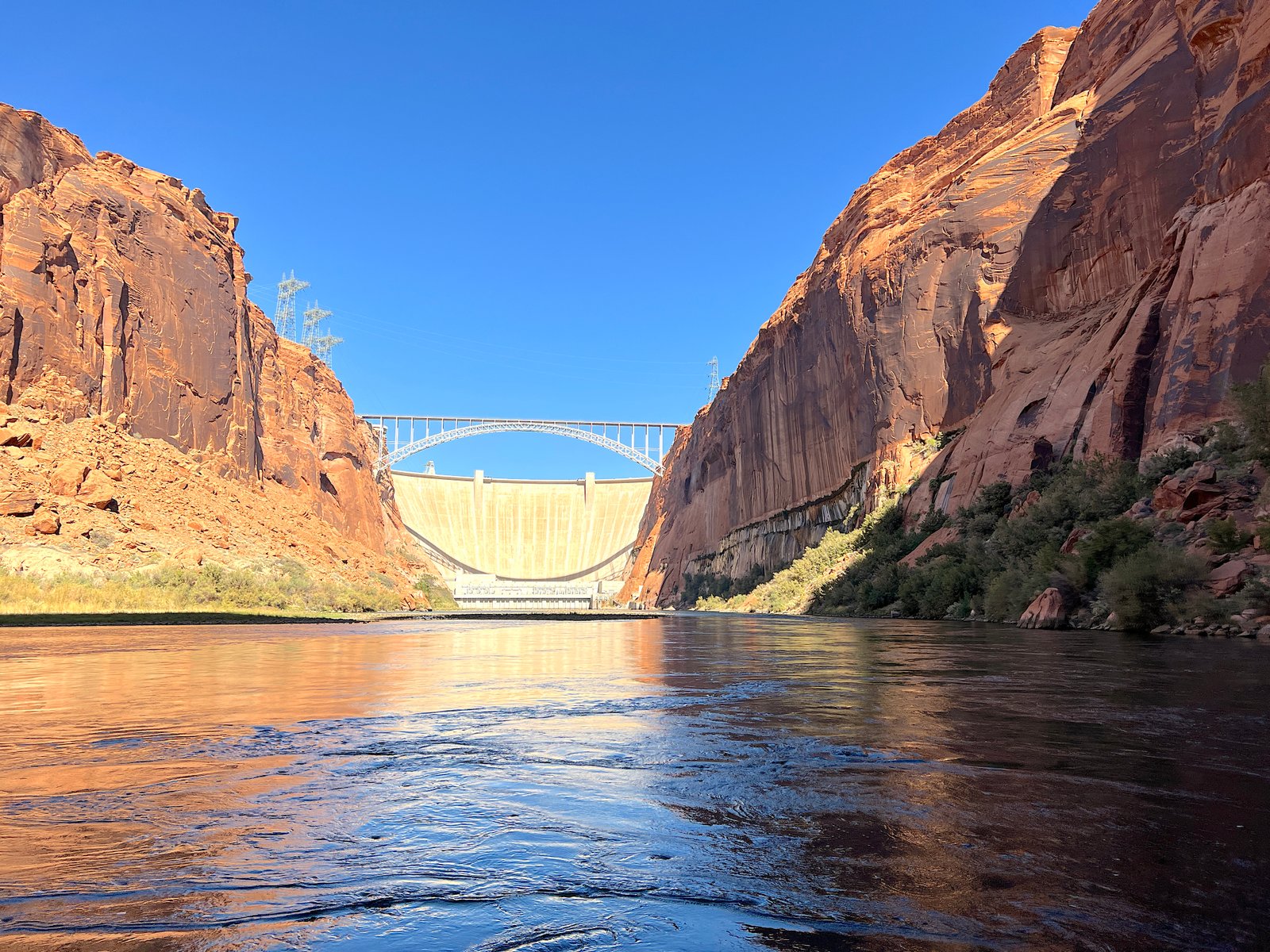
The boat ride itself was beautiful. As we traveled upriver, the captain pointed out hiking trail access points, petroglyph panels, and unique rock formations tucked into the canyon walls. It was the perfect preview of everything we’d be paddling past on the way back to Lees Ferry.
Finally, it was our turn to start our kayaking adventure. The captain dropped us off, made sure we had everything we needed, and we climbed into our kayak and pushed off into the canyon. Right away, we felt the current carrying us downstream. It wasn’t difficult to paddle, but it was definitely moving—something to be aware of depending on the time of year and recent rainfall.
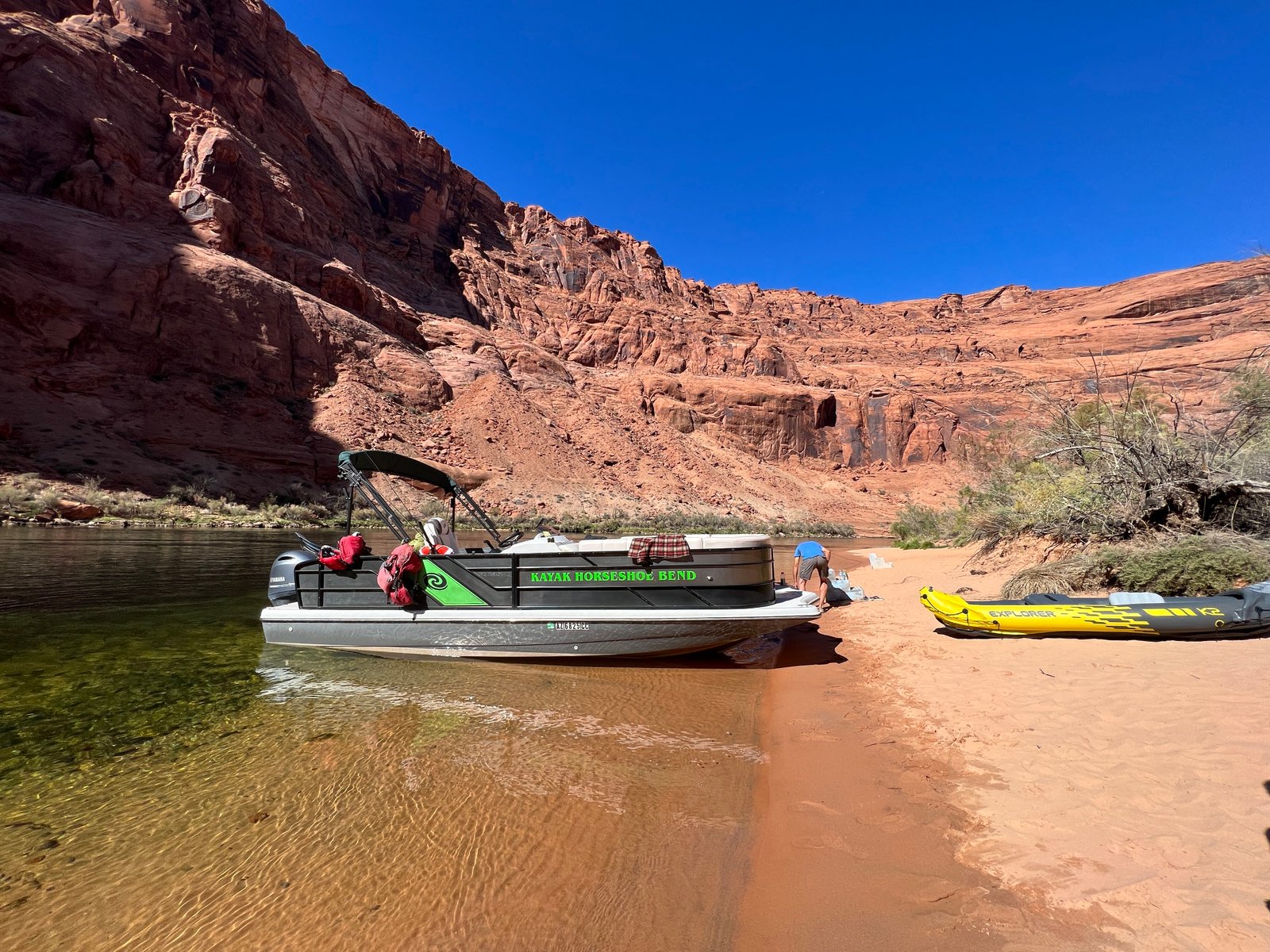
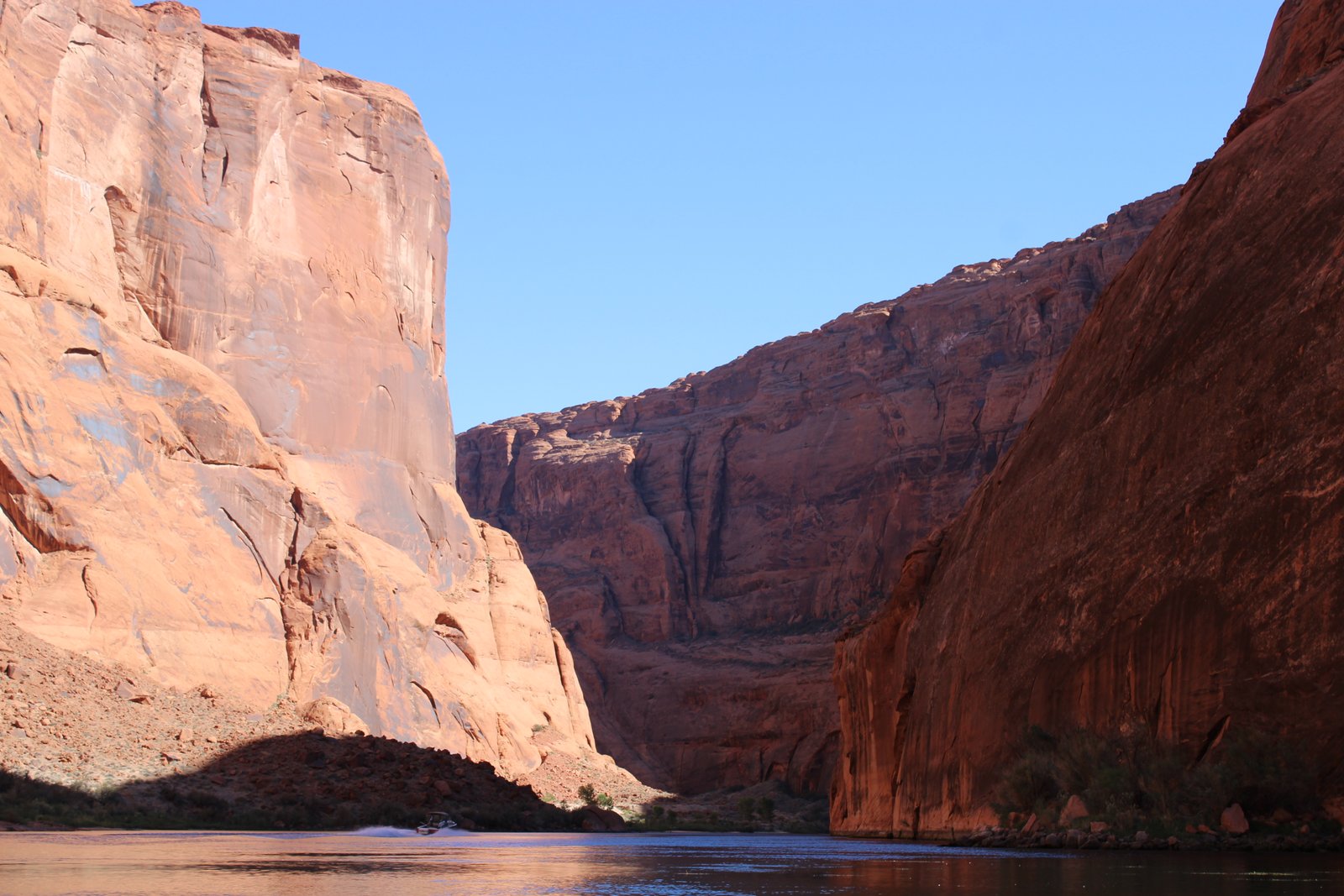
As we entered the curve of Horseshoe Bend, the canyon walls rose higher and higher around us. If you look closely, you can see tiny silhouettes of people standing at the overlook far above. It’s a surreal moment, realizing just how deep inside the canyon you are. If you haven’t visited the overlook yet, it’s worth doing both—seeing Horseshoe Bend from above gives you a completely different perspective of where you’re paddling below.
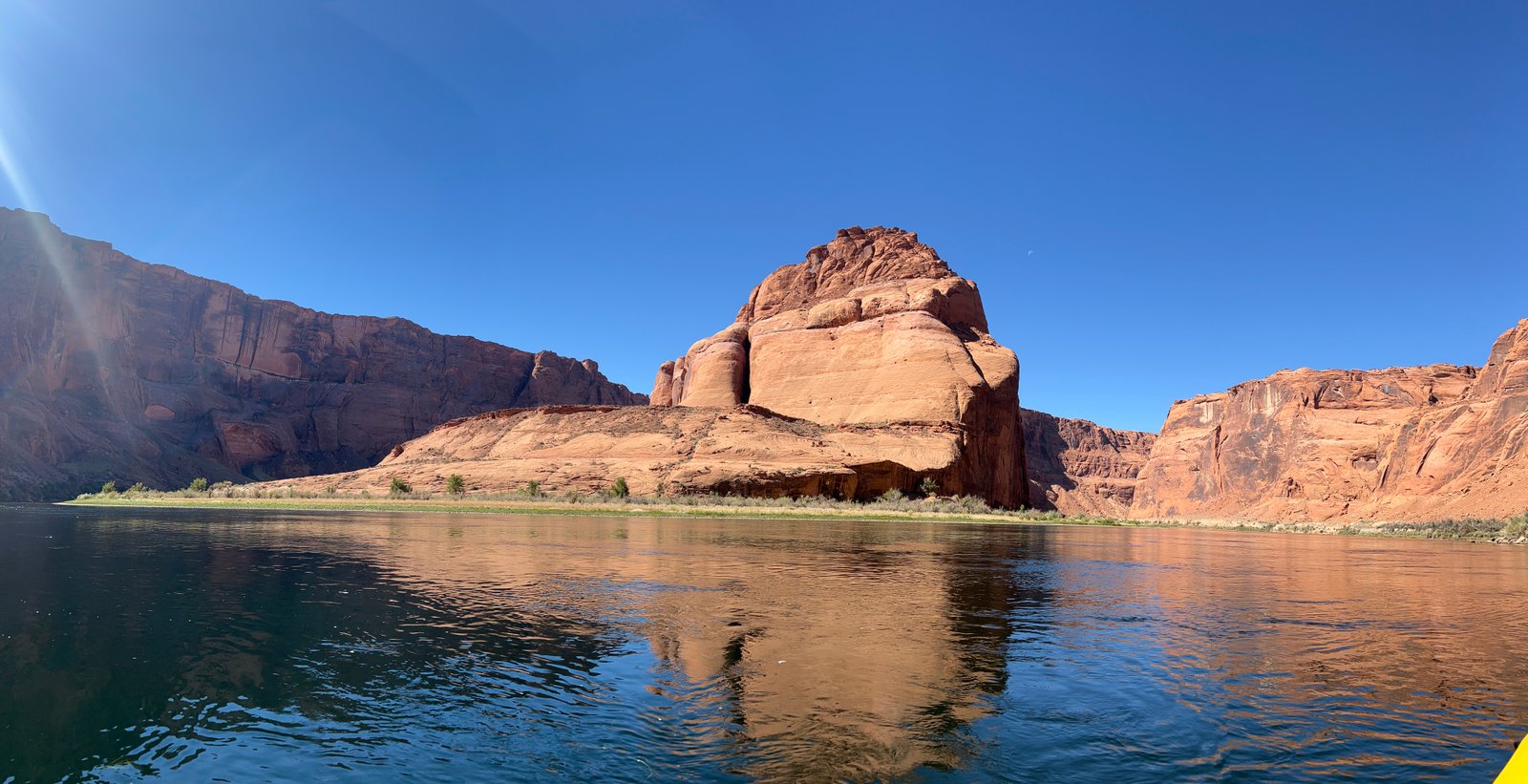
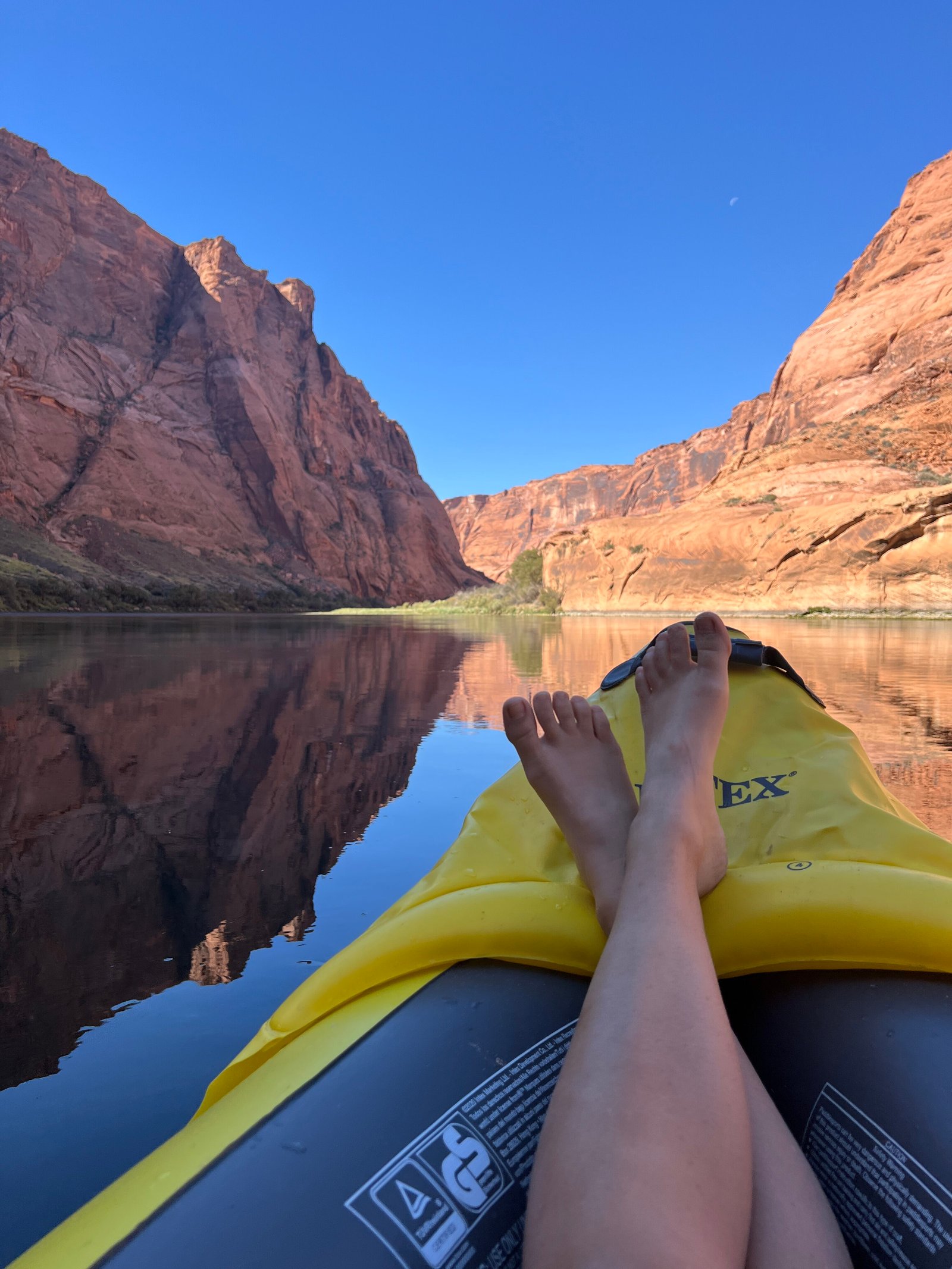
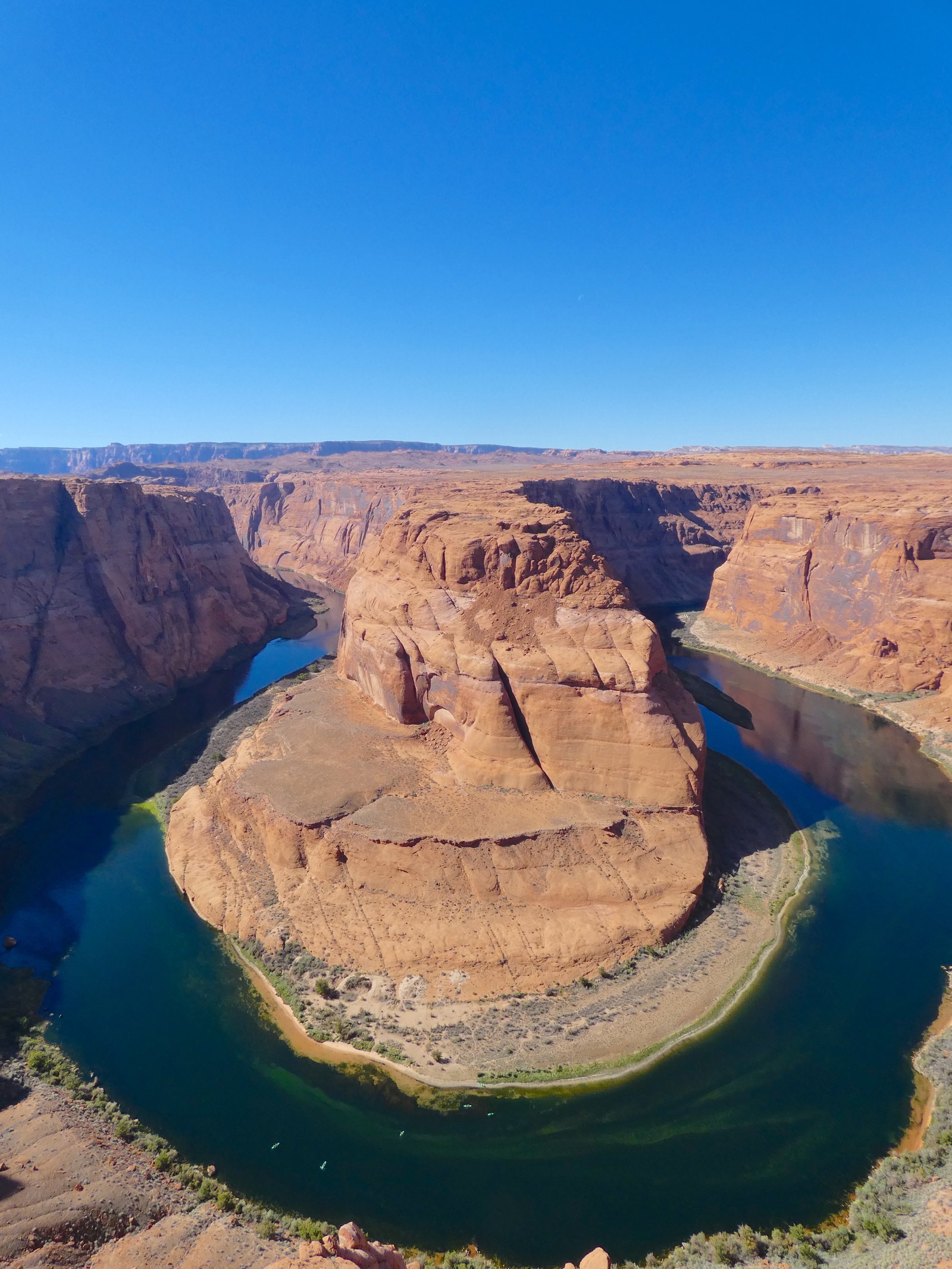
As we cruised down the river, we passed mile 9 and mile 8, where two of the designated campgrounds are located. Both have vault toilets, and even if you’re not camping, they make convenient spots to stretch your legs or take a quick break. Along the way, there are several sandy beach areas where you can pull off, have lunch, and take in the scenery.
For most of our paddle, we were completely alone—just the quiet canyon walls, the sound of the water, and the occasional backhaul boat or small group of kayakers passing by. The narrow canyon walls provide pockets of shade throughout the day, which is a welcome break from the sun, especially in summer.
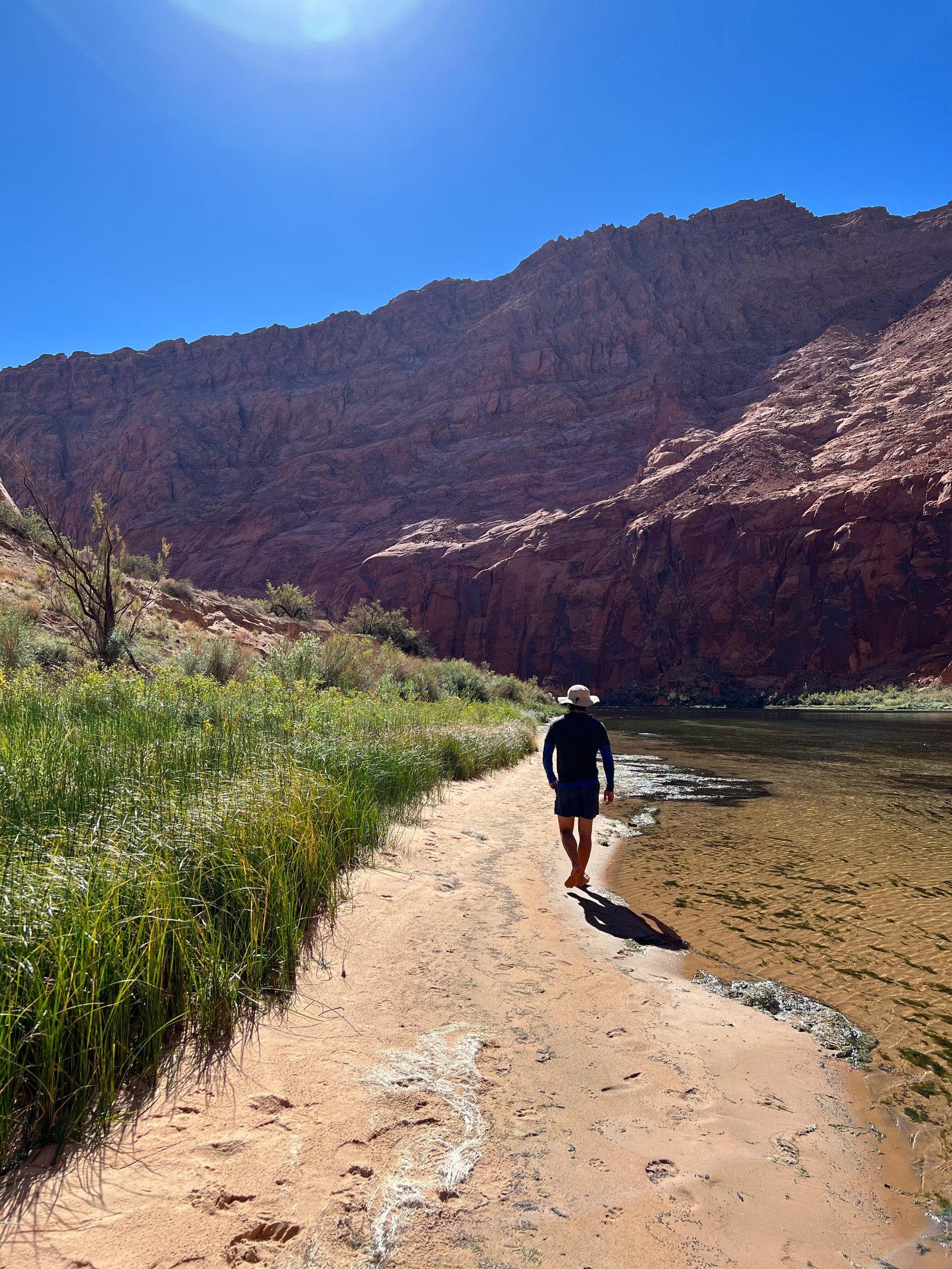
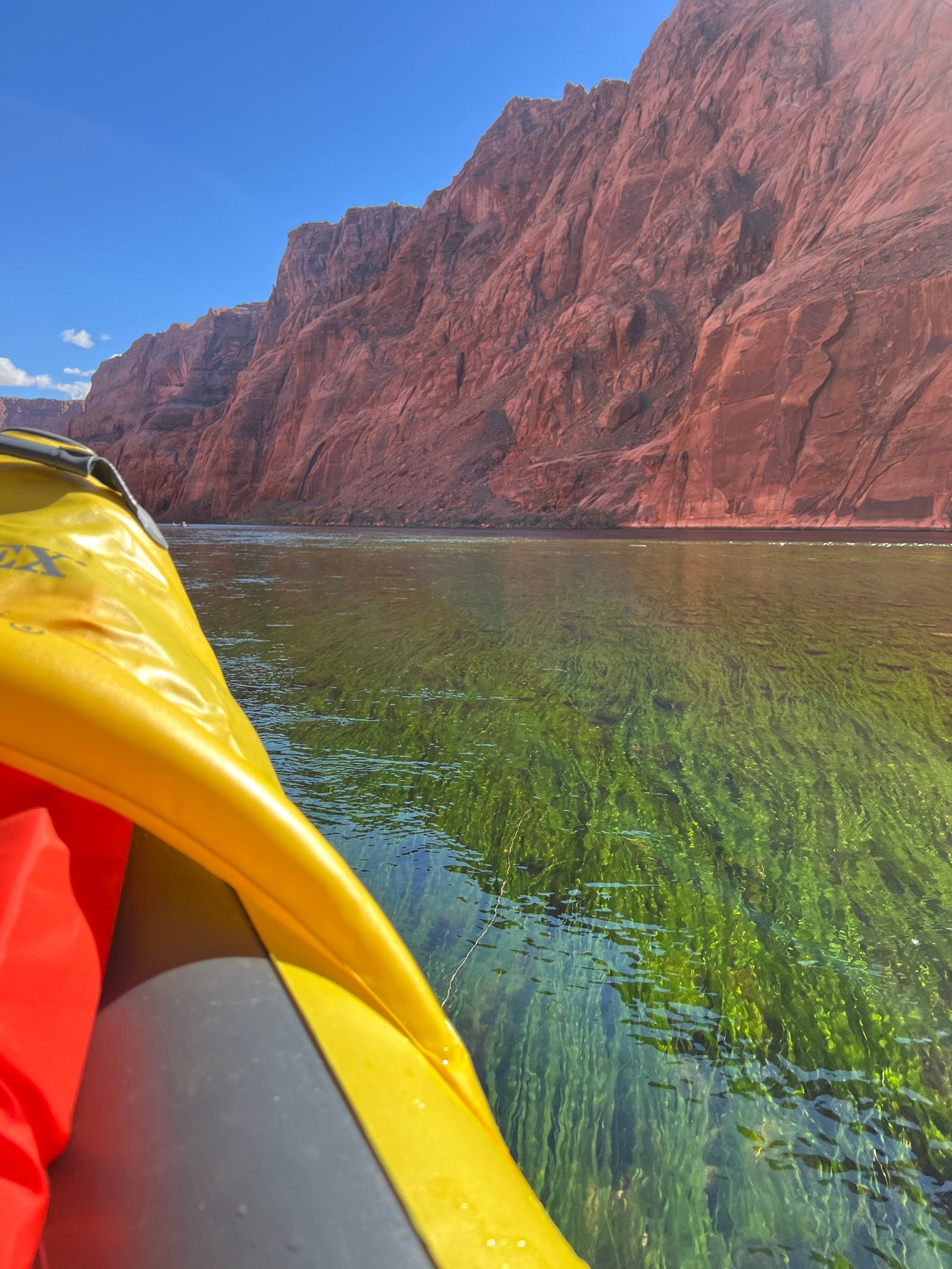
The water was clear during our trip, and you could see algae and plant life flowing beneath the surface, moving gently with the current. It’s one of those small details that makes this stretch of the Colorado River feel so peaceful and alive.
Around mile 3, we came up on the west entrance of Waterholes Canyon. This is a great spot to pull off and explore a bit. The east entrance of Waterholes Canyon requires a guided tour, but the west side is accessible from the river and offers a short, scenic walk into the canyon. It’s a fun detour and a nice way to break up the paddle before continuing downstream.


After Waterholes Canyon, it’s about a three‑mile stretch until you reach Lees Ferry. Here, the current slowed down noticeably, so we had to put in a bit more muscle to finish the last part of the paddle. Make sure you’re wearing your life jacket during this section—Water Patrol does drive through the area and will fine you if you don’t have it on.
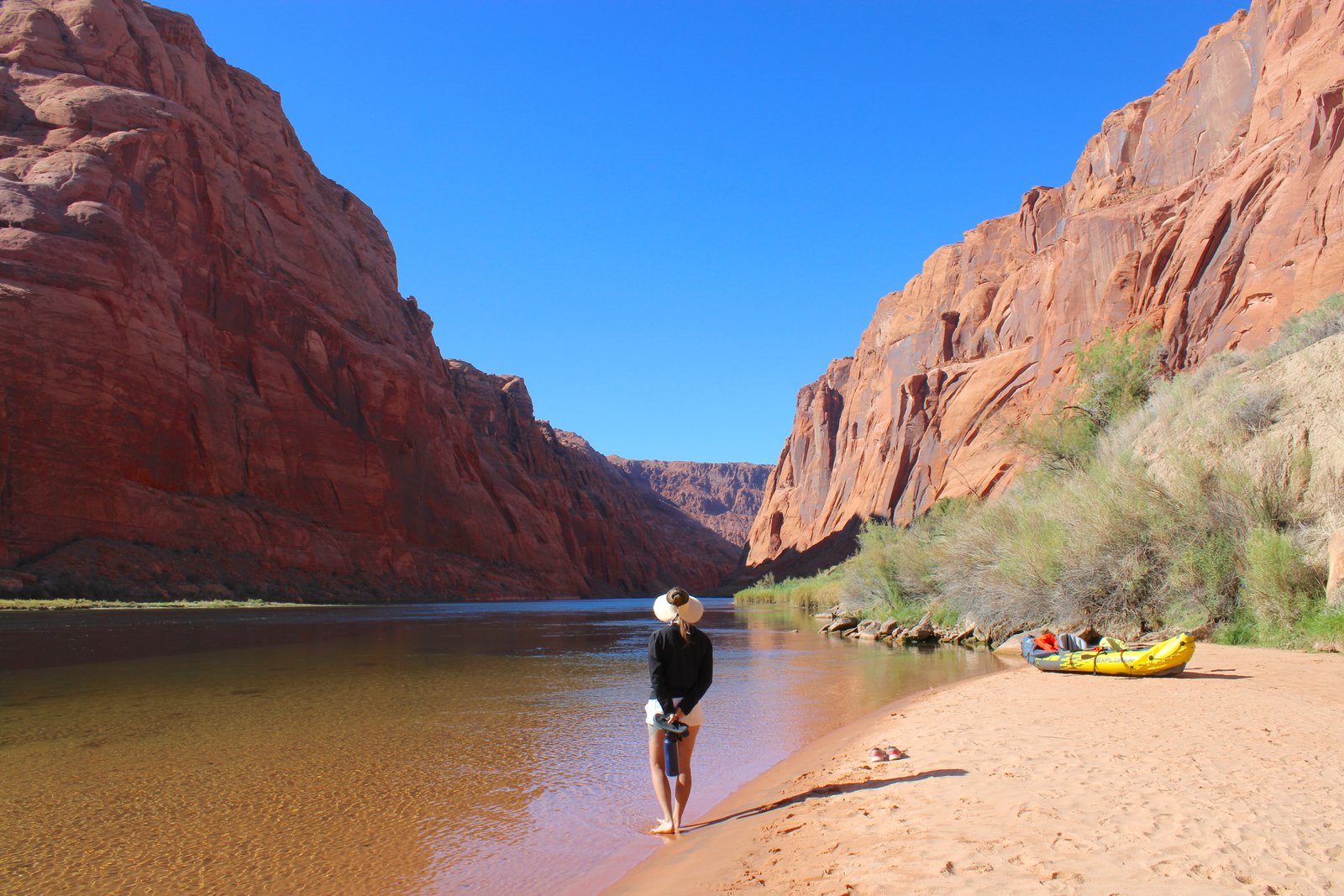
We took our time on this final stretch, stopping at a small beach to rest and enjoy the quiet. We even saw a group of wild horses. The canyon was peaceful, and for most of the day it felt like we had the river entirely to ourselves. We passed only a couple of backhaul boats and a few kayakers, but otherwise it was silent — just the sound of the water and the canyon walls around us.
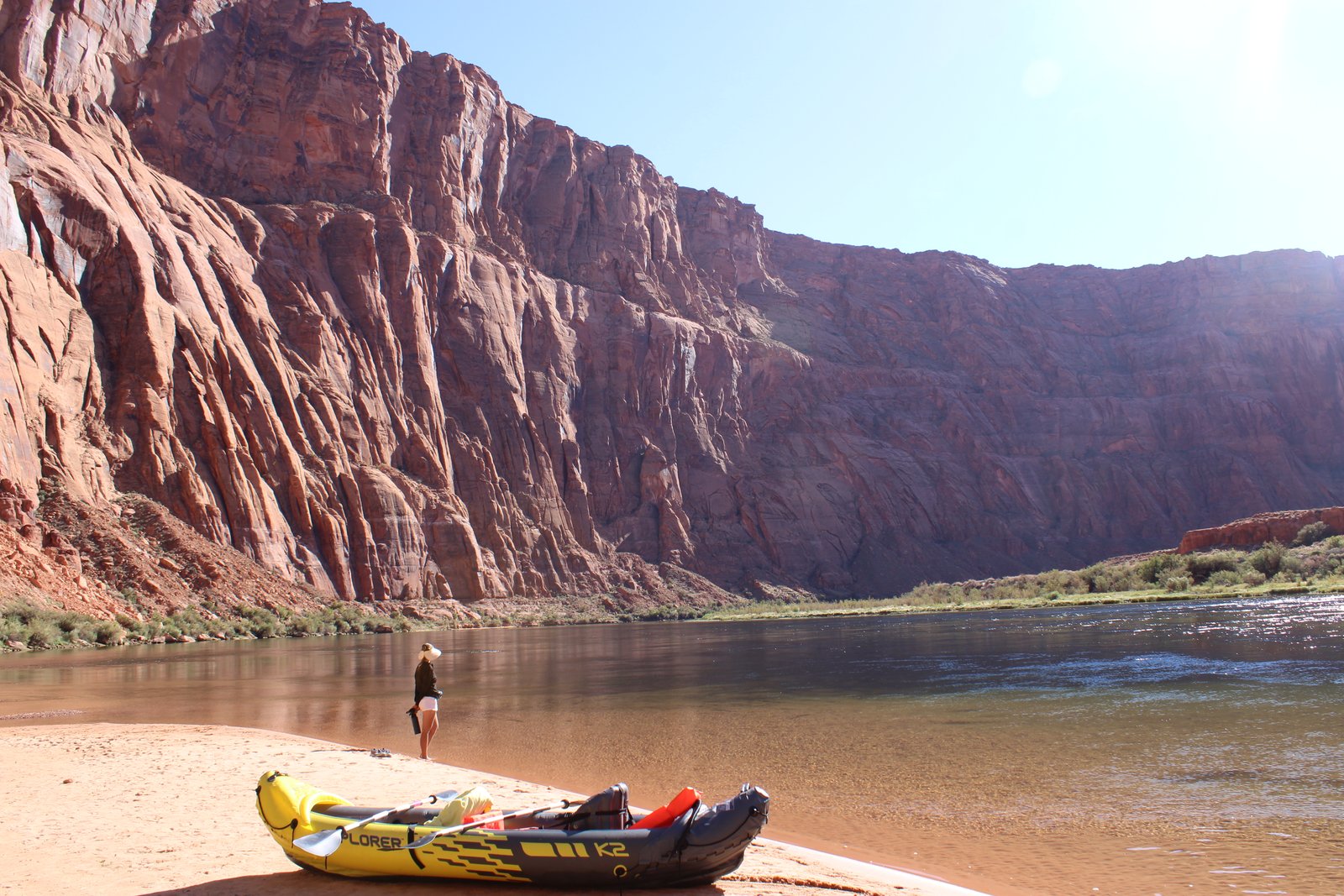
In total, our paddle took about five and a half hours, including stops for photos, lunch, and exploring. Our favorite moment was drifting quietly through the narrow canyon walls near mile 8, where the shade cooled everything down and the reflections on the water were beautiful.
As we approached Lees Ferry, the canyon began to open up and we could see the boat ramp in the distance. There were a few anglers and kayakers near the shoreline, which made it easy to spot the exit point. Once we reached the ramp, we pulled our kayak out of the water, packed up our gear, and headed back toward Lake Powell. If you rented a kayak, your captain will tell you exactly where to leave it once you return.
Overall, kayaking the Colorado River through Horseshoe Bend was an incredible experience — calm water, dramatic canyon walls, quiet stretches of river, wildlife sightings, and plenty of places to explore along the way. It’s absolutely an adventure to consider if you’re visiting Page or the Glen Canyon area.
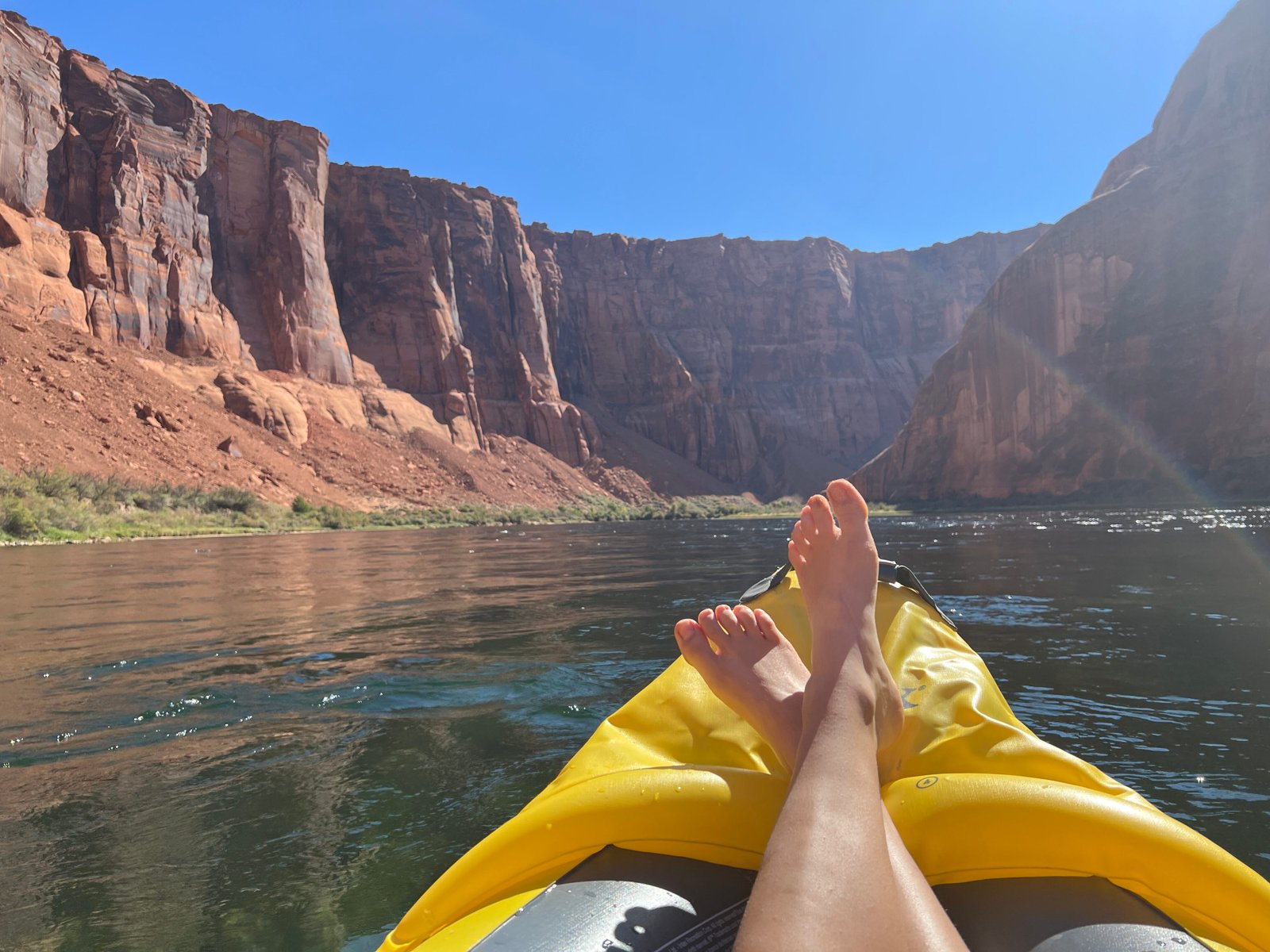
Kayaking Horseshoe Bend is one of the most unique ways to experience the Colorado River and Glen Canyon. Whether you choose a short day trip or a longer paddle from the Dam, the calm water, dramatic canyon walls, and quiet stretches of river make this adventure unforgettable. If you’ve kayaked this section before, feel free to share your experience in the comments — I’d love to hear what your day on the river was like.
FAQ: Kayaking Horseshoe Bend
Do I need a permit to kayak this section of the Colorado River?
No permit is needed for kayaking between Glen Canyon Dam and Lees Ferry. A permit is required if you plan to paddle past Lees Ferry into the Grand Canyon.
How long does the kayak trip take?
Beginner day trips from Horseshoe Bend/Petroglyph Panel take about 5–6 hours. Longer or overnight trips from Glen Canyon Dam take 6–9 hours, depending on stops and current.
Is the current strong?
The current is generally mild and beginner‑friendly, but it can be stronger depending on the season, water releases, and recent rainfall. Most paddlers find it easy to navigate.
Can beginners do this trip?
Yes — the Horseshoe Bend drop‑off (mile 10) is perfect for beginners. The Glen Canyon Dam route is better for experienced paddlers or overnight trips.
Do I need to bring my own life jacket?
If you rent a kayak, life jackets and paddles are included. If you bring your own kayak, you must bring a life jacket — and you must wear it, as Water Patrol can issue fines.
Is the water cold?
Yes. The Colorado River stays cold year‑round, even in summer. It’s refreshing for dipping your feet but too cold for swimming for long periods.
Are there bathrooms along the river?
Yes — vault toilets are located at mile 9 and mile 8 campgrounds. These are the only restroom options until you return to Lees Ferry.
Can I stop along the river?
Absolutely. There are several sandy beaches and small pull‑offs perfect for lunch, photos, or exploring short side trails.
Is the boat ride to the drop‑off point cold?
It can be. Outfitters provide blankets on the backhaul boat, and they’re worth using — the canyon is shaded and breezy during the ride upriver.
Is Horseshoe Bend crowded?
The overlook above is extremely popular, but the river below is quiet. Most paddlers experience long stretches with no one else around.
Can I explore Waterholes Canyon from the river?
Yes — the west entrance at mile 3 is accessible from the river and does not require a guide. The east entrance requires a guided tour.
What should I bring?
Water, sun protection, dry bags, snacks, layers, secure footwear, a small first aid kit, and a trash bag. Overnight trips require full camping gear.
Is this a good trip for photography?
Yes — the canyon walls, reflections on the water, and the curve of Horseshoe Bend make this one of the most photogenic paddles in the area.
Tips For First-Timers
- Arrive Early at Lees Ferry – Give yourself at least 30 minutes before departure to park, inflate your kayak (if needed), organize your gear, and meet your captain. The dock area gets busy, and arriving early keeps everything stress‑free.
- Know Your Drop‑Off Point – Confirm whether you’re being dropped at mile 10 (Horseshoe Bend) or Glen Canyon Dam. Distances and timing vary, and cell service is limited once you’re on the river.
- Use the Blankets on the Backhaul Boat – The ride upriver is chilly, even in summer. Grab a blanket — you’ll be glad you did.
- Wear Your Life Jacket the Entire Time – Water Patrol does check for compliance, and fines are issued if you’re not wearing it. Even though the river is calm, the water is deep and cold year‑round.
- Don’t Overpack Your Kayak – Space is limited, especially in inflatable kayaks. Bring essentials, but keep your gear streamlined so you’re not juggling too much on the water.
- Take Advantage of Shade – The canyon walls create pockets of shade throughout the day. Use them for breaks, hydration, and cooling off.
- Plan for a Slower Finish – The current is strongest near Horseshoe Bend and gradually slows as you approach Lees Ferry. Expect to paddle harder during the last few miles.
- Stop at Mile 3 for Waterholes Canyon – The west entrance is accessible from the river and makes a great break. It’s a short, scenic walk and a fun detour for beginners.
- Bring More Water Than You Think You Need – The canyon traps heat, and there are no refill stations. Hydration makes a huge difference in how enjoyable the day feels.
- Use Dry Bags for Everything Important – Phones, cameras, snacks, and layers should all be protected. Even calm water leads to splashes and paddle drips.
- Take Your Time – This isn’t a race. The best part of the trip is drifting, exploring beaches, taking photos, and enjoying the quiet canyon walls.
Helpful Links
- Glen Canyon National Recreation Area – Lees Ferry Information – Official details on parking, facilities, river access, and current conditions. https://www.nps.gov/glca/planyourvisit/lees-ferry.htm
- Glen Canyon Backhaul Services – Information on backhaul boat shuttles for kayakers traveling upriver. https://www.nps.gov/glca/planyourvisit/boat-shuttle.htm
- Kayak Horseshoe Bend (Outfitter) – Kayak rentals, backhaul service, and trip details. https://kayakhorseshoebend.com/
- Kayak the Colorado (Outfitter) – Kayak rentals, backhaul service, and route options. https://kayakthecolorado.com
- Glen Canyon Dam Water Release Information – Daily water release data that affects current strength. https://www.usbr.gov/uc/water/crsp/cs/gcd.html