
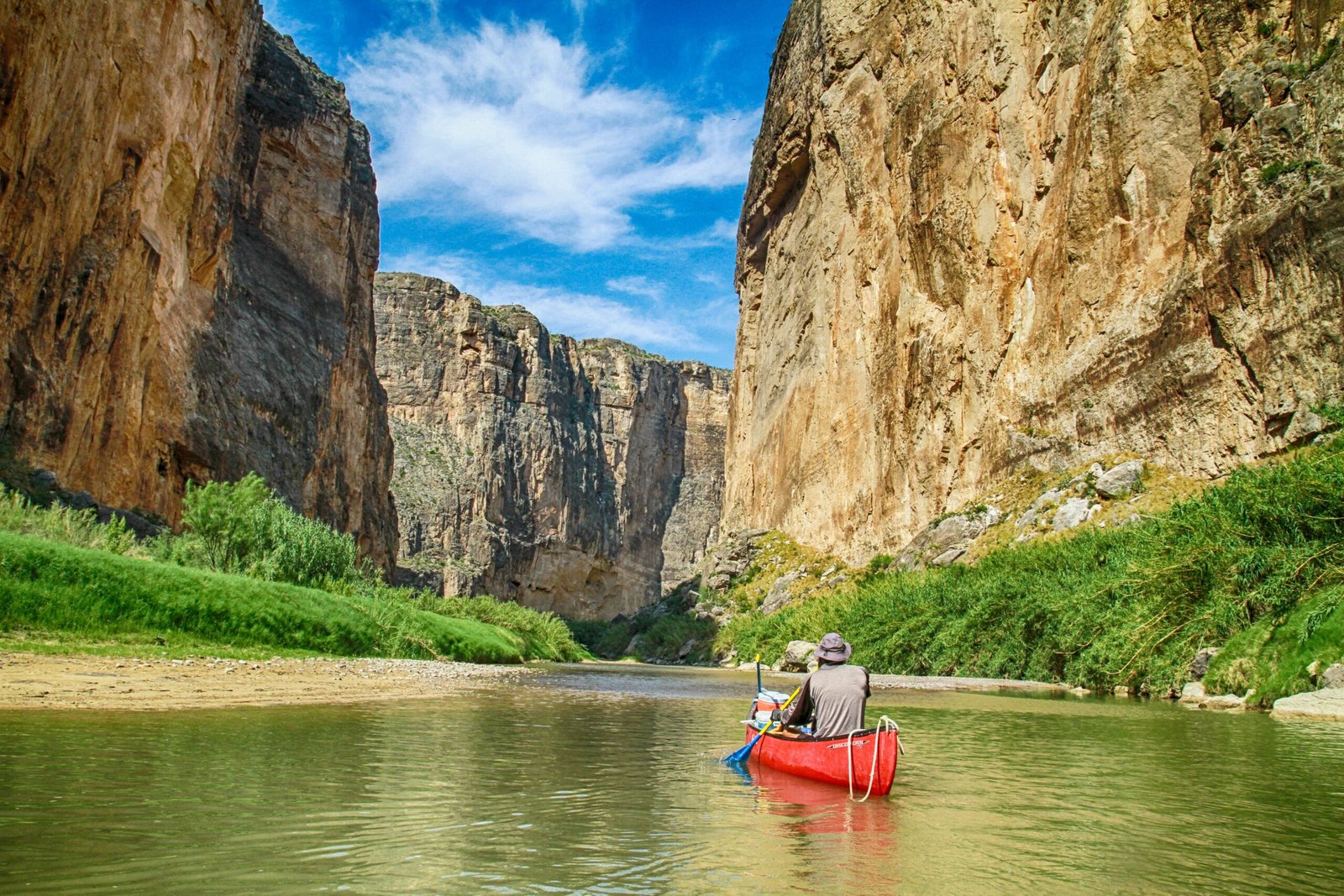
There is something undeniably magnetic about West Texas. It’s a place where the horizons stretch endlessly, rugged mountain peaks rise abruptly from vast desert basins, and the night skies offer some of the clearest stargazing in North America. Whether you’re drawn to the wild solitude of Big Bend, the quirky art scenes of high-desert towns, or historic outposts tucked along mountain passes, West Texas feels like an entirely different world.
While many travelers speed through on their way across the state, taking the time to explore this wide-open region reveals incredible hiking trails, rich borderlands culture, and unforgettable landscapes. Having spent extensive time exploring and living in this corner of the state, I’ve put together this comprehensive guide to help you discover the absolute best places to visit—from iconic bucket-list stops to off-the-beaten-path hidden gems.
Here is everything you need to know to plan your ultimate West Texas adventure.
This post contains affiliate links, so we may earn a small commission when you make a purchase through links on our site at no additional cost to you.
At a Glance: Best Places to Visit in West Texas
If you are planning your itinerary, here is a quick look at the top spots and hidden gems covered in this guide:
- Big Bend National Park – Rugged canyons, desert hikes, and iconic views along the Rio Grande.
- Terlingua Ghost Town – Quirky historic mining town with famous chili, live music, and desert character.
- Marfa – Famous high-desert hub for minimalist art, mystery lights, and unique stays.
- Alpine – The bustling heart of the Big Bend region, filled with historic murals, local shops, and mountain views.
- Lajitas Golf Resort – A premier desert oasis offering championship golf, luxury amenities, and river adventures along the Mexican border.
- Fort Davis & The Davis Mountains – High-altitude pine forests, historic forts, and world-class stargazing.
- Big Bend Ranch State Park – Texas’s wildest state park, featuring scenic river drives and remote trails.
- Guadalupe Mountains National Park – Home to the highest peak in Texas and dramatic desert canyons.
- Hueco Tanks State Park & Historic Site – An oasis near El Paso legendary for ancient rock art, natural rock basins, and world-class bouldering.
- Balmorhea State Park – The world’s largest spring-fed swimming pool, perfect for a high-desert dip.
- Monahans Sandhills State Park – Towering dunes ideal for sand surfing and sunset views.
1. Big Bend National Park
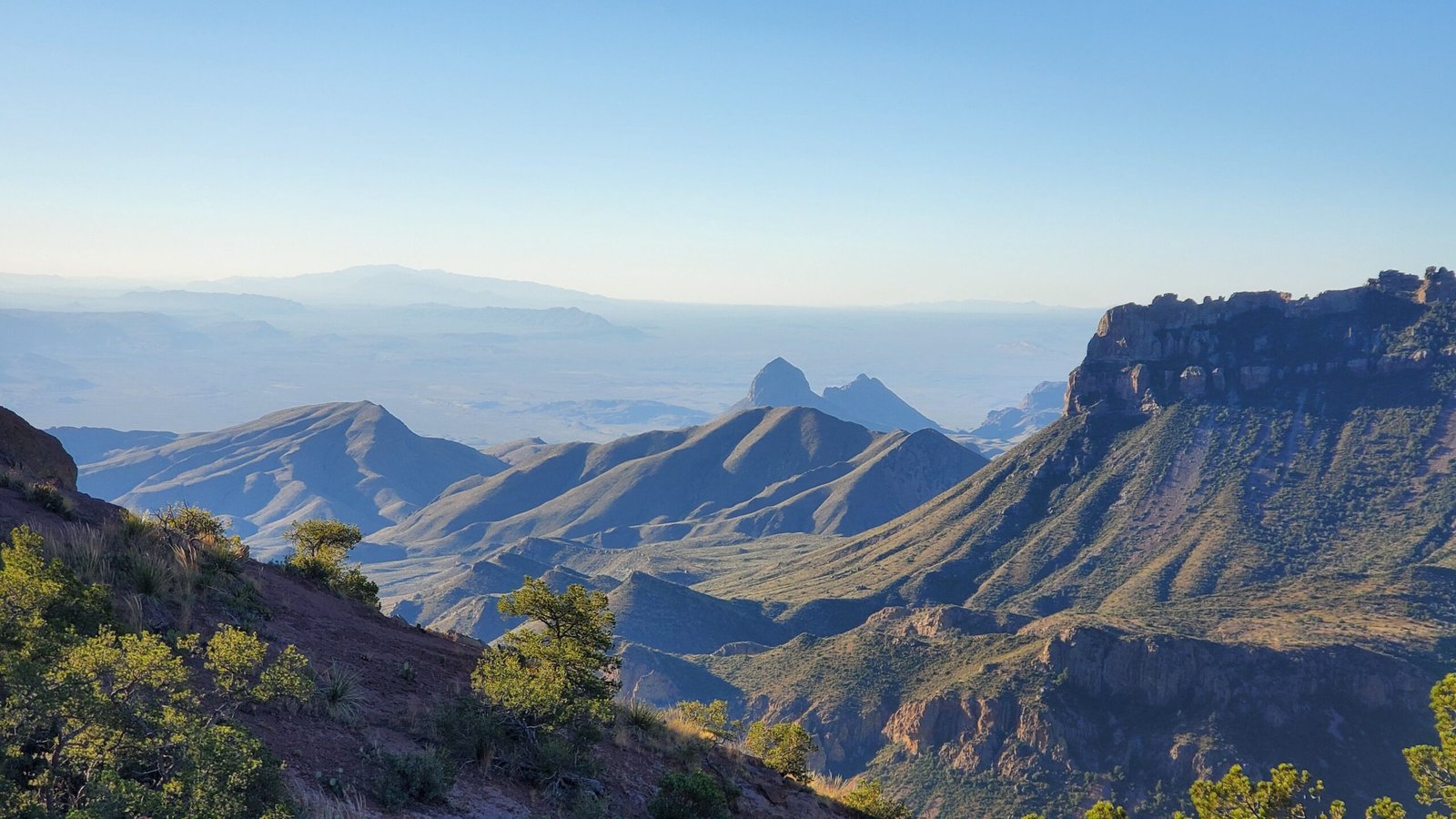
No trip to West Texas is complete without visiting its crown jewel: Big Bend National Park. Covering over 800,000 acres, this vast landscape encompasses towering limestone canyons, sprawling Chihuahuan Desert, and the cool, pine-covered peaks of the Chisos Mountains. Whether you are spending a weekend or an entire week, Big Bend offers a sense of wild solitude that is hard to find anywhere else.
Top Things to Do in Big Bend:
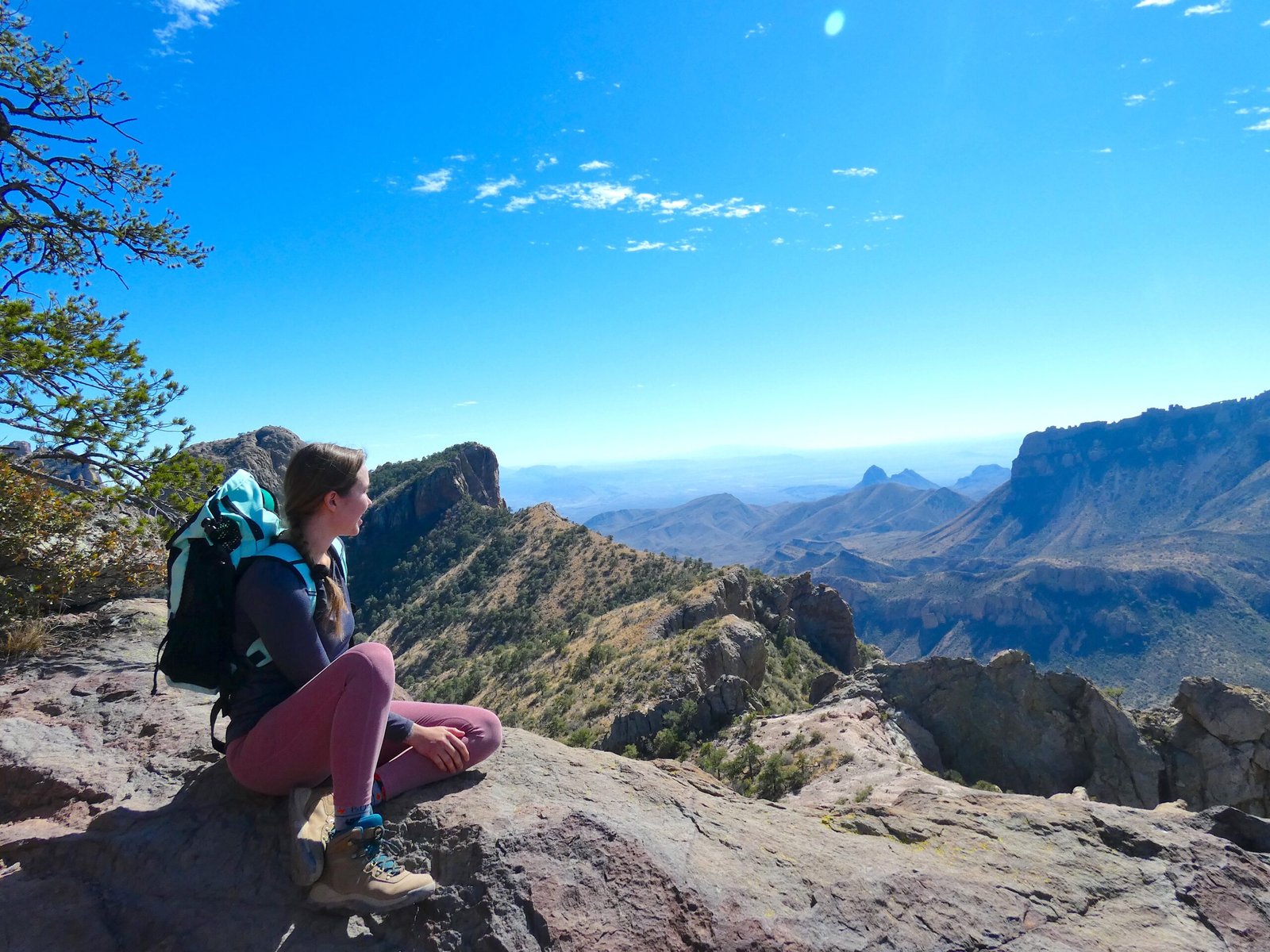
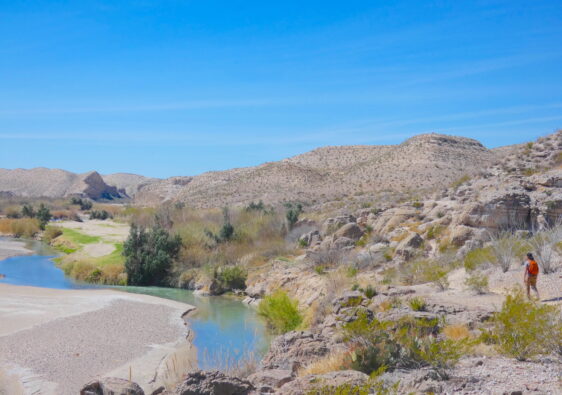
- Hike Santa Elena Canyon: Standing on the banks of the Rio Grande with 1,500-foot sheer limestone walls towering above you is an unforgettable experience. The 1.7-mile round-trip trail leads right into the mouth of the canyon.
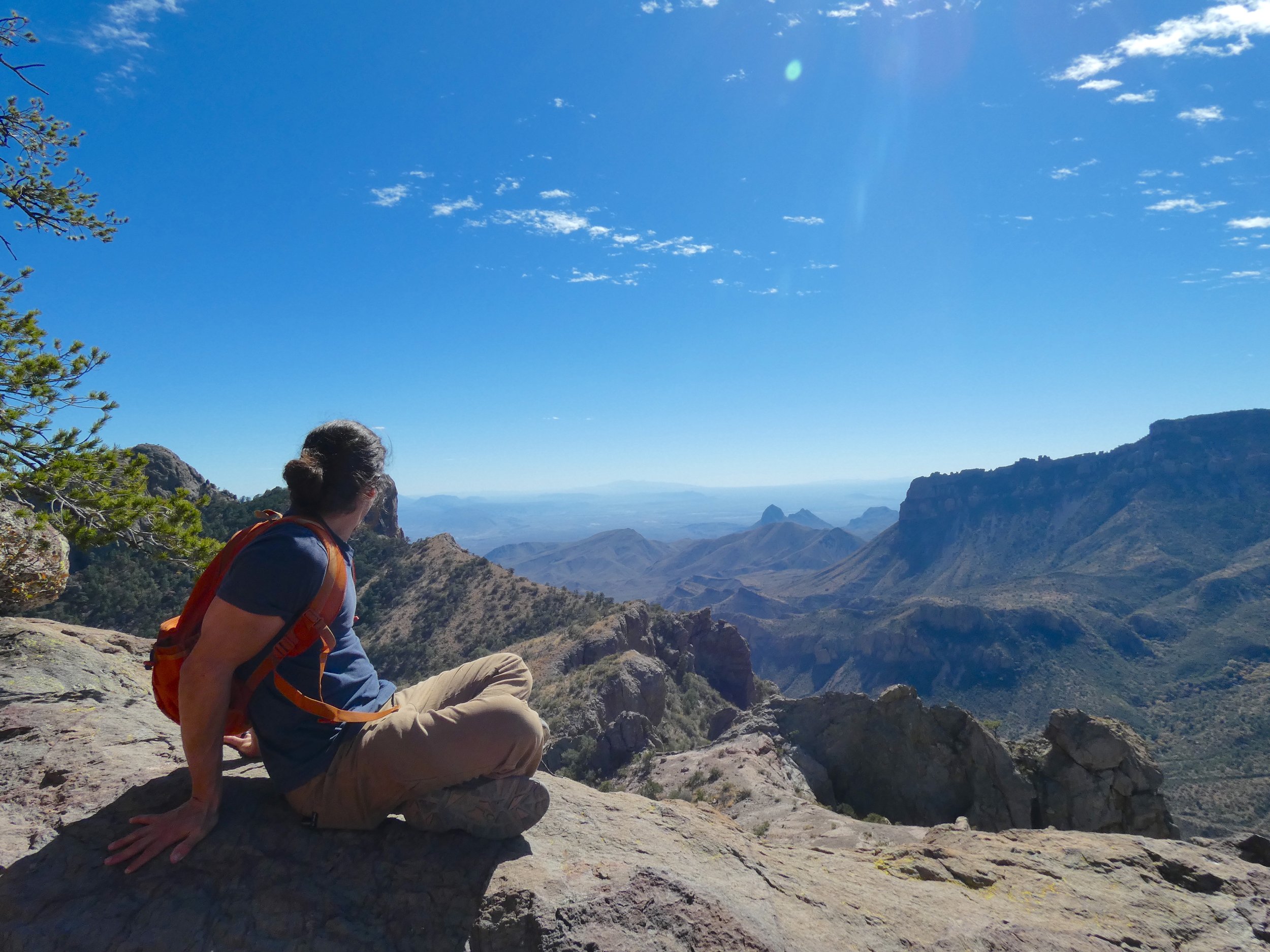
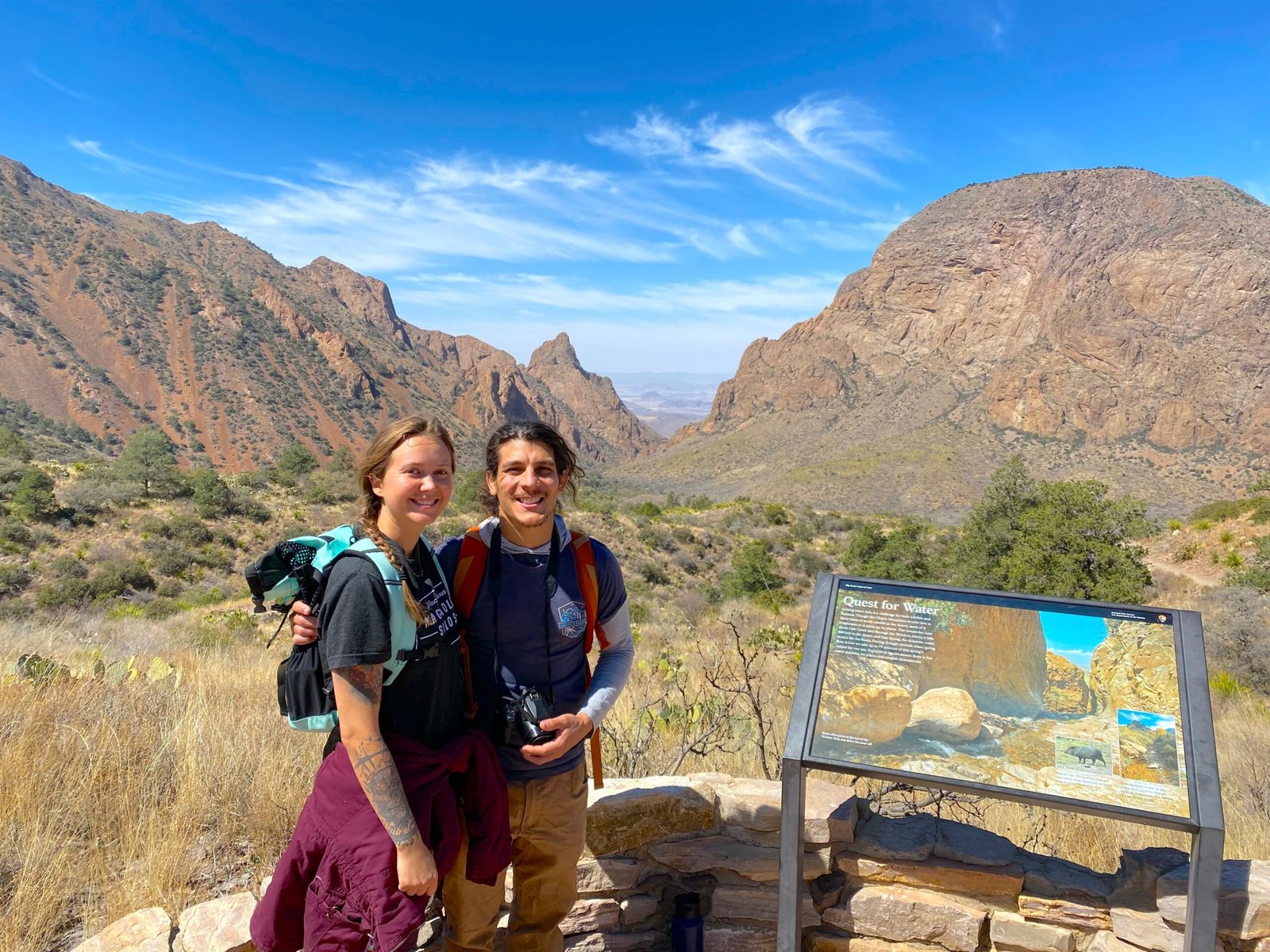
- Explore the Chisos Basin: Drive up into the heart of the park to hike the popular Lost Mine Trail (4.8 miles round-trip) or enjoy sunset views through The Window.
- Drive Ross Maxwell Scenic Drive: This 30-mile paved route highlights the best of the park’s volcanic geology, offering stops like Sotol Vista, Homer Wilson Ranch, and Castolon Historic District.
- Soak in the Historic Hot Springs: Take a short walk along the Rio Grande to sit in the 105°F natural thermal waters flowing into the river.
Insider Tip: Parking at popular trailheads like Santa Elena Canyon and Lost Mine Trail fills up fast, especially during peak season (November through April). Plan to arrive at trailheads before 8:00 AM to secure a spot and beat the afternoon desert heat!
2. Terlingua Ghost Town
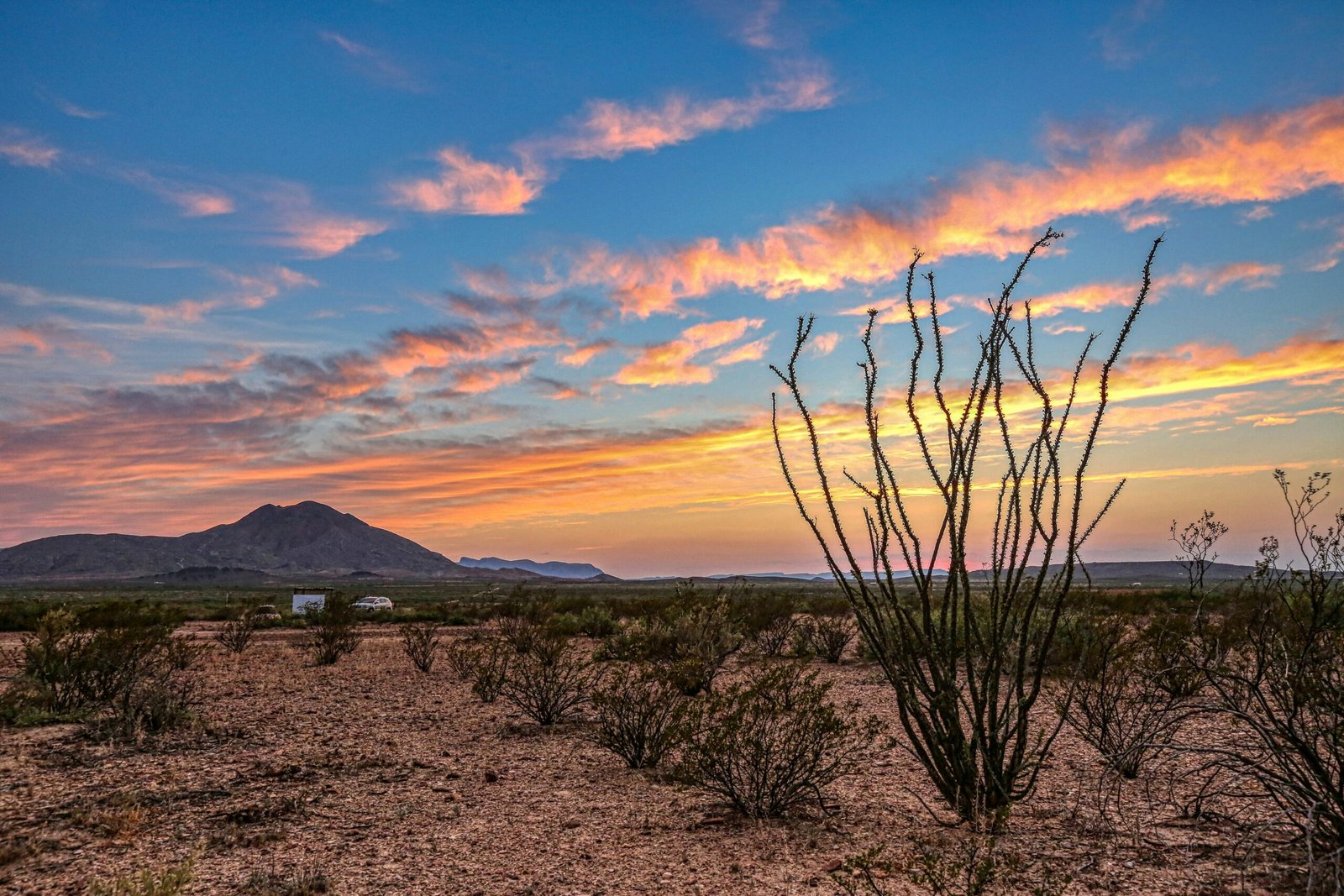
Located just outside the entrance to Big Bend National Park, Terlingua Ghost Town is a legendary West Texas outpost with a rich, colorful history. Once a booming mercury mining town in the early 1900s, it lay largely abandoned for decades before transforming into a vibrant, quirky community of artists, desert dwellers, guides, and musicians.
Top Things to Do in Terlingua:
- Explore the Historic Cemetery: Walk through the weathered ruins and stone graves dating back to the mining era, offering a quiet, poignant look into the region’s past.
- Dine at the Starlight Theatre: Housed inside a restored 1930s movie theater, this local icon is famous for its cold drinks, Texas-style chili, live music every night, and laid-back desert vibes.
- Catch a West Texas Sunset on the Porch: Gathering on the porch outside the Terlingua Trading Company at dusk is a long-standing tradition. Grab a cold drink, sit back, and watch the sun set over the Chisos Mountains in the distance.
- Experience the Championship Chili Cook-Off: If you visit during early November, the town explodes with thousands of visitors for the annual International Chili Championship.
Insider Tip: Cell service can be spotty in Terlingua, and seating at the Starlight Theatre is first-come, first-served. Plan to put your name on the dinner list early, grab a drink on the porch, and soak in the evening atmosphere while you wait!
3. Marfa
Deep in the high desert, Marfa is one of the most unexpected and fascinating destinations in the American Southwest. Once a quiet ranching and railroad hub, it transformed into an internationally renowned contemporary art capital in the 1970s thanks to minimalist artist Donald Judd. Today, Marfa blends high-end art installations, historic architecture, upscale dining, and quirky desert character.
Top Things to Do in Marfa:
- Visit Chinati Foundation: Founded by Donald Judd, this massive open-air contemporary art museum spans 34 acres of former military buildings, showcasing large-scale installations designed to interact with the surrounding landscape. (Be sure to book reservations well in advance!)
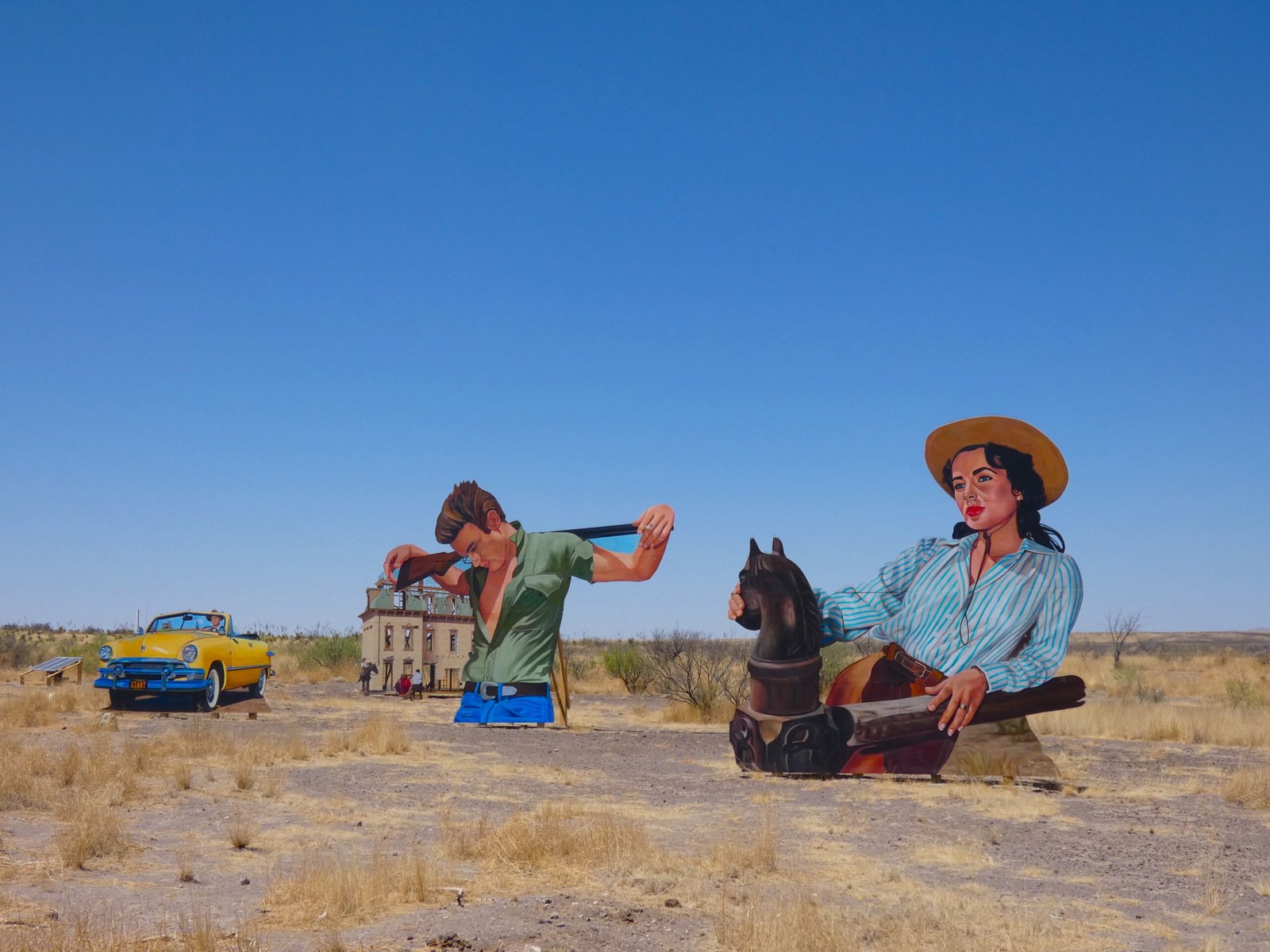
- Snap a Photo at the “Giant” Movie Mural: Located about 5 miles west of town on US-90, these massive cutout murals by artist John Cerney honor the iconic 1956 film Giant starring James Dean, Elizabeth Taylor, and Rock Hudson, which was filmed nearby. Solar-powered speakers hidden in the brush even play country music as you take in the views!
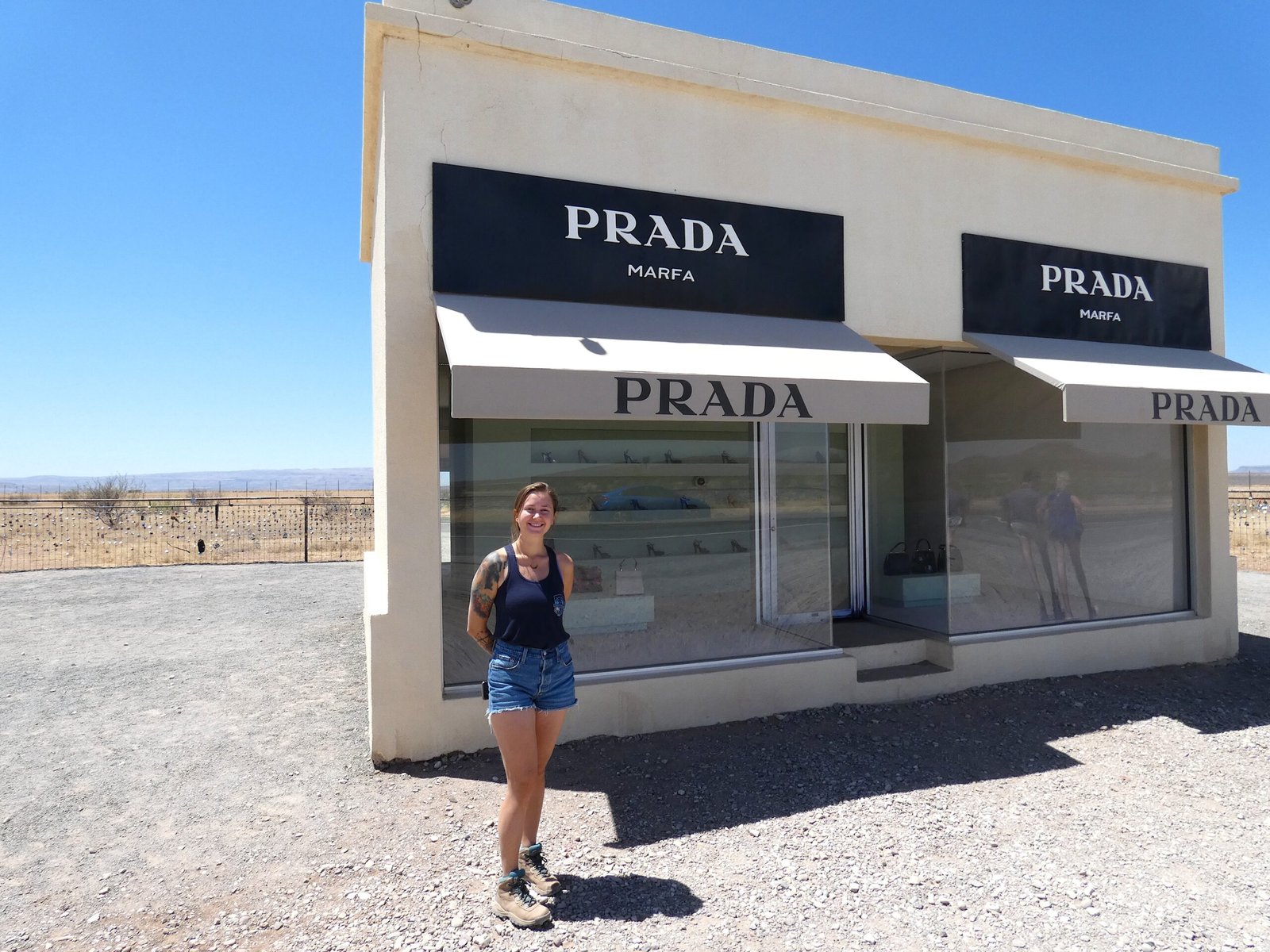
- Pose at Prada Marfa: Located further down US-90 in Valentine, this famous non-functioning Prada storefront art installation sits alone in the middle of the Chihuahuan Desert and is one of the most photographed road-trip stops in West Texas.
- Catch the Marfa Lights: Head east of town to the official Marfa Lights Viewing Center at dusk to search the horizon for the area’s famous, unexplainable phantom orbs of light.
- Explore Historic Downtown & Hotel Paisano: Walk the historic courthouse square to browse independent galleries, boutique shops, and local bookstores, then stop inside the historic Hotel Paisano—where the cast of Giant stayed during filming.
Insider Tip: Many art galleries, shops, and restaurants in Marfa operate on limited schedules (often closed early in the week). Check opening days and book museum or dinner reservations ahead of time so you don’t miss out!
4. Alpine
Nestled in a high-desert valley surrounded by the Twin Peaks and Davis Mountains, Alpine serves as the bustling hub of the Big Bend region. Home to Sul Ross State University, this welcoming mountain town blends western heritage, historic architecture, colorful street art, and a lively music and dining scene. It makes an ideal base camp if you want modern amenities while staying close to West Texas adventures.
Top Things to Do in Alpine:
- Hike to the Desk on Hancock Hill: One of West Texas’s most famous tradition hikes, this 1.8-mile round-trip trail leads up behind the Sul Ross campus to a wooden school desk carried up the mountain by students in 1981. Open the drawers to leave your own message in the visitor notebooks!
- Explore the Museum of the Big Bend: Located on the Sul Ross State University campus, this outstanding museum features exhibits on regional natural history, Native American artifacts, western art, and Texas history.
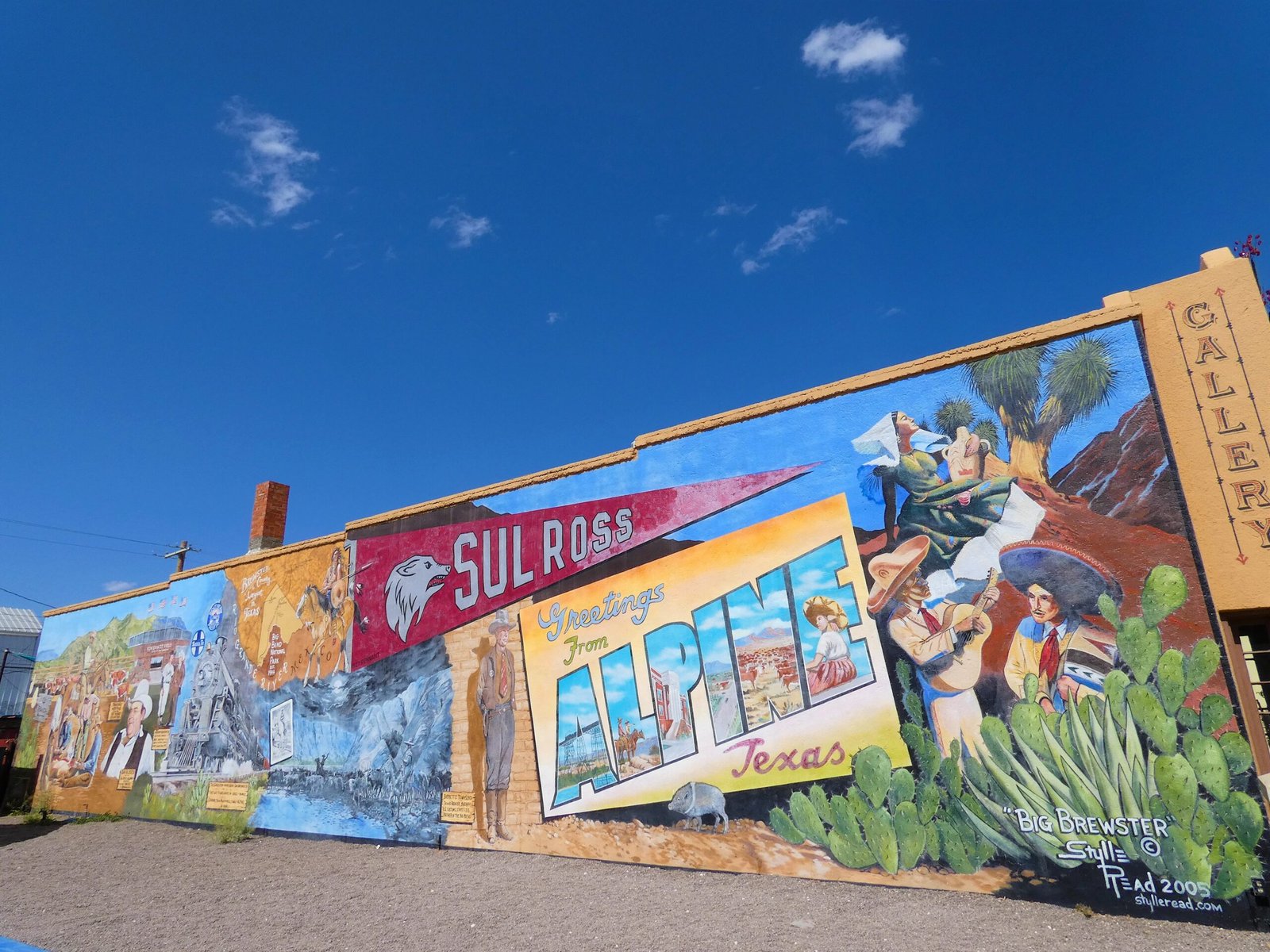
- Take a Downtown Mural Walk: Stroll along Holland Avenue and the surrounding historic district to admire dozens of vibrant street murals depicting local wildlife, ranching history, and desert scenery.
- Catch an Alpine Cowboys Baseball Game: If visiting between May and July, step back in time at historic Kokernot Field—a stone-walled 1940s ballpark modeled after Wrigley Field—to catch a home game of the independent Pecos League.
- Dine at Reata Restaurant: Enjoy legendary upscale legendary Texas cuisine—from chicken fried steak to charbroiled ribeyes—in an adobe setting named after the fictional ranch in the classic movie Giant.
Insider Tip: Alpine is one of the few towns in the region with full grocery stores, gear supply options, and consistent cell coverage. It’s the best spot on your itinerary to restock camper supplies, grab fuel, or enjoy a craft brew or live music on Holland Avenue.
5. Lajitas Golf Resort
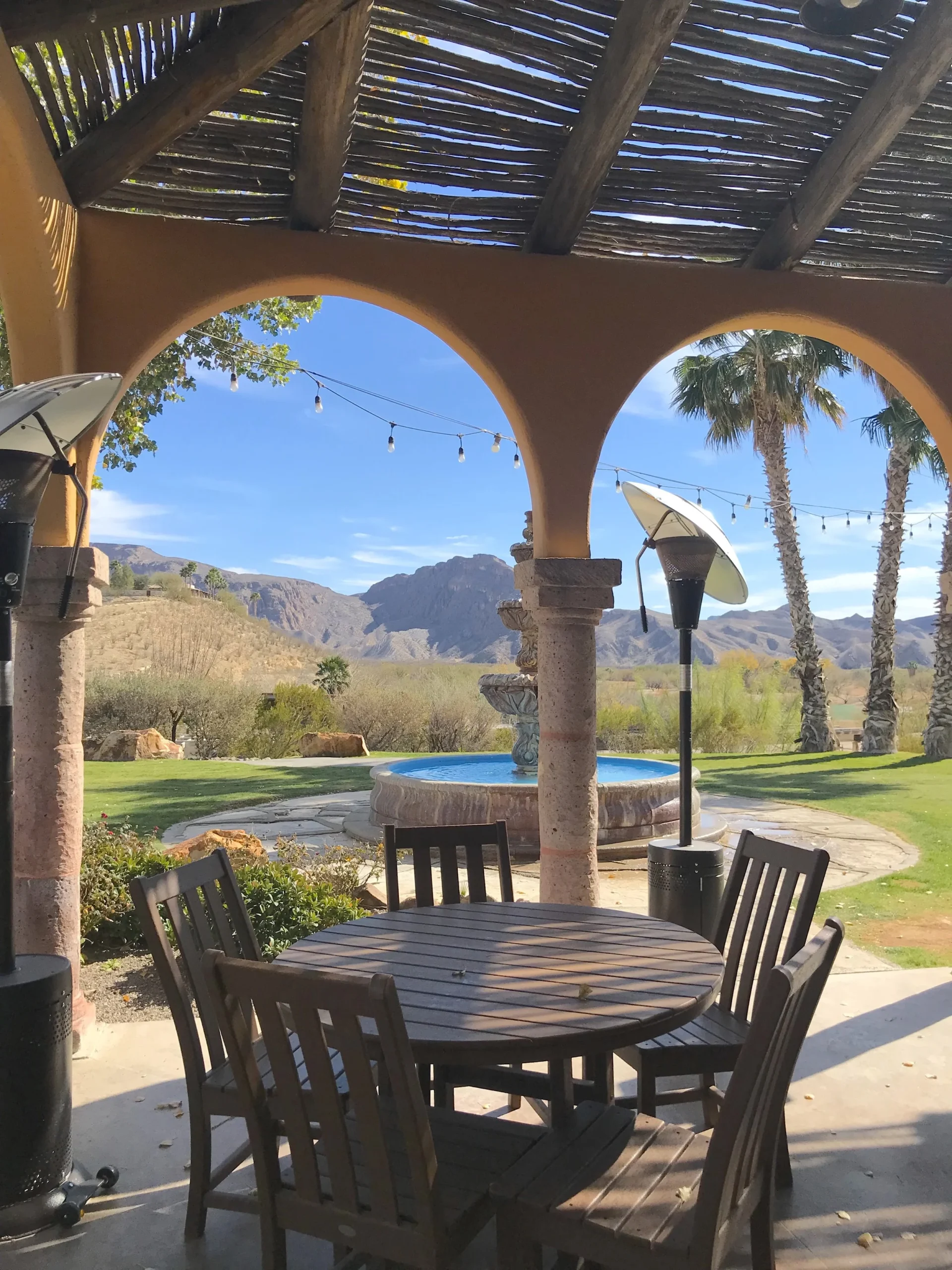
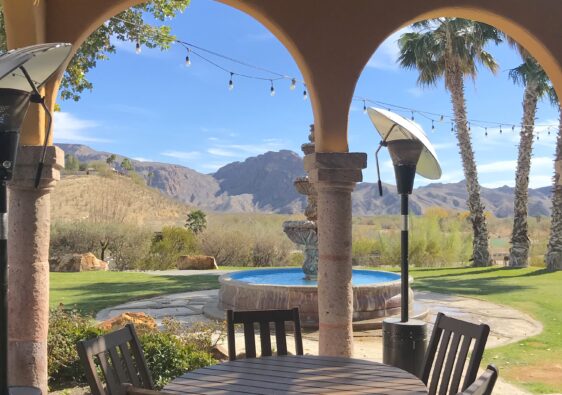
Tucked along the banks of the Rio Grande between Big Bend National Park and Big Bend Ranch State Park, Lajitas Golf Resort is a legendary desert oasis. Known for its rich Old West history, rugged scenery, and luxury amenities, this 27,000-acre resort offers a unique mix of high-end relaxation and thrilling outdoor adventure. Whether you are looking for luxury accommodations, a full-hookup RV site at Maverick Ranch RV Park, or just a day pass to experience the grounds, Lajitas brings refined comfort to the far West Texas frontier.
Top Things to Do at Lajitas Golf Resort:
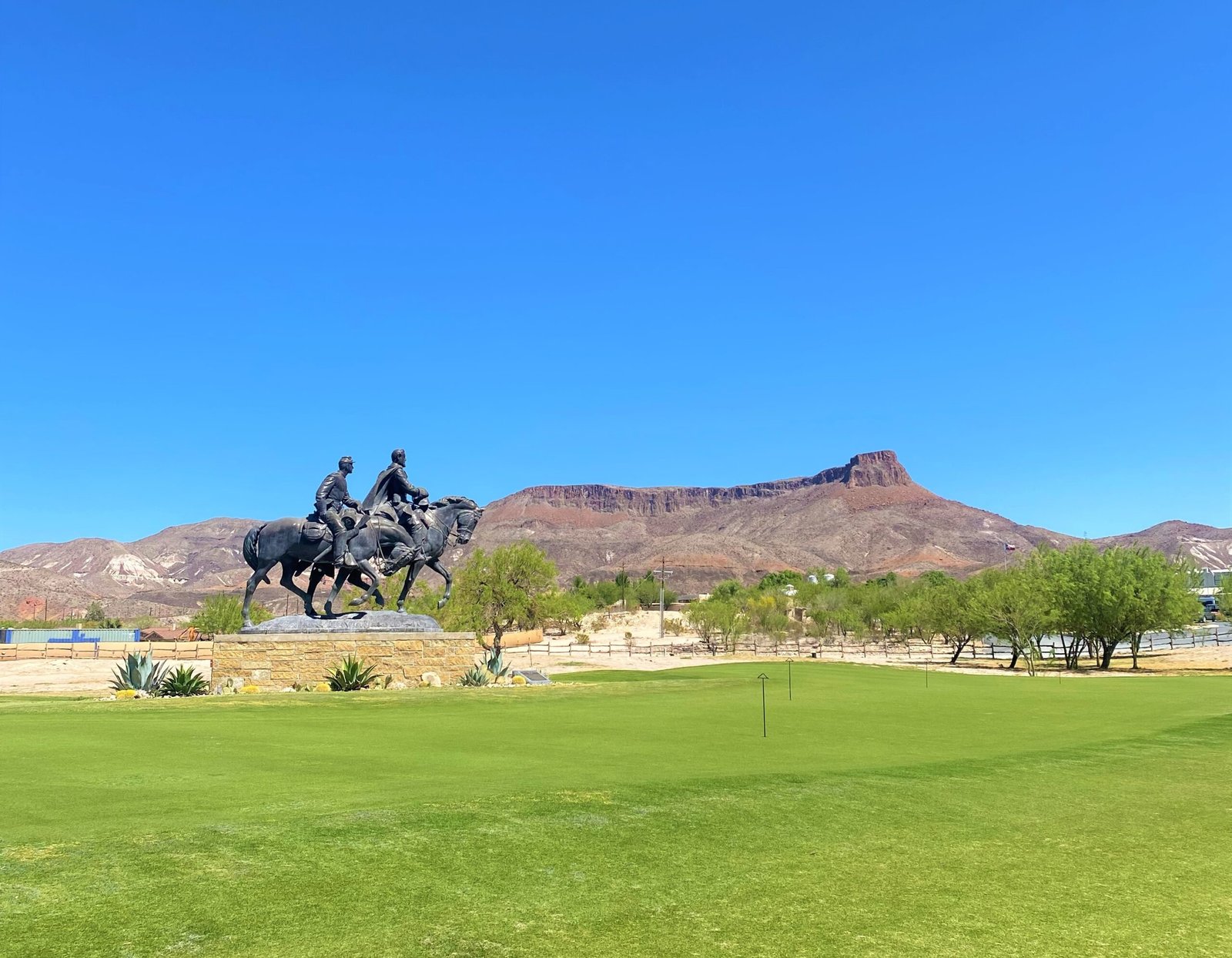
- Tee Off at Black Jack’s Crossing: Frequently ranked as the #1 course you can play in Texas, this 18-hole championship golf course winds through dramatic volcanic canyons and offers breathtaking high-desert views of the Rio Grande and Mexico.
- Go Horseback Riding: Saddle up at the resort’s equestrian center for guided trail rides across rocky mesas and desert terrain, taking in spectacular Big Bend views.
- Zipline Quiet Canyon: Experience an adrenaline rush on a zipline tour soaring over steep desert canyons and rugged mountain passes.
- Meet the Mayor (Clay Henry): Pay a visit to the local general store to meet Clay Henry, the town’s famous goat mayor—a quirky, beloved local tradition!
- Dine & Unwind: Grab drinks at the rustic Thirsty Goat Saloon, enjoy Texas-inspired cuisine at Candelilla Cafe, or relax with a massage at the on-site Agave Spa.
Insider Tip: Even if you aren’t staying overnight at the resort, the general store and bakery are great places to stop for a meal, and Black Jack’s Crossing is a bucket-list stop for any golfer visiting West Texas!
6. Fort Davis & The Davis Mountains
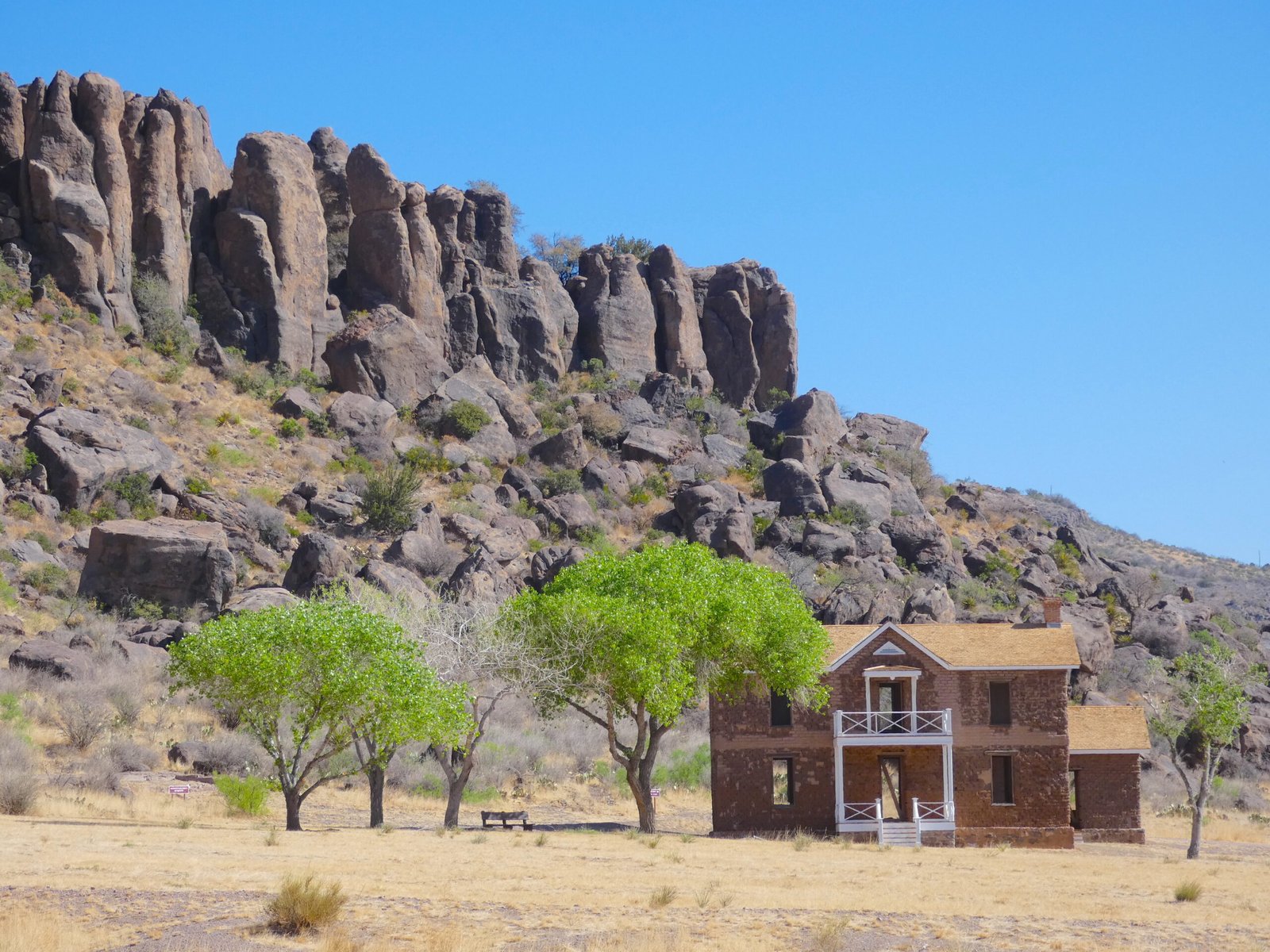
Perched at nearly 5,000 feet in altitude, Fort Davis offers a refreshing, high-mountain escape surrounded by pine-forested peaks, cool alpine breezes, and rich frontier history. As the highest town in Texas, this quiet mountain village serves as the gateway to world-class astronomy, scenic loop drives, and preserved 19th-century military posts.
Top Things to Do in Fort Davis:
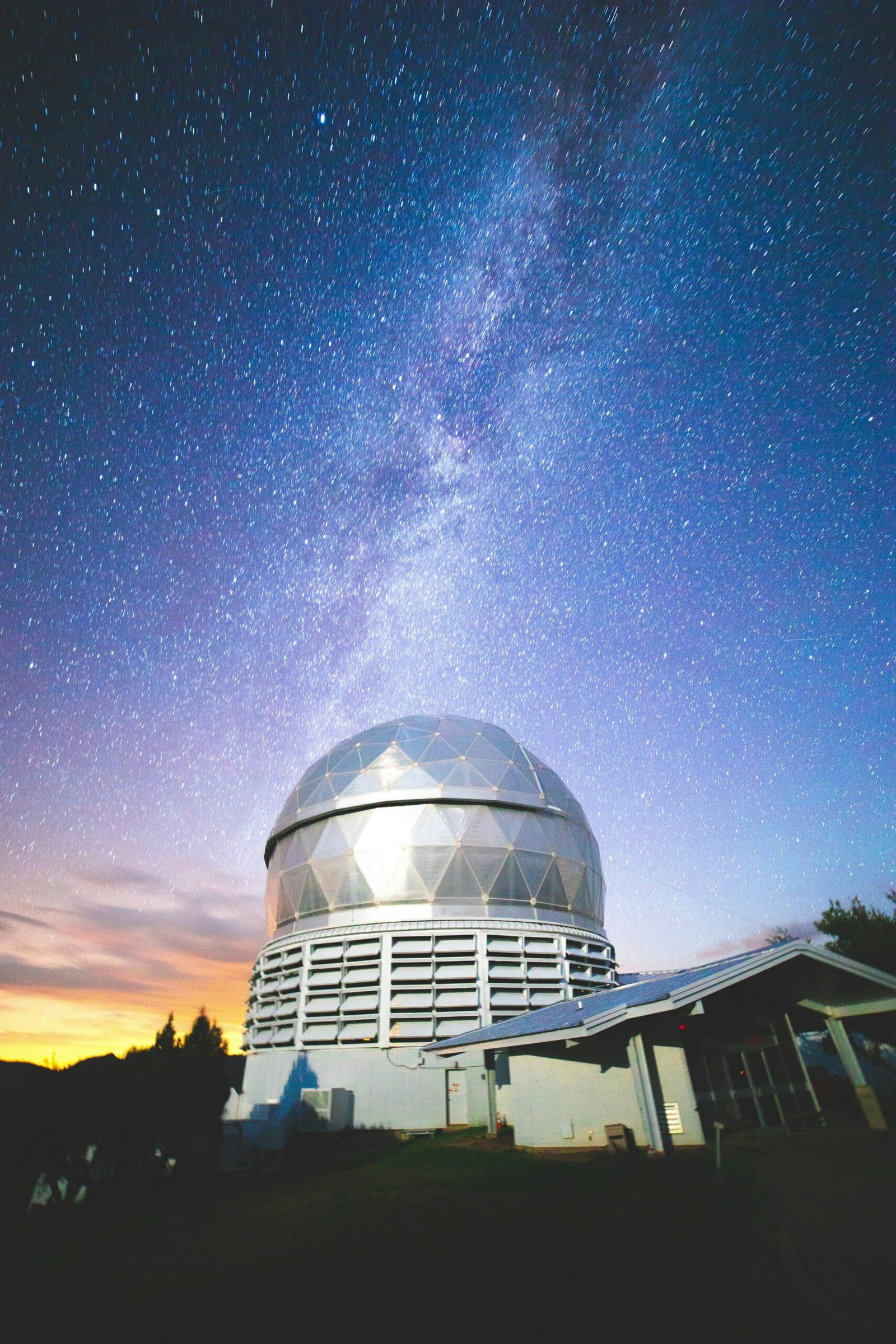
- Stargaze at McDonald Observatory: Located atop Mount Locke, this world-renowned research facility offers some of the darkest skies in the United States. Book tickets in advance for their famous Evening Star Parties to view planets, distant galaxies, and nebulae through giant telescopes.
- Explore Fort Davis National Historic Site: Walk through one of the best-preserved frontier military forts in the Southwest, featuring restored barracks, officers’ quarters, and historic exhibits honoring the legacy of the Buffalo Soldiers.
- Hike Davis Mountains State Park: Explore miles of scenic trails, including the Skyline Drive Trail for sweeping views over the valley or the CCC Trail connecting directly to the historic fort. You can also stay overnight at the historic adobe Indian Lodge inside the park.
- Drive the Davis Mountains Scenic Loop: Take the 75-mile highway loop (Hwy 118 to RM 166) winding through high-elevation mountain passes, past Sawtooth Mountain, and through volcanic rock formations.
- Visit the Chihuahuan Desert Nature Center: Stroll through botanical gardens, hike down into Madera Canyon, and explore an extensive cactus museum showcasing native high-desert flora.
Insider Tip: Star Party tickets at McDonald Observatory frequently sell out weeks (or even months) in advance! Be sure to reserve your spots online as soon as your travel dates are set. Also, pack a jacket—even during summer months, high-altitude desert nights get surprisingly chilly!
7. Big Bend Ranch State Park
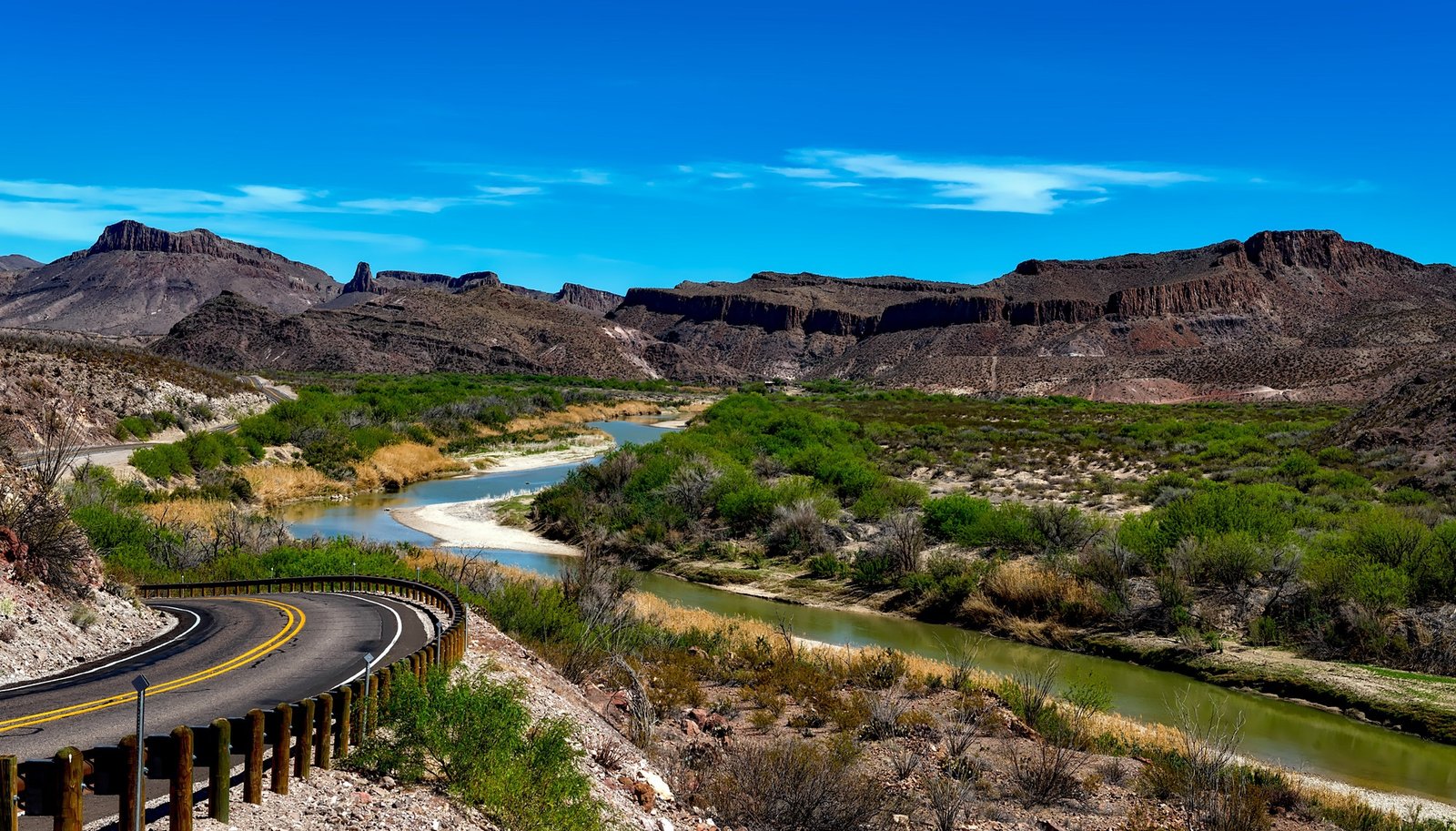
Right next door to the national park lies Texas’s largest and wildest state park: Big Bend Ranch State Park. Spanning over 300,000 acres along the Mexican border, this rugged stretch of land offers a raw, off-the-beaten-path desert experience. With far fewer crowds, dramatic volcanic geology, and miles of dirt roads, it is a paradise for adventurers, 4×4 enthusiasts, and hikers looking to escape the busiest national park trails.
Top Things to Do in Big Bend Ranch State Park:
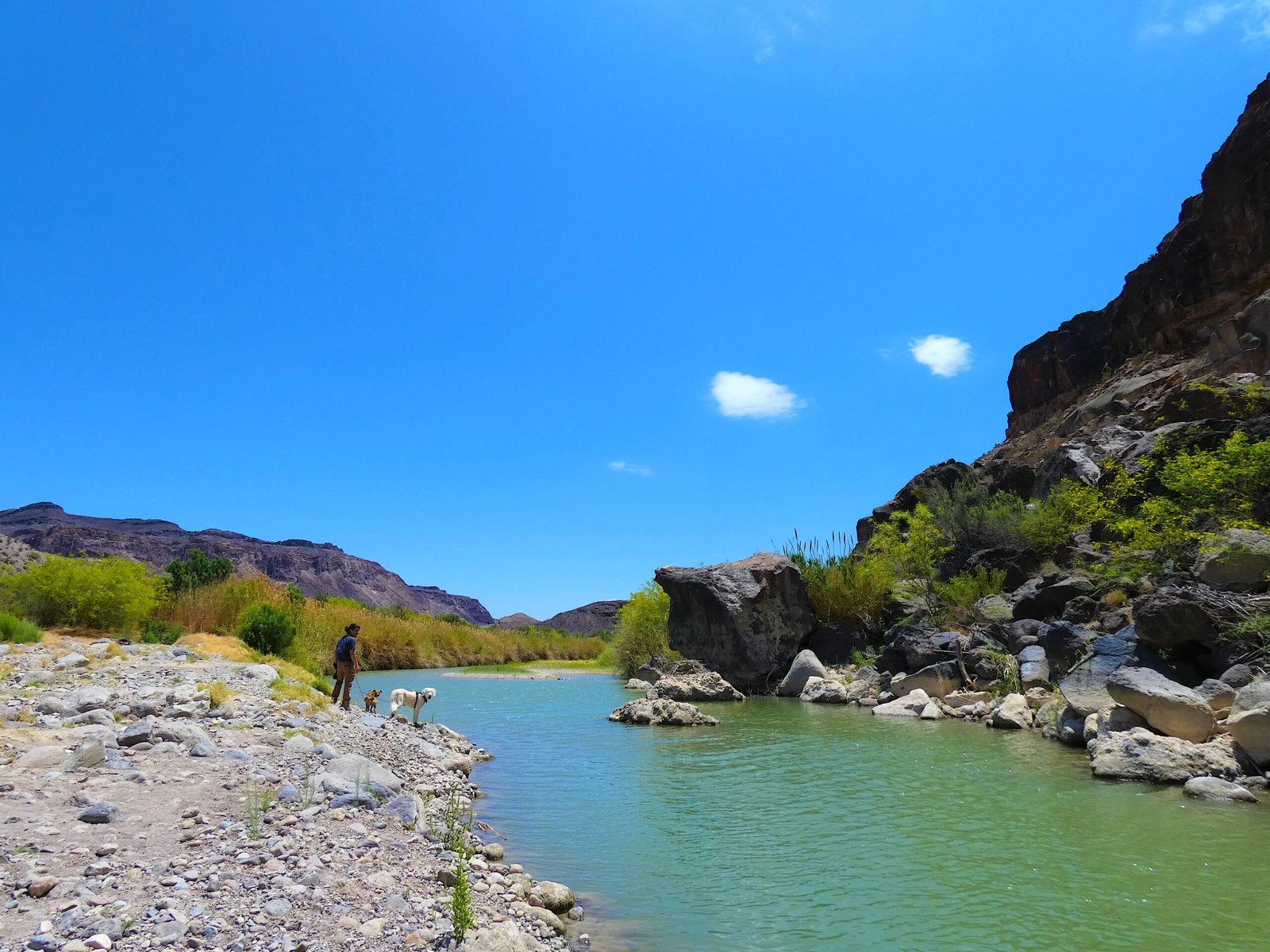
- Drive FM 170 (River Road): Widely considered one of the most scenic drives in North America, this winding paved road parallels the Rio Grande between Lajitas and Presidio, offering breathtaking cliffside overlooks, steep grades, and views into Mexico.
- Hike Closed Canyon: A short, accessible 1.4-mile round-trip trail that leads you right into a dramatic, narrow slot canyon carved through volcanic rock. It’s one of the few shaded hikes in the region and offers relief from the afternoon sun.
- Explore the Hoodoos Trail: Located along FM 170, this short loop takes you through towering, uniquely eroded rock formations down to the gravel banks of the Rio Grande.
- 4×4 Off-Roading in the Interior: For those with high-clearance, four-wheel-drive vehicles, the park’s interior (accessed via Sauceda Ranger Station) features nearly 70 miles of unmaintained dirt roads leading to remote tinajas, springs, and dramatic volcanic calderas.
Planning a Trip? Check out our complete guide on Big Bend Ranch State Park: Everything You Need to Know Before You Go for detailed trail info, backcountry driving tips, and itinerary planning.
Insider Tip: Unlike the adjacent national park, select front-country trails along FM 170 (like Closed Canyon and Hoodoos Trail) allow leashed dogs. If you are traveling with pets, this is one of the absolute best outdoor spots in West Texas to explore together!
8. Guadalupe Mountains National Park
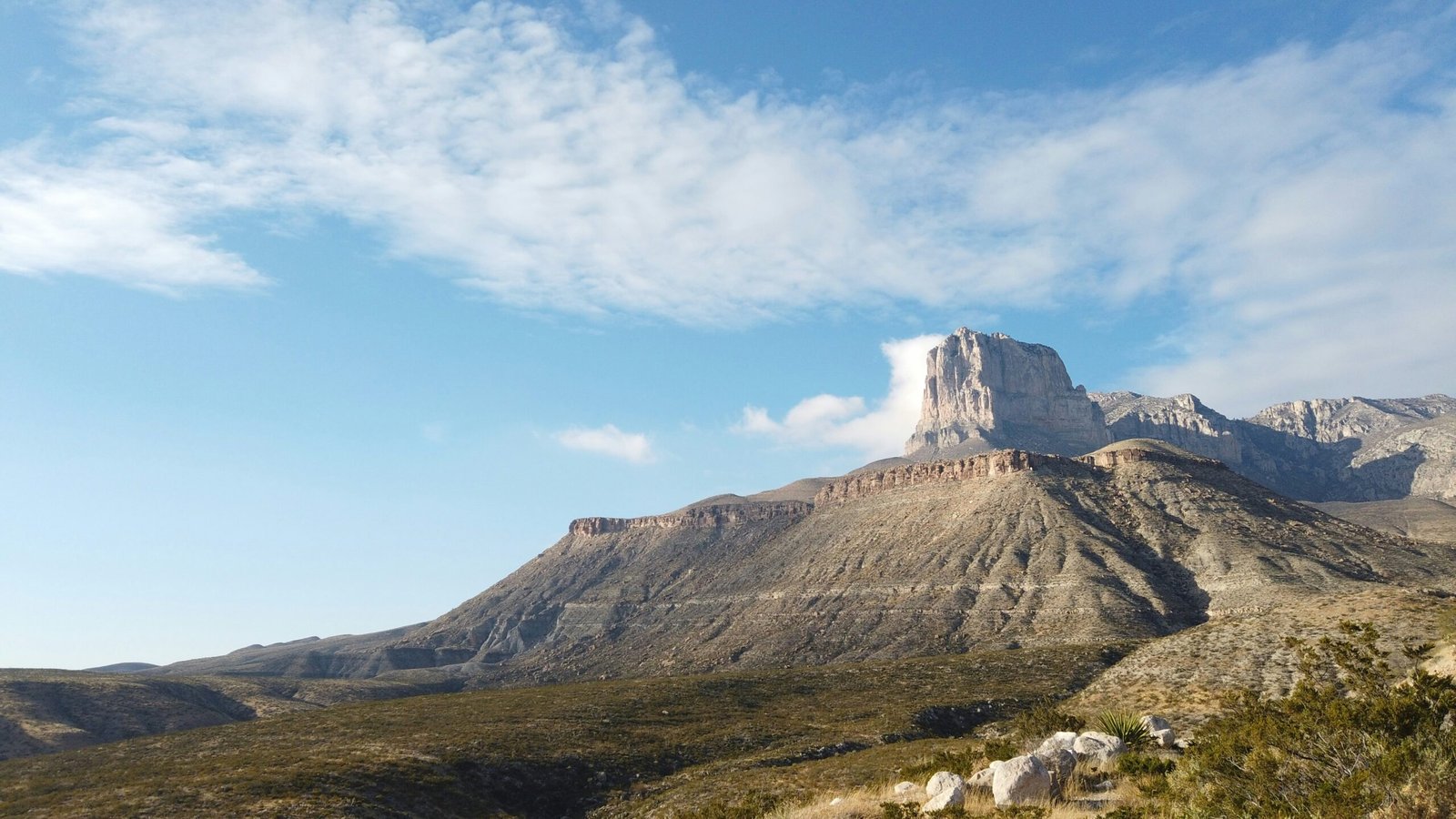
Rising dramatically out of the Chihuahuan Desert, Guadalupe Mountains National Park is a paradise for hikers, wilderness lovers, and outdoor enthusiasts. Protecting the world’s premier fossilized Permian reef, this rugged national park features deep canyons, lush maple forests, and the four highest peaks in Texas. Because it has no paved scenic drive through the park center, the best way to experience its wild beauty is by hitting the trail.
Top Things to Do in Guadalupe Mountains:
- Conquer Guadalupe Peak: Tackle the strenuous 8.4-mile round-trip trail to stand at the top of Texas (8,751 feet). At the summit, you’ll be rewarded with panoramic desert views and the iconic stainless steel pyramid monument.
- Hike Devil’s Hall Trail: A favorite 4.2-mile round-trip hike that leads along a dry wash and requires light rock scrambling to reach a striking, narrow limestone slot canyon.
- Explore McKittrick Canyon: Famous as one of the best places in Texas to see vibrant fall foliage (late October to early November), this canyon trail features shaded Bigtooth maple trees, lush springs, and the historic 1930s Pratt Cabin.
- Visit the Salt Basin Dunes: Tucked away on the park’s western boundary, these bright white gypsum sand dunes sit directly below the towering cliff face of El Capitan, offering a surreal setting for sunset photography.
- Stroll the Historic Pinery Trail: A short, paved, accessible walk near the Pine Springs Visitor Center leading to the stone ruins of an 1858 Butterfield Overland Mail station.
Insider Tip: Unlike most national parks, Guadalupe Mountains operates on Mountain Time (MT) while surrounding Texas towns like Van Horn or Pecos run on Central Time (CT). Keep an eye on your clock when planning early morning trailhead arrivals or catching park gates before they close!
9. Hueco Tanks State Park & Historic Site
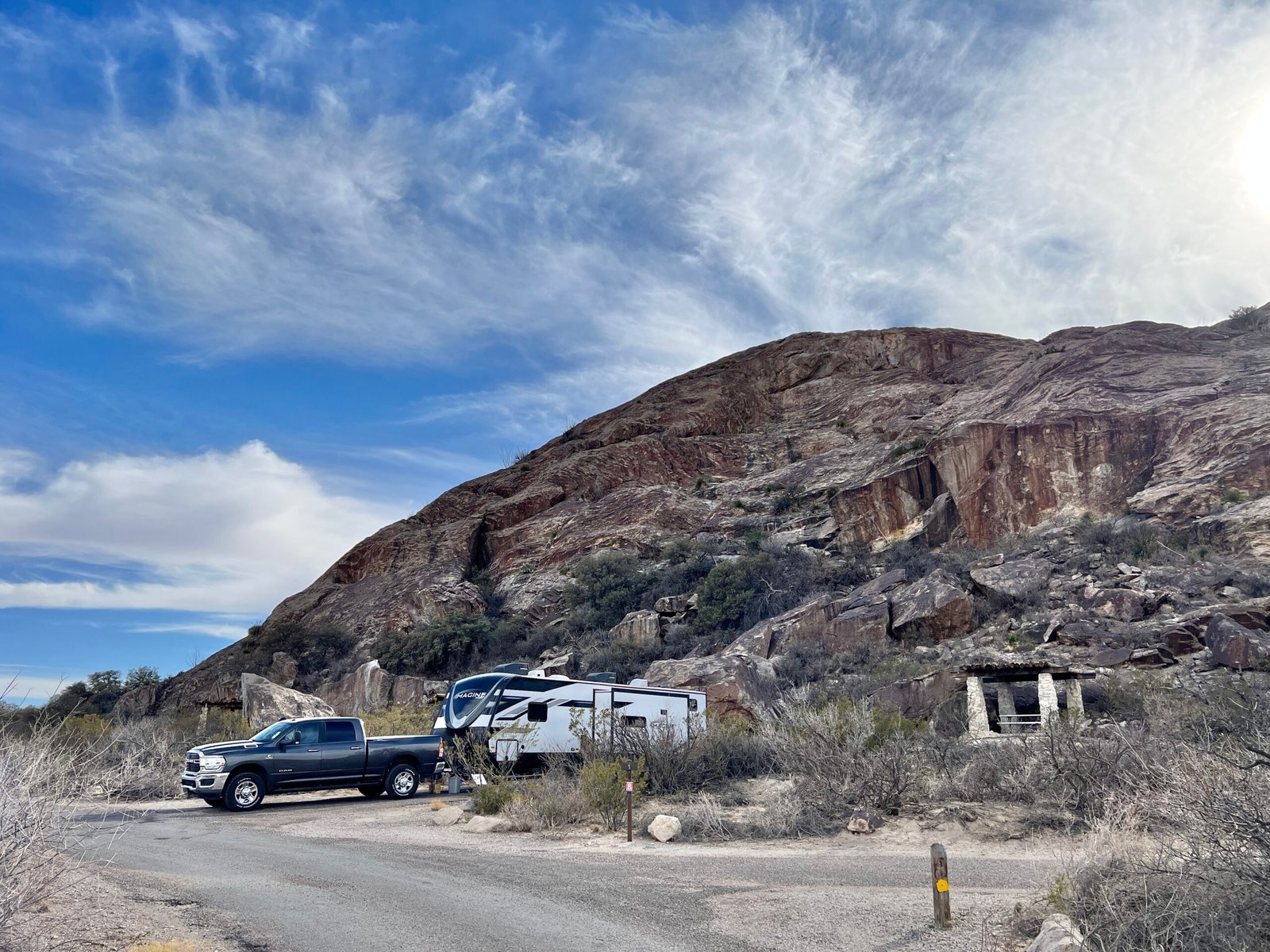
Located about 30 miles east of El Paso, Hueco Tanks State Park & Historic Site is a unique desert sanctuary named for its “huecos”—natural hollows in the massive rock formations that trap rainwater in the arid high desert. For thousands of years, people have gathered at these rock basins for water, leaving behind an incredible repository of Native American pictographs and petroglyphs. Today, it is globally revered as both a cultural treasure and one of the world’s premier bouldering high-desert camping destinations.
Top Things to Do at Hueco Tanks:
- Camp Under Desert Skies: Stay overnight in the park’s quiet, scenic campground. Offering 20 sites equipped with water and electrical hookups (30/50 amp) or water-only hookups, it serves as an ideal, serene basecamp tucked right beneath the towering rock mounds.
- View Ancient Rock Art: Take a guided tour to view hundreds of sacred pictographs and petroglyphs, including ancient mask paintings and symbols left by Native American cultures over the past 1,500+ years.
- World-Class Bouldering: Renowned across the globe for its overhanging rock faces and ideal pocketed handholds, Hueco Tanks draws rock climbers from around the world.
- Hike North Mountain: Explore the self-guided area of North Mountain along marked trails winding between towering rock mounds, ancient basins, and desert vegetation.
- Birdwatching: Because the rock basins hold water, the park acts as a lush oasis for wildlife, attracting dozens of migratory bird species throughout the year.
Insider Tip: To protect its fragile cultural relics, daily visitor access at Hueco Tanks is strictly capped. Access to North Mountain (the self-guided area) and campground sites cannot be booked online—you must call the reservation line (512-389-8911) up to 90 days in advance. Note that open fires (wood or charcoal) are strictly prohibited inside the park; only containerized fuel stoves/gas grills are allowed.
10. Balmorhea State Park
Rising like a lush blue oasis out of the surrounding desert expanse, Balmorhea State Park is home to the world’s largest spring-fed swimming pool. Built in the 1930s by the Civilian Conservation Corps (CCC), this iconic West Texas oasis is fed by San Solomon Springs, pumping more than 15 million gallons of clear, 72° to 76°F water into the pool every single day. It is an absolute must-visit road-trip stop for a refreshing swim, snorkel, or scuba dive in the middle of the high desert.
Top Things to Do at Balmorhea State Park:
- Swim & Snorkel in the Spring-Fed Pool: Dive into the crystal-clear pool, which reaches depths up to 25 feet. Don’t forget your mask and snorkel—you’ll be swimming alongside Texas spiny softshell turtles and rare, native fish like the endangered Comanche Springs pupfish.
- Scuba Dive the High Desert: Because the spring water is remarkably clear and deep, Balmorhea is one of the most unique freshwater scuba diving destinations in the Southwest.
- Explore the Restored Cienega: Take a peaceful walk around the reconstructed desert wetlands (cienega) near the pool to watch aquatic life in the winding canals and spot visiting migratory birds.
- Stay Overnight: Book one of the 34 park campsites or stay at the historic, CCC-built San Solomon Springs Courts—retro, pueblo-style motel rooms located right inside the park.
Insider Tip: Because of its immense popularity as a summer refuge, daily entry passes sell out fast! Day-use passes can be reserved up to 30 days in advance on the Texas State Parks website. If you’re traveling during peak months or weekends, book your day pass as early as possible to guarantee entry.
11. Monahans Sandhills State Park
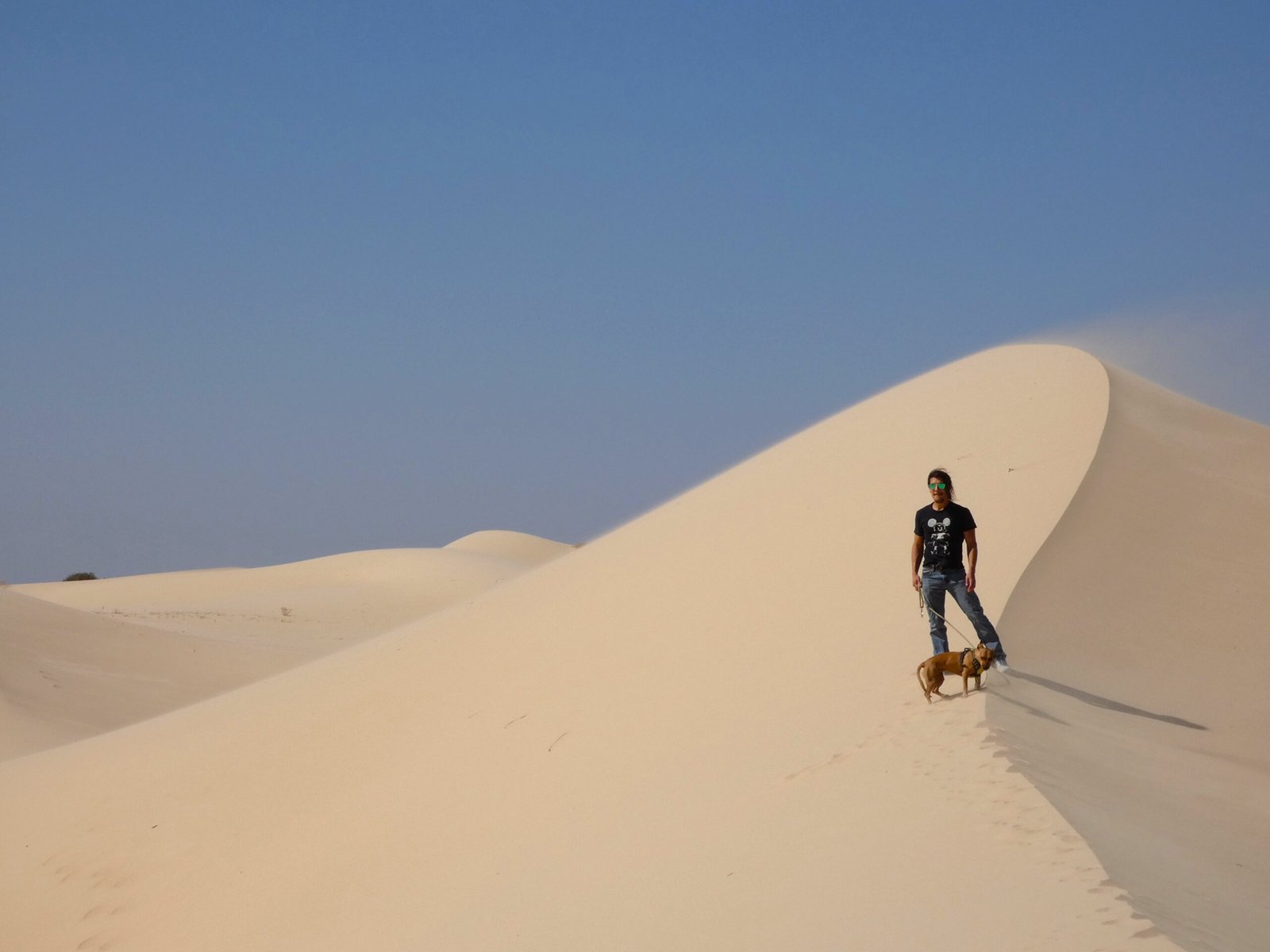
Rounding out our West Texas tour is Monahans Sandhills State Park, a giant ocean of golden sand dunes that feels completely unexpected in the middle of Permian Basin oil country. Spanning nearly 4,000 acres, these active dunes shift and change shape overnight with the desert wind, reaching heights up to 70 feet. It functions as a massive natural playground for road-trippers of all ages to explore, trek, and slide down rolling sand peaks.
Top Things to Do at Monahans Sandhills State Park:
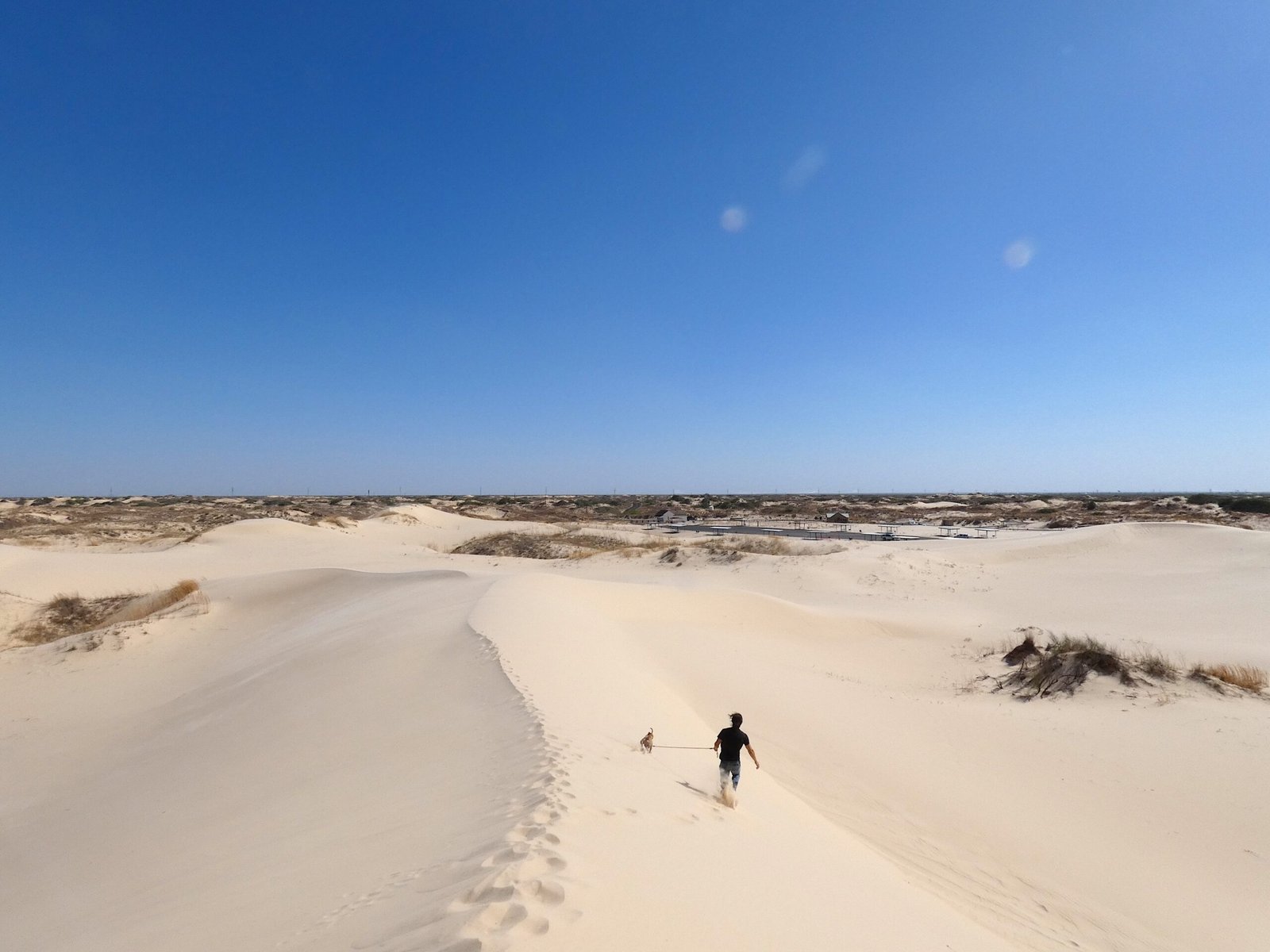
- Go Sand Disk Sledding: Rent a sand disk at the park headquarters and test your skills surfing and sledding down the steep faces of the dunes—a hit for both kids and adults!
- Explore Off-Trail Dune Hiking: Unlike most state parks with strict trail corridors, Monahans has no marked trails. You are completely free to wander across the open dunes wherever your footprints take you.
- Visit the Dunagan Visitor Center: Learn about the surprisingly rich wildlife, native plants, and human history of the dunes, and watch local desert birds and wildlife through the large viewing windows.
- Camp Under the Desert Stars: Book one of the 25 park campsites equipped with water and electricity to catch stunning, uninhibited desert sunsets and sunrises over the sand.
Insider Tip: Summer sands get scorching hot under the midday desert sun! Visit in the early morning or late afternoon to enjoy cooler temperatures, smooth unprinted sands for photography, and spectacular golden-hour lighting over the dunes.
West Texas Travel Planning Essentials
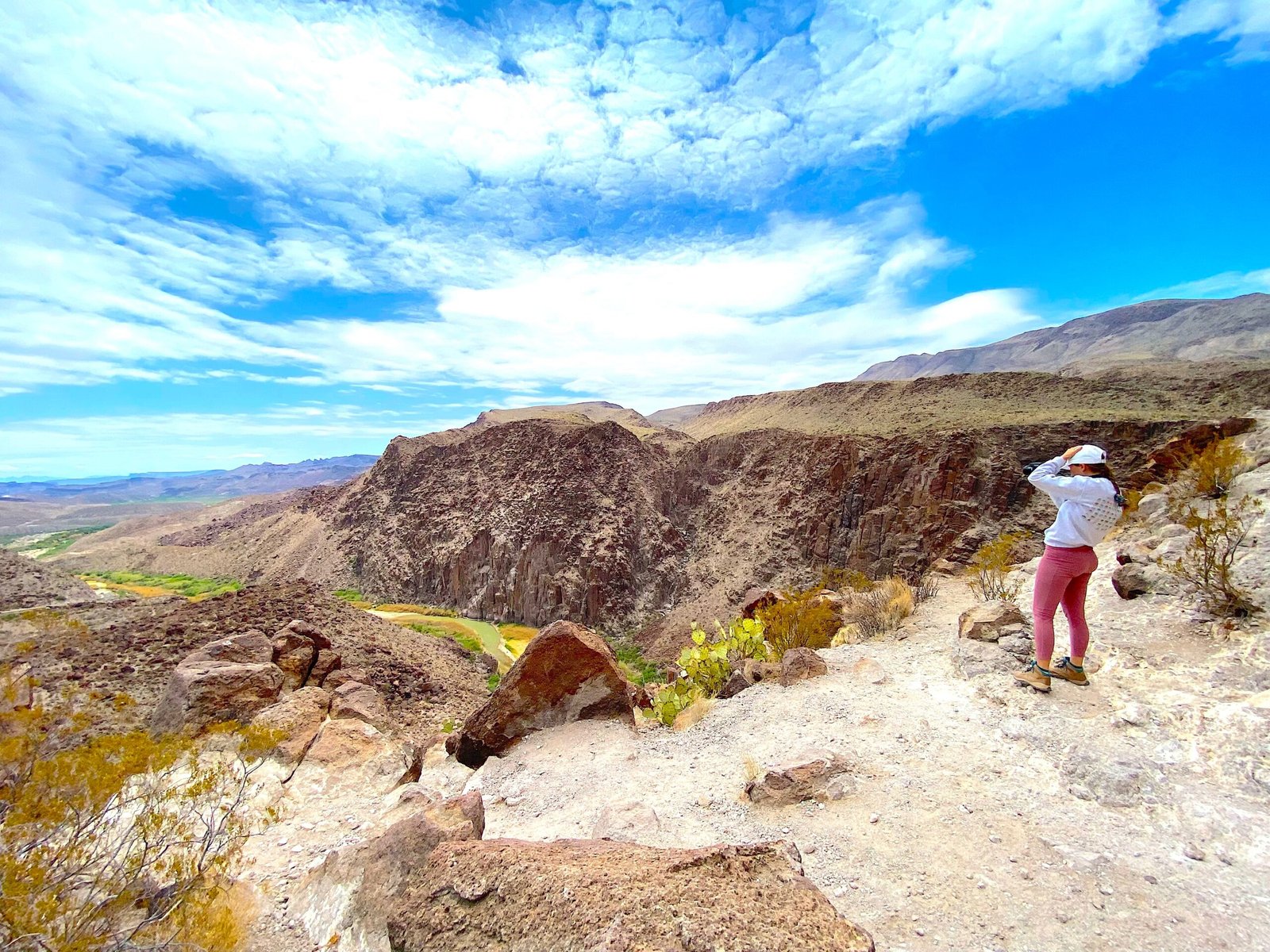
Planning a trip to West Texas requires a bit more preparation than your average road trip. Distances are vast, cell phone service can disappear for hours, and desert weather varies dramatically depending on elevation and season. Use these essential planning tips to build a smooth, stress-free trip.
Best Time to Visit West Texas
West Texas is a year-round destination, but the experience changes significantly depending on when you go:
Spring (March – May): Widely considered the best time to visit. Temperatures are mild, wildflower blooms (like the famous Big Bend Bluebonnet) peak in late February and March, and desert hiking conditions are ideal. Note that spring break (March) brings peak crowds to Big Bend National Park, so book campsites and lodging months in advance.
Fall (October – November): Another prime season featuring warm, pleasant days and crisp desert nights. Late October through early November brings stunning fall foliage to McKittrick Canyon in Guadalupe Mountains National Park and cottonwood groves along the Rio Grande.
Winter (December – February): Daytime temperatures are comfortable for hiking (often in the 50s and 60s), but nighttime temperatures regularly drop below freezing, especially at higher elevations in Fort Davis and Guadalupe Mountains. Snow is rare but possible in mountain areas.
Summer (June – September): Desert temperatures routinely exceed 100°F (38°C) at lower elevations, making midday hiking hazardous. If visiting in summer, plan all hiking for early morning hours, carry double the water you think you need, and spend afternoon heat swimming at Balmorhea or enjoying mountain towns like Fort Davis. Monsoon season also brings sudden thunderstorm downpours and flash flood risks from July through September.
Getting Around West Texas & Driving Tips
- Plan Your Fuel & Water Stops: Gas stations and grocery stores can be 50 to 80 miles apart. Never let your gas tank drop below a quarter full, and always carry extra drinking water in your vehicle (at least one gallon per person per day).
- Download Offline Maps: Cell coverage is extremely spotty or nonexistent across large stretches of Highway 118, FM 170, and inside Big Bend National Park. Download offline maps via Google Maps or AllTrails before leaving major towns.
- Watch for Wildlife at Dawn & Dusk: Javelinas, mule deer, jackrabbits, and wild burros frequently cross remote highways. Drive cautiously during twilight hours.
- Mind Time Zones: Most of West Texas operates on Central Time (CT), but Guadalupe Mountains National Park and El Paso operate on Mountain Time (MT). Pay close attention when crossing time zone boundaries for guided tours or park gate closures.
Best West Texas Road Trip Itineraries (7-Day & 10-Day Routes)
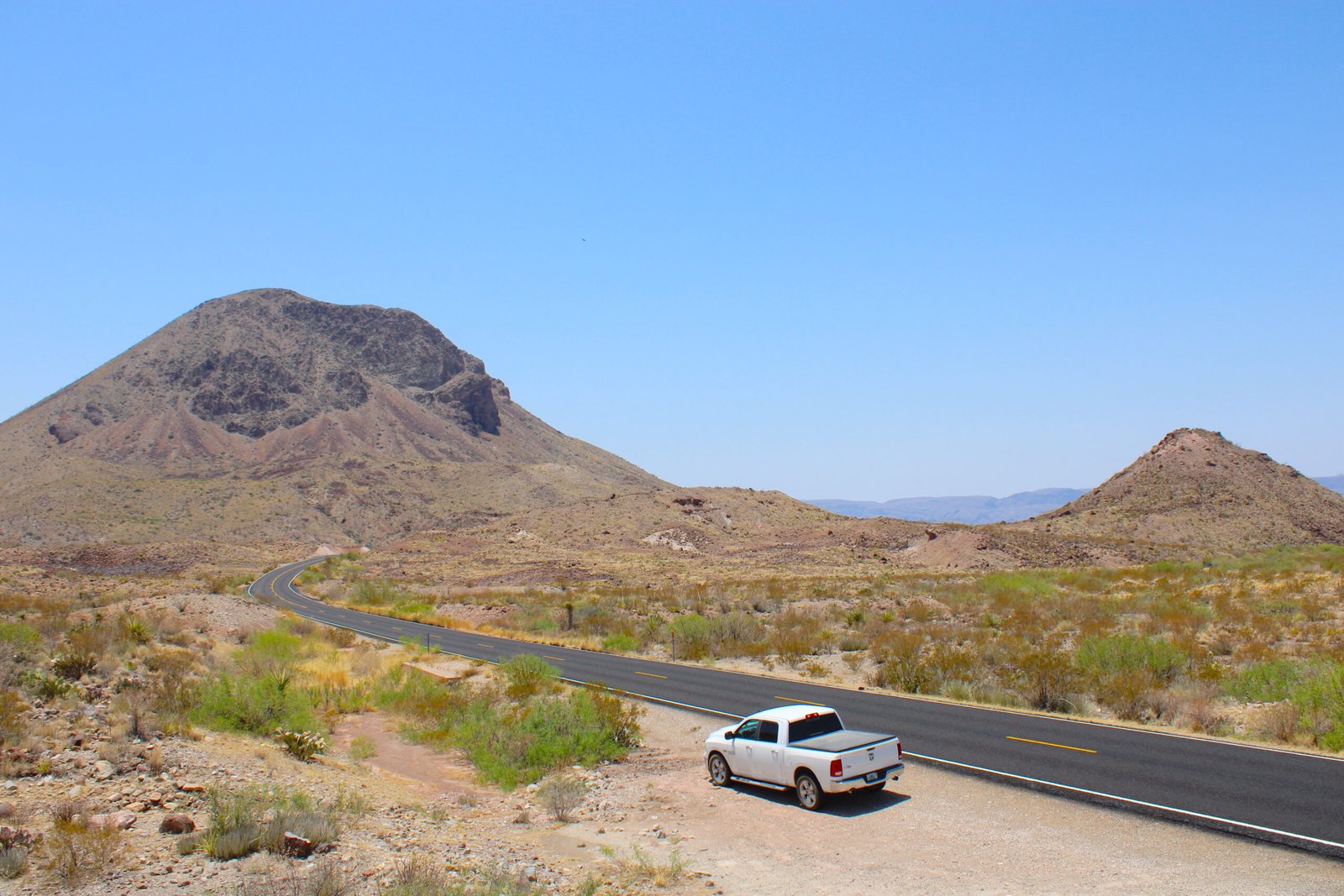
Option A: 7-Day West Texas Highlights (The Southern Loop)
Best for first-time visitors focused on Big Bend National Park, historic desert towns, and scenic mountain drives.
Day 1: Arrival & Terlingua Ghost Town — Check into your basecamp, explore historic ruins, and grab dinner on the porch at the Starlight Theatre.
Day 2: Big Bend National Park (Canyons & Scenic Drive) — Drive Ross Maxwell Scenic Drive and hike into Santa Elena Canyon.
Day 3: Big Bend National Park (Chisos Mountains) — Drive into the high-elevation Chisos Basin and hike the iconic Lost Mine Trail.
Day 4: Scenic FM 170 & Marfa — Drive River Road (FM 170) through Big Bend Ranch State Park, hike Closed Canyon, and head north to snap photos at Prada Marfa and the Giant movie mural.
Day 5: Marfa & Alpine Culture — Explore Marfa’s art galleries, then head to Alpine to hike up to the Hancock Hill desk and enjoy dinner downtown.
Day 6: Fort Davis & McDonald Observatory — Tour Fort Davis National Historic Site, explore Davis Mountains State Park, and attend an evening Star Party at McDonald Observatory.
Day 7: Morning Coffee & Departure — Grab coffee in Fort Davis or Alpine before starting your drive home.
Option B: 10-Day Ultimate West Texas & National Parks Loop
Best for travelers wanting to hit all 11 locations, two national parks, mountain peaks, sand dunes, and spring-fed pools.
Days 1–3: Big Bend National Park & Terlingua Basecamp — Spend three days exploring Santa Elena Canyon, Ross Maxwell Scenic Drive, Lost Mine Trail, and Terlingua Ghost Town.
Day 4: Lajitas & Big Bend Ranch State Park — Visit Lajitas Golf Resort to meet Mayor Clay Henry (the goat), then drive scenic FM 170 and hike Closed Canyon or Hoodoos Trail.
Day 5: Marfa & Alpine — Visit Prada Marfa, explore Alpine’s murals and local shops, and watch for the Marfa Lights at night.
Day 6: Fort Davis & Stargazing — Hike in Davis Mountains State Park, tour the historic fort, and stargaze at McDonald Observatory.
Day 7: Balmorhea State Park & Monahans Sandhills — Take a morning swim in Balmorhea’s spring-fed pool, then head to Monahans to go sand disk sledding on the dunes at sunset.
Days 8–9: Guadalupe Mountains National Park — Hike to the top of Texas at Guadalupe Peak (or explore Devil’s Hall), and visit McKittrick Canyon and the Salt Basin Dunes.
Day 10: Hueco Tanks State Park & Departure — Take a guided ancient pictograph tour at Hueco Tanks before departing from El Paso.
Recommended Places to Stay & Camping Basecamps
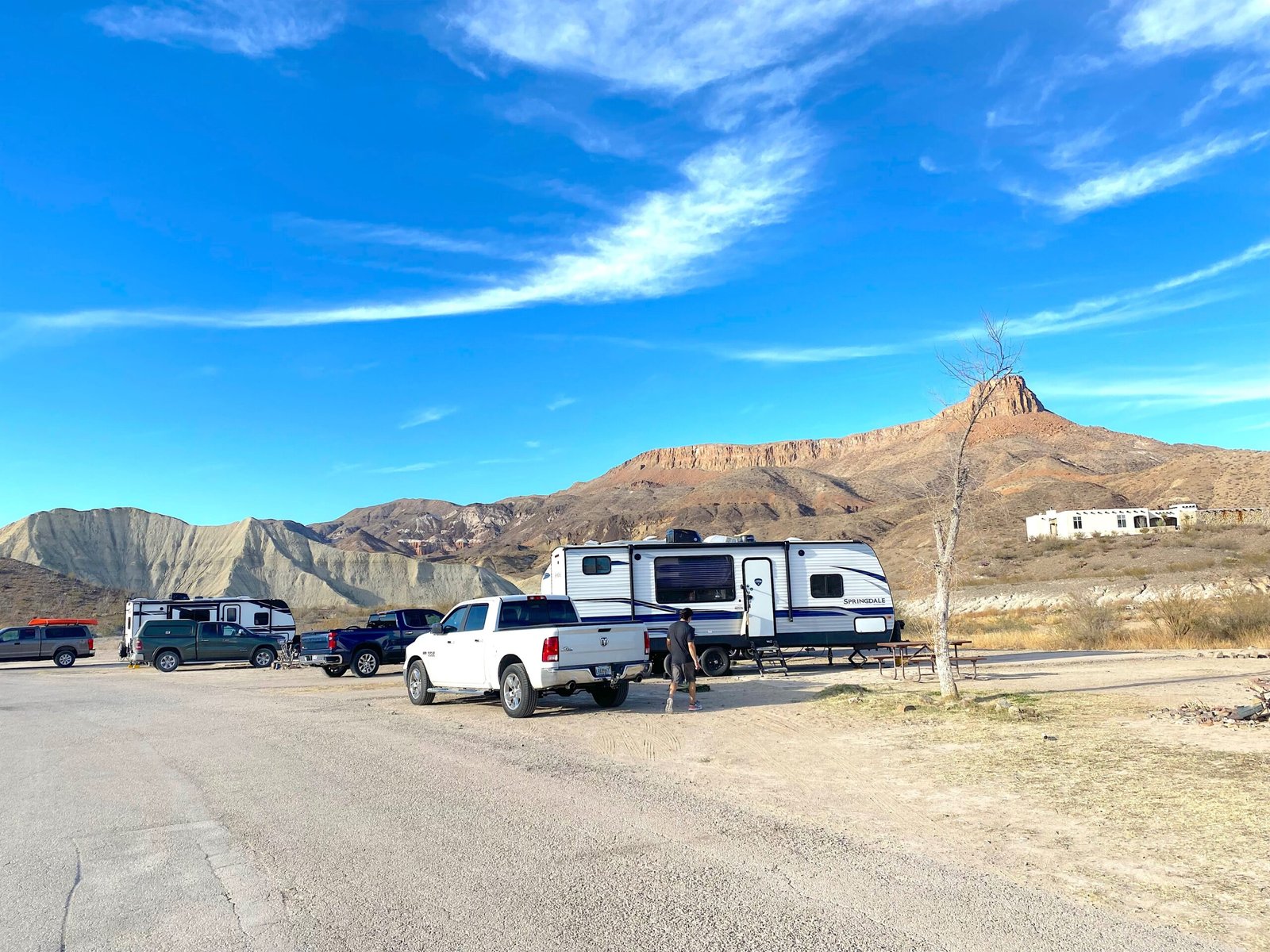
Because West Texas is vast and spread out across multiple mountain ranges and desert valleys, setting up basecamps in strategic locations is the secret to an efficient road trip. Here are the best places to stay and camp across the region:
Big Bend & Terlingua Area (Basecamp for Days 1–4)
- Lajitas Golf Resort (Resort & RV Park): A sprawling luxury resort offering traditional hotel rooms, upscale suites, private rental homes, and full-hookup RV sites. It features a championship golf course, a zip line, horseback riding, and the Agave Spa.
- Chisos Mountains Lodge (National Park Lodge): The only hotel-style lodging located inside Big Bend National Park. Offers rustic motel rooms and historic stone cottages tucked right in the Chisos Basin, making it an ideal basecamp for early morning mountain hikes.
- Basecamp Terlingua (Unique Glamping & Lodging): Famous for its quirky bubble rooms, restored mining ruins, luxury tipis, and vintage airstreams right on the edge of the ghost town.
- Chisos Basin Campground (National Park Camping): Perched at 5,400 feet in the heart of Big Bend National Park. Offers stunning tent and small RV/trailer sites surrounded by towering mountain peaks.
- Rio Grande Village RV Campground (Full Hookups): The only campground in Big Bend National Park with full RV utility hookups, located near the Rio Grande riverbanks.
Marfa, Alpine & Fort Davis Area (Basecamp for Days 5–6)
- El Cosmico (Marfa – Glamping & Camping): A bohemian nomadic hotel and campground offering retro trailers, yurts, teepees, and open space for tent camping.
- Hotel Paisano (Marfa – Historic Hotel): A gorgeous, historic 1930s hotel right in downtown Marfa where the cast and crew of the movie Giant stayed during filming.
- Indian Lodge (Davis Mountains State Park – Historic Hotel): A stunning, pueblo-style adobe hotel built by the Civilian Conservation Corps in the 1930s, featuring white-washed walls and private patios overlooking the mountains.
- Davis Mountains State Park Campground (RV & Tent Camping): Offers shaded RV hookups and primitive walk-in tent sites nestled right in the pine and oak-forested canyons.
Far West Texas & El Paso Area (Basecamp for Days 7–10)
- Monahans Sandhills State Park Campground: A serene, 25-site loop offering water and electric hookups (plus covered picnic shelters and hot showers) set right at the base of the golden sand dunes.
- Balmorhea State Park Campground: Quiet campsites with water and electricity located right next door to the world-famous spring-fed swimming pool.
- Pine Springs Campground (Guadalupe Mountains NP): The main campground inside Guadalupe Mountains National Park, offering tent and RV dry-camping sites right at the foot of the massive mountain escarpment.
- Hueco Tanks State Park Campground: Offers 20 well-maintained campsites with water and electric hookups nestled directly beneath the giant rock mounds. (Remember to reserve by phone up to 90 days in advance!)
West Texas Desert Packing Essentials & Gear Checklist
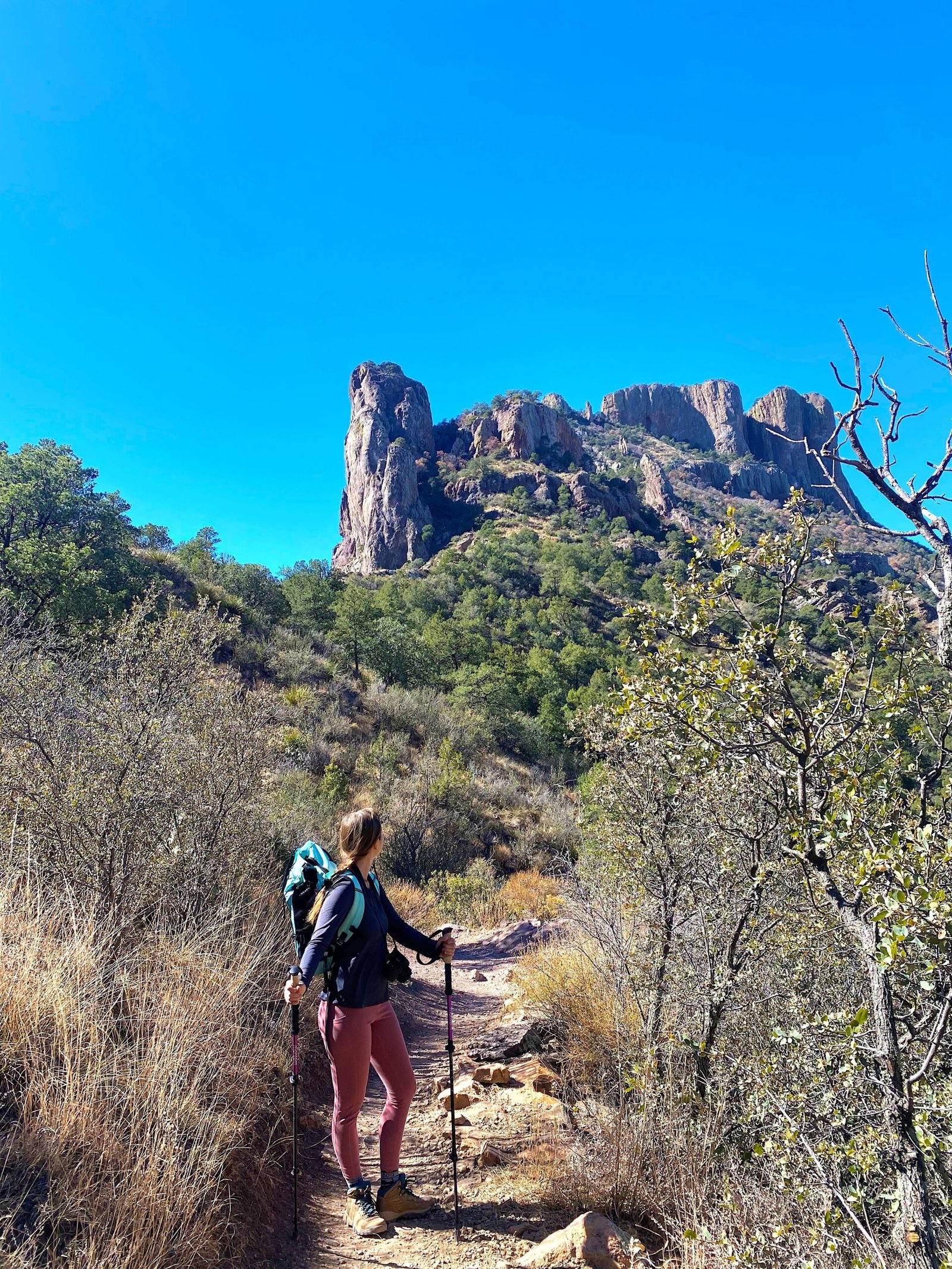
Packing for the Chihuahuan Desert requires a deliberate gear strategy. Sharp trailside vegetation, unyielding sun exposure, rapid temperature drops at night, and zero natural shade mean having field-tested gear makes all the difference between a punishing hike and an unforgettable adventure.
1. Sun & UV Protection
- UPF 50+ Sun Hoodie or Light Long-Sleeve Shirt: A breathable long-sleeve sun hoodie is my absolute non-negotiable for desert trails. I rely on the Soothfeel Women’s UPF 50+ Sun Protection Hoodie because it keeps me cool and completely protected from relentless UV rays without feeling heavy, and the thumbholes keep the backs of my hands covered.
- Wide-Brim Sun Hat & Polarized Sunglasses: 360-degree face shade is crucial out here. I’ve worn my FURTALK Wide Brim Sun Hat for over five years of desert travel to keep the heat off my face and neck, and I pair it with SOJOS Polarized Sunglasses to cut through the intense glare off white rock and open highways.
- Mineral Sunscreen & SPF Chapstick: Desert elevation and dry winds amplify sun and moisture loss fast. I pack Earth Mama Mineral Sunscreen SPF 40 because it offers reliable, broad-spectrum non-nano zinc protection that holds up through long, sweaty trail miles without irritating my skin, and I always keep a tube of SPF chapstick on hand to keep my lips from cracking in the arid climate.
2. Hydration & Trail Electrolytes
- Hydration Bladder & Insulated Water Bottles: Plan on carrying at least 1 gallon of water per person per day (or 2 to 3 liters in your daypack for half-day hikes). I bring along my Simple Modern Insulated Water Bottles on every outing—there is nothing better than taking a sip of ice-cold water during a hot afternoon descent.
- Electrolyte Powder Packets: Rapid sweating in dry desert heat drains essential minerals quickly. I always mix LMNT Sugar-Free Electrolyte Packets into my water to keep my energy stable, beat muscle cramps, and prevent post-hike heat headaches.
3. Footwear & Trail Stability
- Breathable Hiking Boots or Trail Runners: Rugged volcanic rock, cacti, and loose scree will destroy weak shoes. I swear by my Columbia Newton Ridge Plus Hiking Boots, which have logged over five years of tough mountain and desert trails while keeping my feet cushioned, supportive, and blister-free.
- Trekking Poles: Steep, gravelly descents and loose sand dunes take a toll on your knees. I use my Montem Ultra Strong Trekking Poles for extra stability whenever I’m tackling loose scree or descending steep trails like Santa Elena Canyon or Guadalupe Peak.
4. Backcountry Logistics, Health & Night Essentials
- Offline GPS App & Paper Maps: Cell coverage completely disappears across large swaths of West Texas and inside the national parks. Download offline maps via AllTrails or Gaia GPS beforehand, and keep a physical park map in your pack just in case.
- Saline Nasal Spray: The high-desert air is remarkably dry, and the sudden shift in humidity can quickly irritate your nasal passages and lead to nosebleeds. I’ve learned to always pack a small bottle of saline nose spray to keep my sinuses hydrated and comfortable throughout the trip.
- Headlamp or Flashlight (with Red Light Mode): High-desert darkness sets in fast once the sun drops behind the mountains. A headlamp with a red-light setting is essential for preserving your night vision while navigating campgrounds or enjoying world-class stargazing.
- Pliers or a Small Comb: A classic desert insider tip—keep a small comb or multi-tool pliers in your first-aid kit. It gives you quick, safe leverage to pluck out stray cactus spines or jumping cholla burrs if you accidentally brush against trailside brush.
Frequently Asked Questions About Visiting West Texas
How many days do you need for a West Texas road trip?
You need at least 5 to 7 days to explore the core highlights of West Texas, such as Big Bend National Park, Terlingua, Marfa, and Fort Davis. However, a 10-day itinerary is ideal if you want to complete the full loop to include Guadalupe Mountains National Park, Balmorhea State Park, Monahans Sandhills, and Hueco Tanks.
What is the closest major airport to Big Bend National Park?
Midland International Air and Space Port (MAF) in Midland/Odessa is the closest commercial airport, located about 3.5 hours north of Big Bend National Park. El Paso International Airport (ELP) is another popular option, located about 4.5 hours northwest, making it a great starting point if your route includes Hueco Tanks or Guadalupe Mountains.
Do I need a 4WD vehicle to drive around West Texas?
For almost all major attractions—including Ross Maxwell Scenic Drive, River Road (FM 170), Marfa, Balmorhea, and Guadalupe Mountains—a standard 2WD passenger car or crossover is completely fine. High-clearance or 4WD vehicles are only necessary if you plan to tackle unpaved backcountry dirt roads inside Big Bend National Park or Big Bend Ranch State Park.
Is cell service reliable in West Texas?
No, cell coverage across West Texas is notoriously spotty. Service drops frequently along remote highway stretches and is virtually non-existent inside Big Bend National Park and Big Bend Ranch State Park. Always download offline Google Maps and trail maps (such as AllTrails) prior to departing major towns.
Are the Chisos Mountains Lodge and Basin area open in Big Bend National Park?
Yes, the Chisos Basin—including the Chisos Mountains Lodge, Chisos Basin Campground, visitor center, and nearby trailheads like Lost Mine Trail—remains open and accessible. While a major multi-year reconstruction project was previously announced, the full construction closure was canceled, meaning visitors can continue accessing the Basin and its facilities as normal.
Can you bring pets to West Texas national and state parks?
Pets are allowed in most state parks (like Davis Mountains, Balmorhea, and Monahans) on a leash, but options are extremely limited in national parks. In Big Bend National Park and Guadalupe Mountains National Park, pets are strictly limited to paved roads, drive-in campgrounds, and vehicle parking areas—they are not permitted on dirt hiking trails or in the backcountry.
Do I need a passport when traveling through West Texas?
While you don’t need a passport to drive through West Texas, bringing one is highly recommended. Border Patrol checkpoints are active along all major highways leading north out of the border region (such as US-385, TX-118, and US-67). Additionally, a valid passport is required if you want to legally cross the Rio Grande into the village of Boquillas del Carmen, Mexico, inside Big Bend National Park.
Is West Texas safe for a solo road trip?
Yes, West Texas is generally very safe, welcoming, and has low crime rates. However, the biggest safety risk is the remote environment. Always carry extra water, monitor fuel levels, inform someone of your daily travel plans, and download offline maps before driving through dead zones.
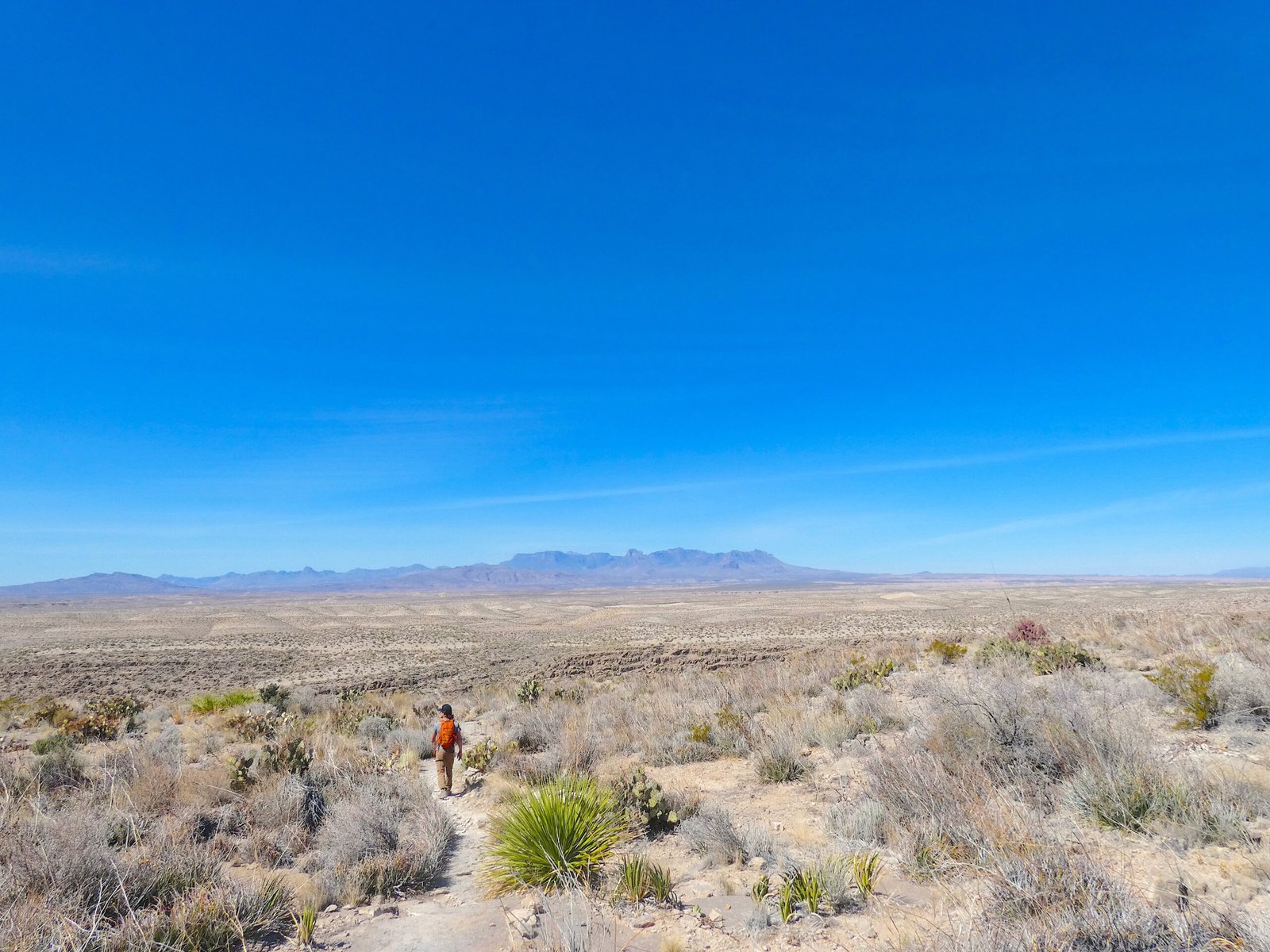
West Texas is a region unlike anywhere else in North America—a vast, rugged landscape where towering mountain peaks meet dramatic desert canyons, ancient volcanic rock, and star-filled night skies. Whether you have a single week to hike Santa Elena Canyon and stargaze in Fort Davis, or 10 full days to explore all two national parks, high-desert art hubs, and natural spring oases, this corner of the Lone Star State is an unforgettable adventure.
Careful planning, carrying plenty of water, and having offline maps ready will ensure your road trip through the Trans-Pecos desert goes smoothly. Pack your boots, double-check your camping reservations, and get ready to experience the wide-open magic of West Texas!
Helpful Links & Essential Travel Resources
Before hitting the road, use these official resources to double-check park conditions, book camping permits, and reserve tour tickets:
Official National & State Park Portals
- Big Bend National Park (NPS): Official alerts, trail maps, entrance fee passes, and backcountry permit guidelines.National Park Service History Electronic Library & Archive
- Guadalupe Mountains National Park (NPS): Weather advisories, Guadalupe Peak summit guides, and trail conditions.True North Map Company
- Texas Parks & Wildlife Reservation Portal: Reserve campsites and day passes for Big Bend Ranch, Davis Mountains, Balmorhea, Monahans Sandhills, and Hueco Tanks state parks.
Booking & Logistics
- Recreation.gov: The official booking site for Chisos Basin, Rio Grande Village, and Pine Springs campgrounds.True North Map Company
- McDonald Observatory Visitor Programs: Reserve required advance tickets for Evening Star Parties and solar viewing tours.
- Visit Big Bend Regional Tourism: Gateway community guides, outfitters, and local event calendars for Terlingua, Lajitas, Alpine, and Marathon.