
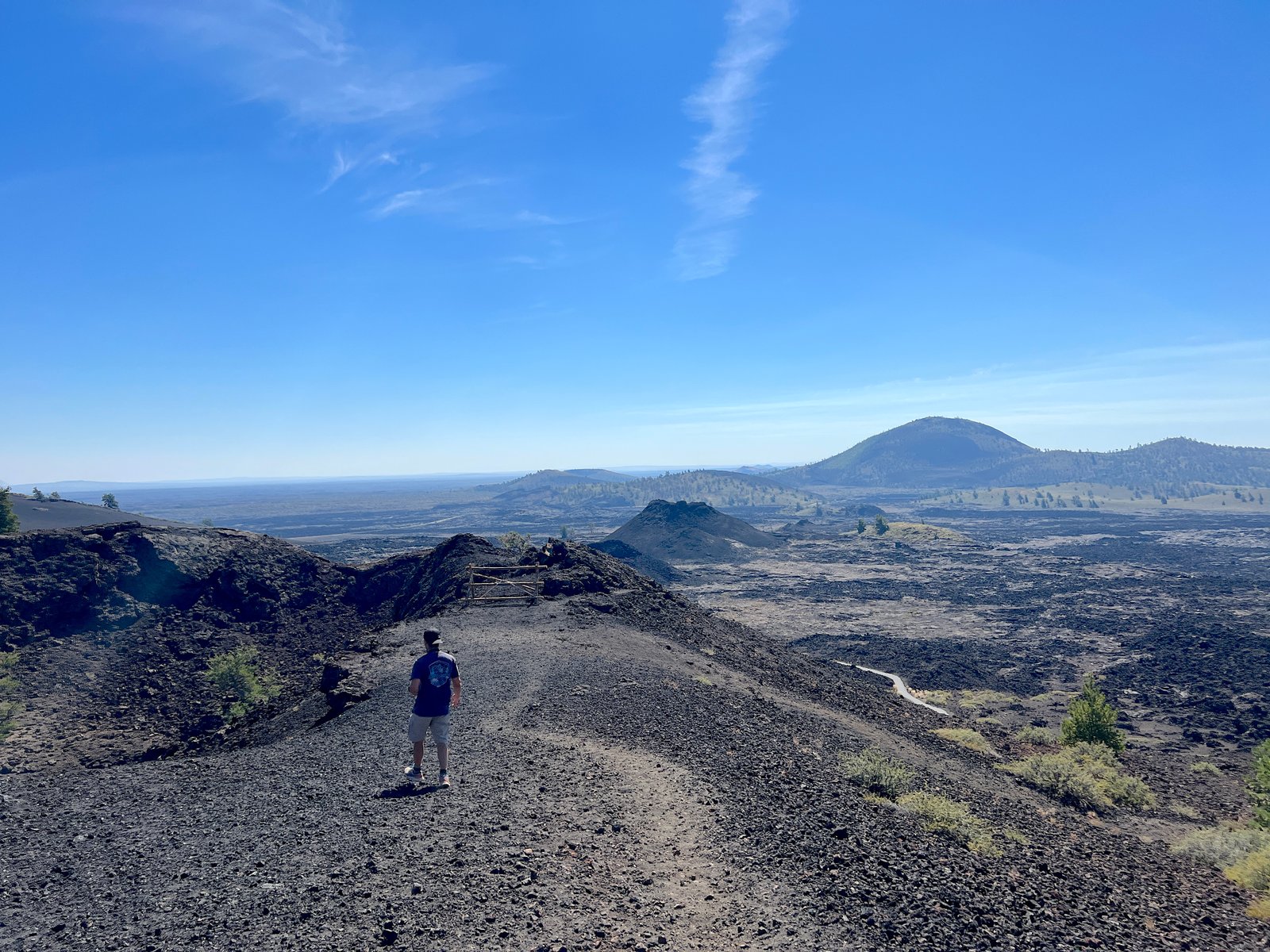
Walking across fields of black molten rock, climbing towering cinder cones, and exploring subterranean lava tube caves feels like stepping onto another planet—or, quite literally, the surface of the moon.
After leaving Salmon, Idaho, we continued our journey south toward Utah, looking for one last epic stop before crossing the state line. That’s when we discovered Craters of the Moon National Monument & Preserve—a hidden gem in central Idaho that we had surprisingly never heard of. The second we saw photos of its vast lava fields and dormant volcanic craters, it immediately jumped to the top of our Idaho bucket list.
We spent a sunny summer day exploring the park’s highlights along the 7-Mile Loop Road, and it easily became one of the most surreal landscapes we’ve ever seen. Whether you have just one day on a road trip or a long weekend to spare, this complete Craters of the Moon 1-day itinerary covers everything you need to know to plan the perfect visit and see the very best of the park in a single day.
This post contains affiliate links, so we may earn a small commission when you make a purchase through links on our site at no additional cost to you.
At a Glance: What’s in This Guide
Planning your trip to Idaho’s most surreal volcanic landscape? Here is a quick breakdown of everything covered in this ultimate 1-day itinerary:
- About the Park & Practical Basics: Fast facts, $20 entrance fees, pet rules on hot basalt, and the free permit required for exploring lava tubes.
- How to Get There & Nearby Airports: Driving times from Boise, Jackson, and Salt Lake City, plus closest regional flight hubs and GPS navigation warnings.
- Best Time to Visit: A seasonal breakdown detailing peak wildflower blooms in June, summer stargazing, and winter snowshoeing.
- Where to Stay: Camping inside Lava Flow Campground versus hotels in Arco and the Picabo Angler RV Park in Carey.
- Park Amenities & Logistics: Where to find restrooms, potable water, cell service coverage, and food options (or lack thereof!).
- The Step-by-Step 1-Day Itinerary: A complete, timed roadmap along the 7-Mile Loop Road covering Inferno Cone, Spatter Cones, Indian Tunnel cave, and more.
- Essential Packing List & Insider Tips: Trail safety on sharp lava, gear recommendations, and high-desert survival essentials.
- Frequently Asked Questions (FAQ): Quick, clear answers on park history, NASA astronaut training, and visiting rules.
About Craters of the Moon National Monument
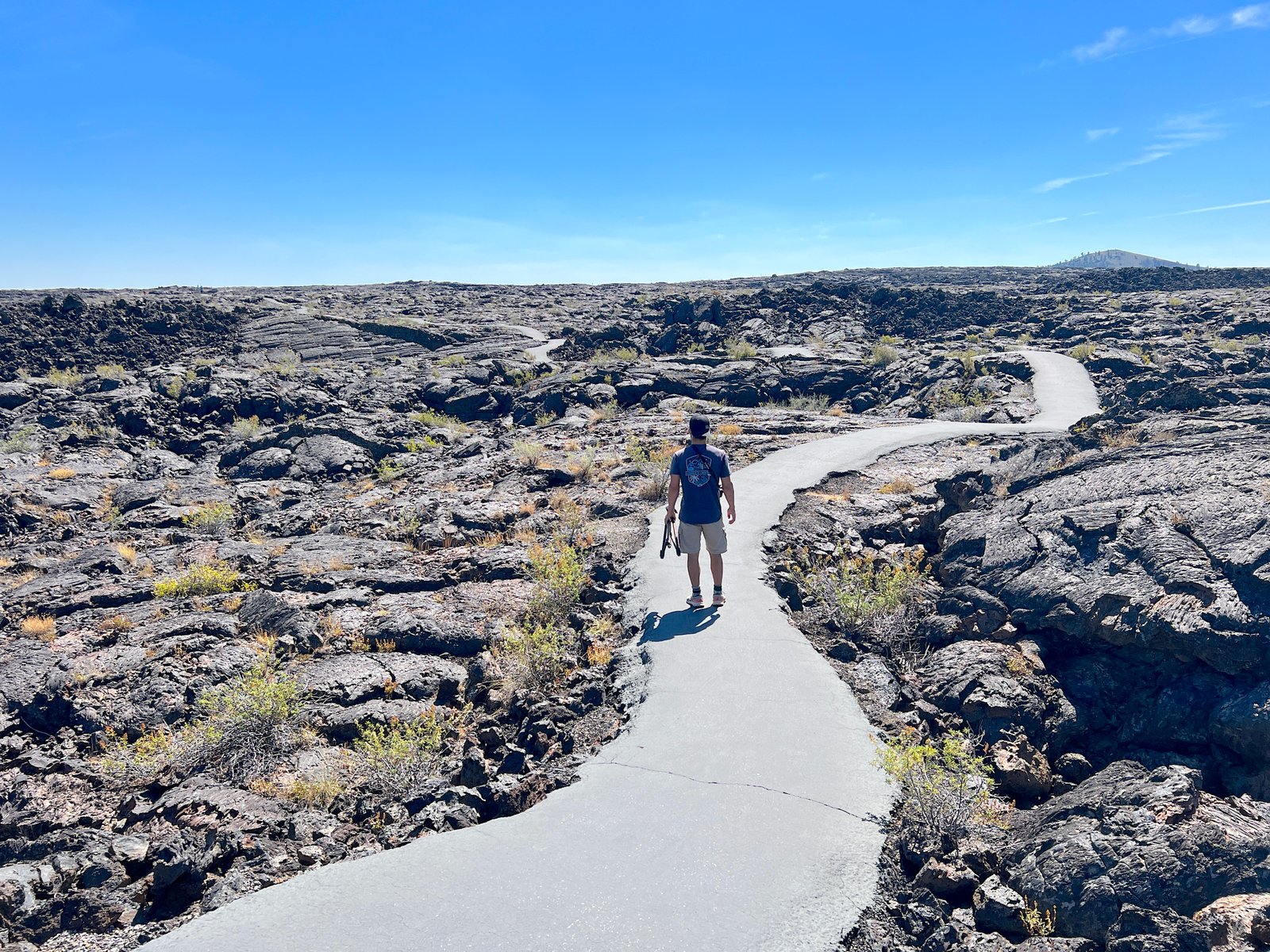
Established in 1924, Craters of the Moon National Monument & Preserve encompasses over 750,000 acres of vast, ocean-like lava fields across South Central Idaho. The park sits along The Great Rift—a 52-mile-long crack in the Earth’s crust where molten basalt spewed as recently as 2,000 years ago. Today, it features a surreal landscape of cinder cones, underground lava tube caves, spatter cones, and lava-charred trees.
Fun Fact: The landscape is so strikingly lunar that in 1969, NASA astronauts trained here to study volcanic geology before heading to the Moon on Apollo missions! The park is also a designated International Dark Sky Park, offering some of the clearest night-sky viewing in the country.
Need-to-Know Basics & Entrance Fees
- Location: South Central Idaho (along US-20/26/93, roughly 18 miles west of Arco, ID)
- Entrance Fee: $20 per vehicle (valid for 7 consecutive days). Standard America the Beautiful Passes are accepted.
- Payment Note: The entrance station and campground accept credit/debit cards only (no cash).
- Free Cave Permits Required: If you plan to explore the lava tubes, you must stop by the Visitor Center first for a quick, free Cave Permit (used to protect local bat populations from White-Nose Syndrome).
- Free Winter Entry: When the 7-Mile Loop Road closes to vehicle traffic for snow (typically November through April), there is no fee to enter the park for cross-country skiing or snowshoeing.
Pet Policy (Important for Dog Owners)
- Where Pets Are Allowed: Dogs are permitted on paved park roads, parking pullouts, and inside the Lava Flow Campground, but must remain on a leash at all times.
- Where Pets Are Prohibited: Pets are not allowed on any hiking trails or inside the lava tube caves.
- Summer Paw Warning: Because the park is made entirely of dark basalt, the pavement and rock surfaces absorb intense heat during summer months. Protect your dog’s paws from burns by keeping walks brief on hot days.
How to Get to Craters of the Moon National Monument
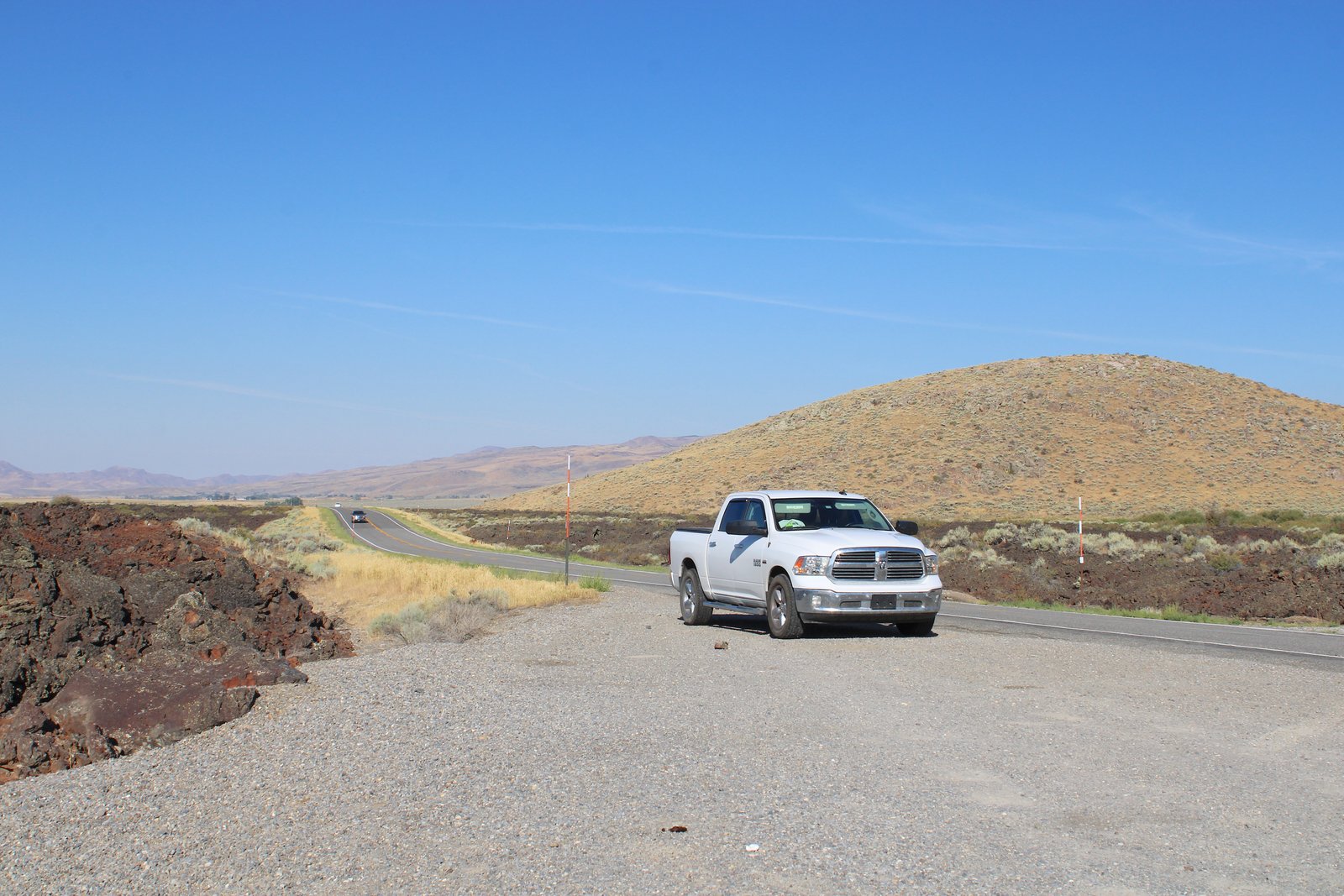
Craters of the Moon National Monument & Preserve is located in South Central Idaho along US Highway 20/26/93, sitting right between the small gateway towns of Carey (24 miles southwest) and Arco (18 miles northeast).
Its central position in the Snake River Plain makes it an easy road trip stop from major hubs in Idaho, Utah, and Wyoming.
Driving Times & Distances
- Arco, ID: 18 miles | 20 minutes
- Idaho Falls, ID: 84 miles | 1.5 hours
- Twin Falls, ID: 90 miles | 1.5 hours
- Sun Valley / Ketchum, ID: 65 miles | 1.25 hours
- Boise, ID: 170 miles | 2.5 hours
- Grand Teton National Park (Jackson, WY): 180 miles | 3 hours
- Yellowstone National Park (West Yellowstone, MT): 194 miles | 3 hours
- Salt Lake City, UT: 230 miles | 3.5 hours
GPS Navigation Tip: Always make sure your route stays on paved highways (US-20/26/93). Some GPS apps try to shortcut visitors through unpaved gravel backcountry roads across the monument.
Nearest Airports
If you’re flying in and renting a car for an Idaho road trip, the closest airports include:
- Friedman Memorial Airport (SUN) – Hailey/Sun Valley, ID (~60 miles)
- Idaho Falls Regional Airport (IDA) – Idaho Falls, ID (~84 miles)
- Magic Valley Regional Airport (TWF) – Twin Falls, ID (~90 miles)
- Boise Airport (BOI) – Boise, ID (~170 miles) (Best for major commercial airline availability)
Best Time to Visit Craters of the Moon National Monument
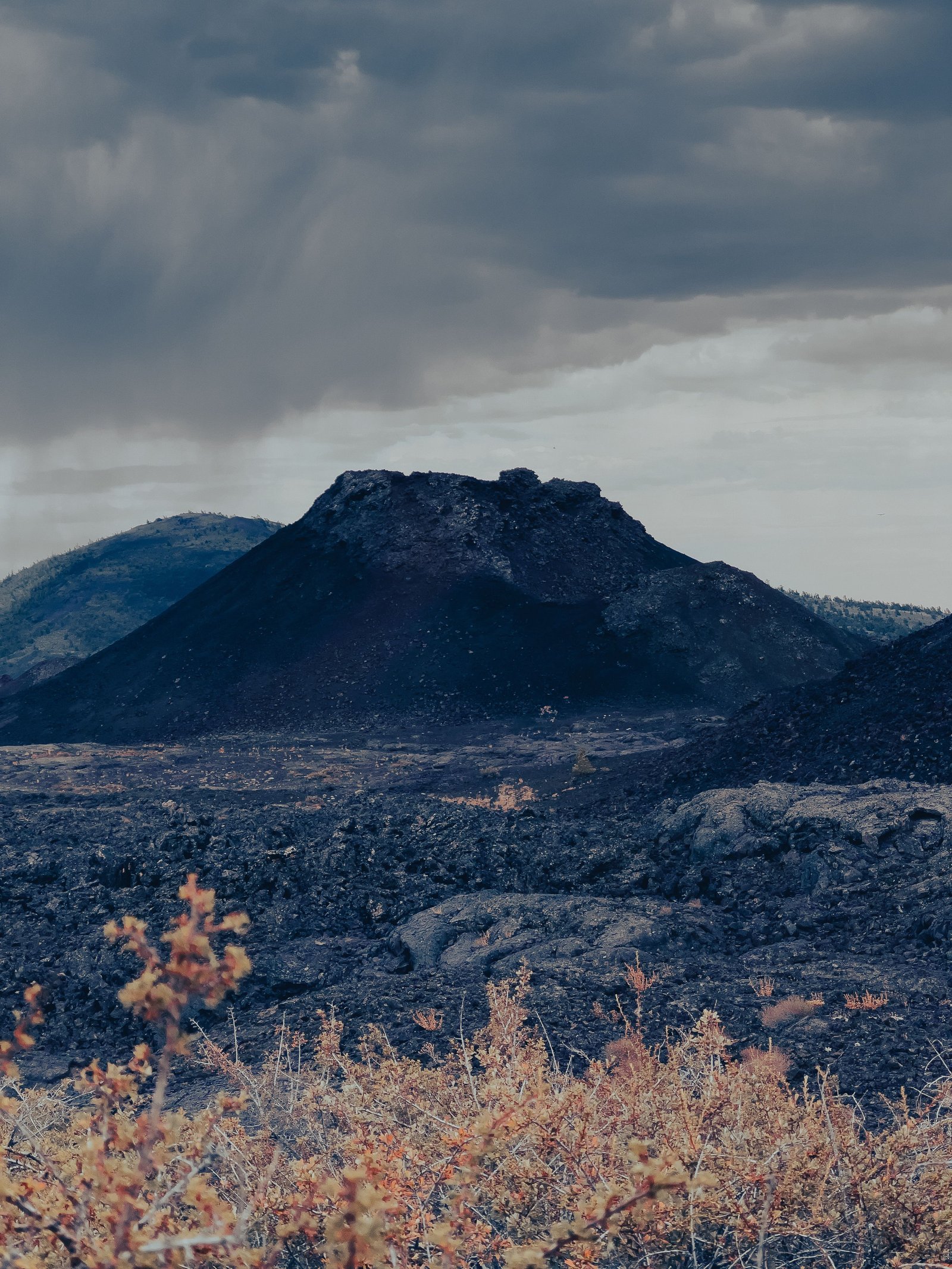
Because Craters of the Moon sits in a high-desert environment at nearly 6,000 feet in elevation, seasonal weather swings are dramatic. Choosing the right time to visit depends heavily on whether you want warm hiking weather, peak wildflower displays, or low crowds.
In short: Late May through June and September through October offer the best combination of comfortable temperatures, open roads, and incredible scenery.
Spring (April – June): Wildflowers & Mild Days
Spring arrives late in the high desert, but it is easily one of the most rewarding times to explore.
April to May: The 7-Mile Loop Road typically reopens to vehicle traffic in mid-to-late April as winter snow melts away. Expect brisk temperatures, lingering snowdrifts, and occasional spring storms. Some lava tubes may remain closed temporarily due to hazardous cave ice.
June (Peak Wildflowers): Mid-to-late June is arguably the single best time of year to visit. Tiny dwarf monkeyflowers and bitterroots bloom directly out of the jet-black cinder slopes, creating a striking purple-and-black contrast across the landscape. Daytime temperatures are comfortably mild for hiking.
Summer (July – August): Peak Season & Stargazing
Summer brings long, sunny days and peak tourist visitation. However, the extreme heat requires a bit of tactical planning.
- Scorching Basalt Heat: While air temperatures frequently top 80°F to 90°F, the dark basalt rock absorbs intense sunlight—sending ground-level temperatures soaring up to 170°F!
- Beat the Heat Strategy: Hike exposed trails (like climbing Inferno Cone or walking the Spatter Cones) early in the morning. Save the cool, underground interiors of the lava tube caves for the heat of the afternoon.
- Clear Dark Skies: Summer nights offer crystal-clear conditions for stargazing in this designated International Dark Sky Park.
Fall (September – October): Quiet Trails & Ideal Weather
If you want to avoid summer crowds and scorching heat, fall is a local favorite.
- Cooler Hiking Temps: Daytime temperatures drop into the crisp 60s and 70s, making long hikes across the exposed lava fields far more enjoyable.
- Fewer Crowds: Summer road-trippers are gone, meaning you can often have entire trail networks, cinder cones, and lava tubes completely to yourself.
- Fall Colors Nearby: While the lava flow itself is mostly evergreen limber pines and basalt, the golden aspens in the surrounding Pioneer and Smoky Mountains make for a gorgeous drive into the park.
Winter (November – March): Cross-Country Skiing & Snowshoeing
Winter transforms Craters of the Moon into a stark, starkly beautiful landscape of jet-black rock and white snow.
- Road Closure: The 7-Mile Loop Road closes to motorized vehicles between mid-November and mid-April.
- Snowshoeing & Skiing: The park grooms the snow-covered Loop Road into a 4-to-7-mile trail for cross-country skiing and snowshoeing.
- Free Snowshoe Rentals: When the Visitor Center is open in winter, rangers offer free snowshoe loans for visitors looking to trek out onto the winter trail!
Where to Stay Near Craters of the Moon National Monument
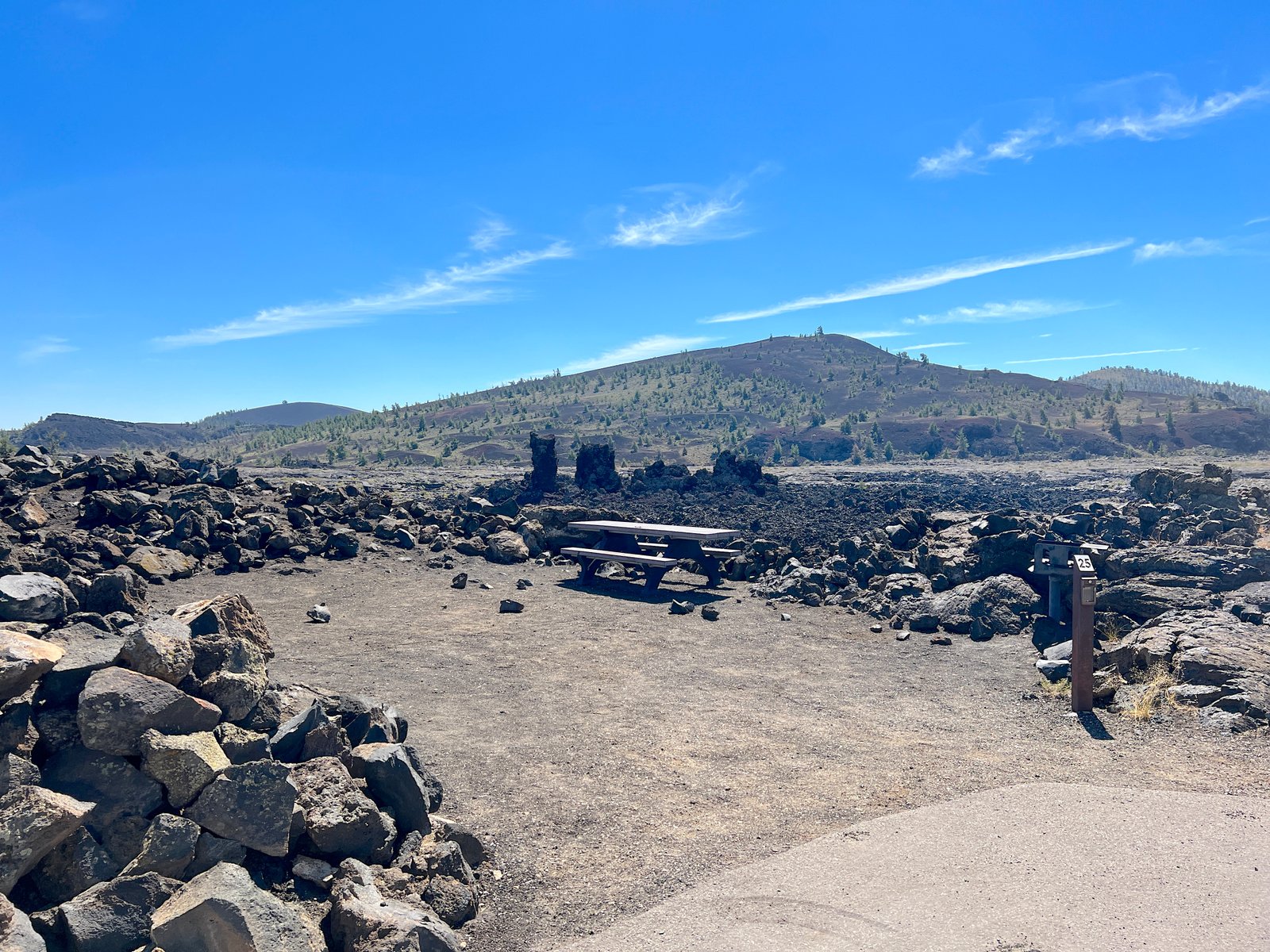
Whether you want to camp directly on top of ancient lava flows under a starry night sky or stay in a comfortable motel nearby, there are several convenient accommodation options close to the park.
Because Craters of the Moon is located in a remote stretch of southern Idaho, accommodations fill up quickly during peak summer months, so it pays to plan ahead!
Camping Inside the Park: Lava Flow Campground
If you want the ultimate Craters of the Moon experience, camp right inside the monument at Lava Flow Campground. The 42 campsites are nestled directly into black basalt formations, offering incredible natural windbreaks and front-row seats to the park’s Dark Sky night displays.
- Reservations: First-come, first-served only (no advance reservations).
- Season: Open May through November (weather permitting).
- Cost: $15 per night during summer (May–October) when water is turned on; $8 per night during shoulder months (April/November). Payment is card-only at the automated entrance station.
- RV & Trailer Details: Sites accommodate tents, camper vans, and RVs up to 40 feet (some pull-through sites available).However, there are no hookups or dump stations inside the park.
- Amenities: Seasonal flush toilets, drinking water spigots, picnic tables, and charcoal grills. Note: Wood campfires are strictly prohibited throughout the entire monument due to fire risk.
Gateway Hotels & Motels (Closest Towns)
If you prefer standard amenities like air conditioning, hot showers, and Wi-Fi, the small towns flanking the park offer cozy local lodging.
1. Arco, Idaho (~18 miles / 20-minute drive northeast)
Arco is the closest gateway town and the most popular basecamp for visitors. Fun fact: Arco was the first city in the world to be powered entirely by atomic energy!
- D&K Motel & Lost River Motel: Classic, budget-friendly roadside motels right along Main Street with clean rooms, free parking, and pet-friendly options.Orbitz
- Arco Inn: Another clean, reliable motel option with quick access to local diners and gas stations.
- Mountain View RV Park: Located right in Arco, offering full hookup RV sites, hot showers, and laundry facilities for road-trippers.
2. Carey, Idaho (~24 miles / 25-minute drive southwest)
Sitting on the opposite side of the park along US-20, this area is ideal if you are arriving from Sun Valley, Boise, or driving east.
- Picabo Angler RV Park (Picabo): Located just west of Carey right along US-20, this is a fantastic option for RVers and road-trippers. It features water and electrical hook-ups, back-in and pull-through sites, restrooms, showers, and a dump station. It sits right across the street from the famous Picabo Angler fly shop, grill, and country store.
- Local Vacation Rentals & Cabins: The Carey and Silver Creek areas offer several private farmhouses and cabins ideal for families or small groups looking for a quiet countryside stay.
Larger Hubs (Best for Chain Hotels)
If you are looking for brand-name hotels (like Marriott, Hilton, or Holiday Inn) or flying into regional airports, consider staying in one of these larger cities on your way in:
- Sun Valley / Ketchum (65 miles west): Ideal if you want upscale mountain resort lodging, boutique dining, and scenic mountain views.
- Idaho Falls (84 miles east): The best option if you’re flying into IDA airport or driving west from Grand Teton/Yellowstone. Offers dozens of modern hotel chains along the Snake River.
- Twin Falls (90 miles south): Great if you are driving up from Utah or visiting Shoshone Falls on your road trip itinerary.
Park Facilities & Amenities
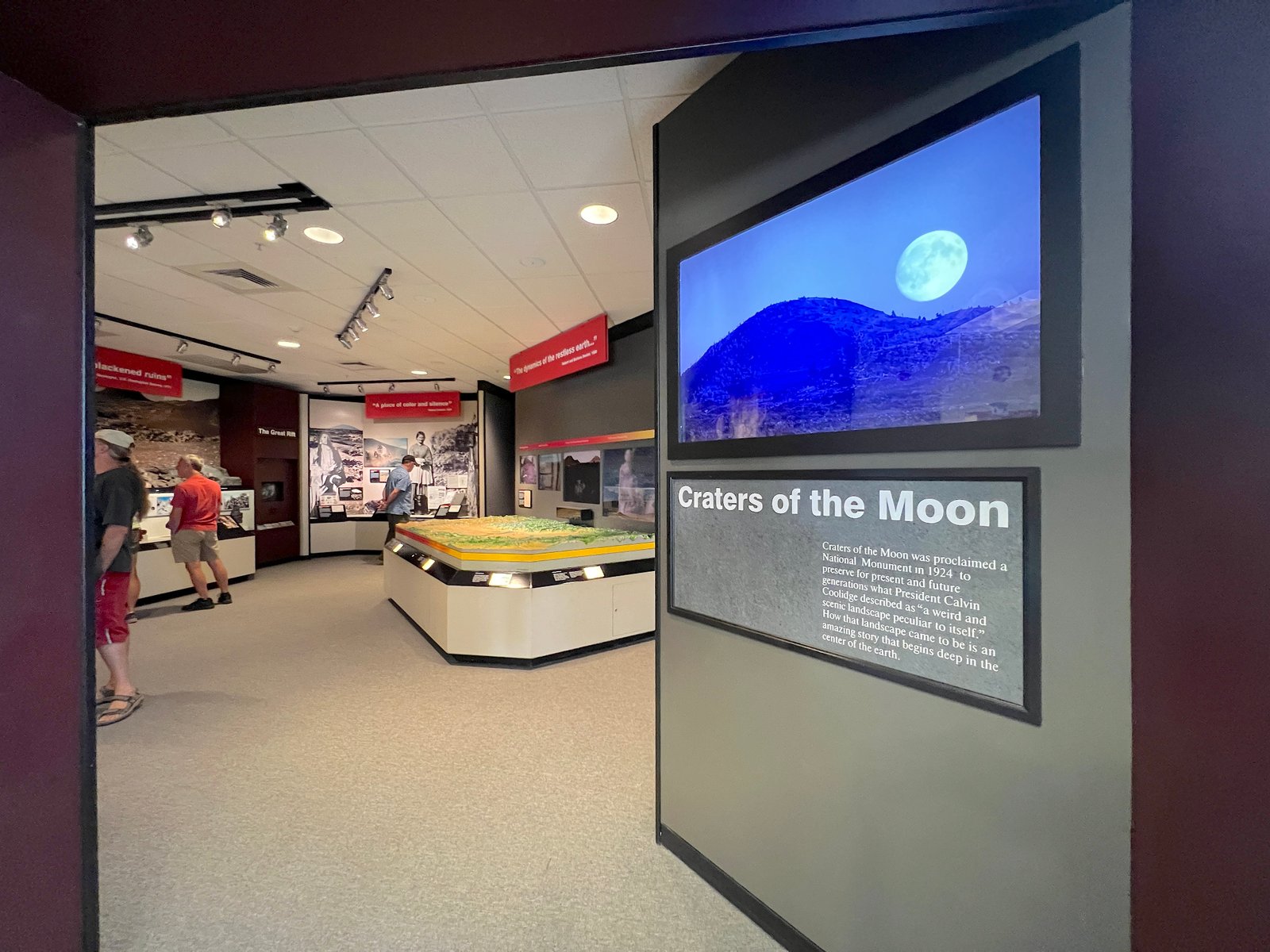
Because Craters of the Moon is located in a remote stretch of the high desert, in-park amenities are limited. Knowing what services are available—and what you need to bring yourself—will save you from unexpected surprises.
- Robert Limbert Visitor Center: Located right at the park entrance, this is your primary resource hub. It features interactive geology exhibits, a park film, a bookstore/gift shop, passport stamp stations, and drinking water fill stations.
- Restrooms: Flush toilets are located at the Visitor Center and inside Lava Flow Campground (seasonal). Vault toilets (pit toilets) are located at major trailheads along the 7-Mile Loop Road.
- Food & Dining: There are no restaurants, cafes, or grocery stores inside the park. The Visitor Center has basic vending machines, but you must pack in all snacks, meals, and picnic supplies. The nearest gas stations and restaurants are in Arco (18 miles east).
- Drinking Water: Potable water spigots are available at the Visitor Center and the Lava Flow Campground during late spring, summer, and early fall. Water is turned off in the winter. Bring reusable water bottles or large jugs to stay hydrated in the dry desert heat.
- Cell Service & Wi-Fi: Cellular service is extremely spotty throughout the park. You may get weak signals near the Visitor Center or high points like Inferno Cone, but do not rely on cellular data for navigation. Download offline Google Maps or trail maps before arriving.
- Gas & EV Charging: There are no gas stations or EV chargers inside the monument. Fill up your tank in Arco or Carey before entering.
The Ultimate 1-Day Craters of the Moon Itinerary
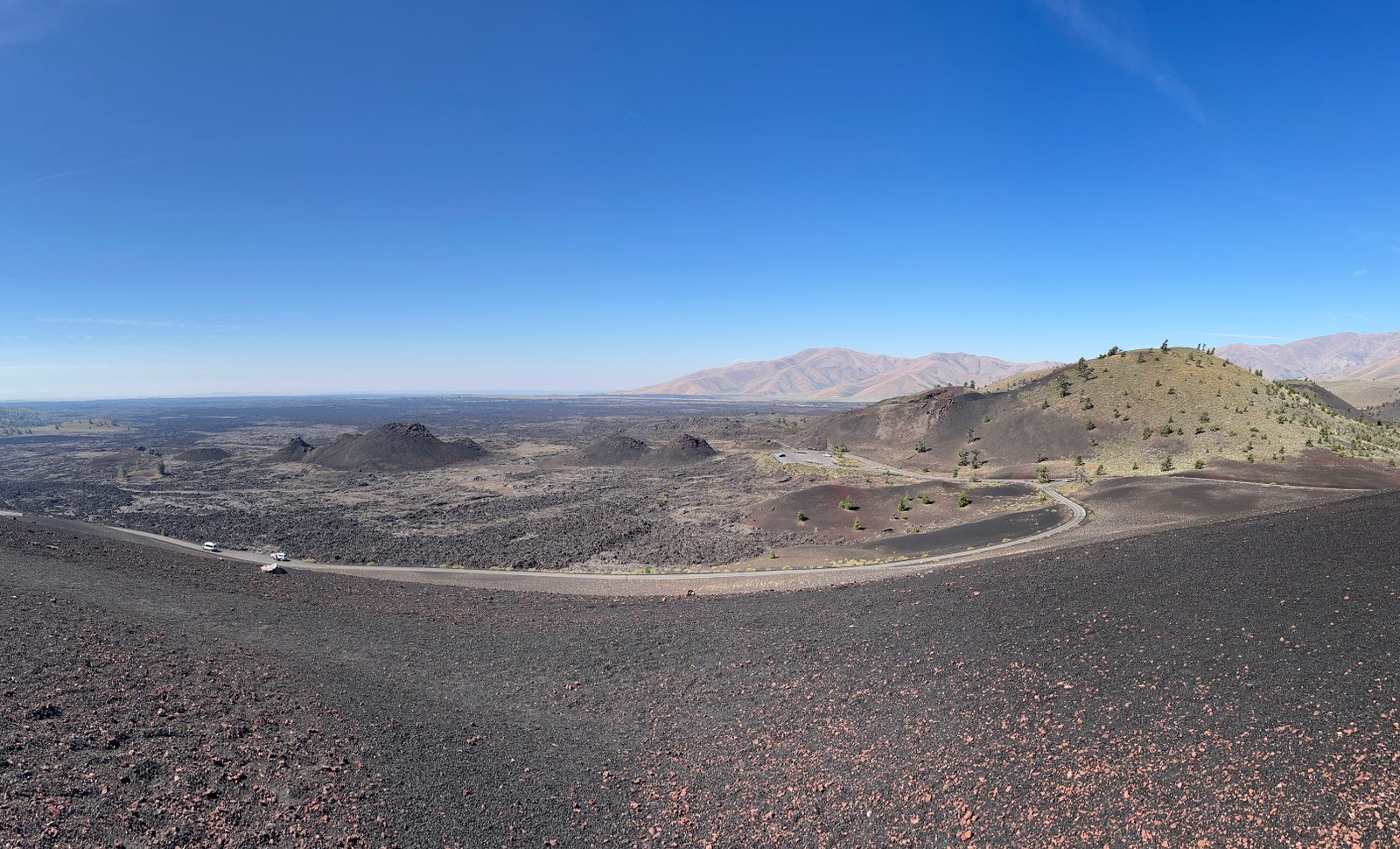
While Craters of the Moon National Monument & Preserve Click covers hundreds of thousands of acres, the vast majority of the park’s top attractions are concentrated along the 7-Mile Loop Road. This paved driving loop allows you to experience cinder cones, volcanic craters, and underground lava tubes all in a single action-packed day.
Here is the exact step-by-step route to make the most of your day:
Stop 1: Grab Your Cave Permit at the Visitor Center
- Suggested Time: 8:30 AM – 9:15 AM
- Distance / Drive Time: Park Entrance
Start your morning at the Robert Limbert Visitor Center right as you enter the park. This is where you can pay your entrance fee or scan your America the Beautiful pass.
- Free Cave Permit: If you plan to explore the lava tube caves later in the day, you must obtain a free cave permit from the front desk ranger. They will ask a quick screening question to ensure you aren’t wearing clothing or shoes previously worn in other caves (to protect local bats from White-Nose Syndrome).
- Exhibits & Park Film: Take 20 minutes to browse the interactive geology exhibits and watch the short introductory film to understand how the Great Rift was formed.
Stop 2: Walk Among Fresh Basalt on the North Crater Flow Trail
- Suggested Time: 9:30 AM – 10:15 AM
- Distance / Drive Time: 0.5 miles from Visitor Center (1 minute)
After leaving the Visitor Center, make your first stop at the North Crater Flow Trail. This short loop provides an up-close introduction to the two main types of lava found in the park: jagged ‘a’ā lava and smooth, rope-like pāhoehoe lava.
- Trail Distance: 0.3-mile loop (paved and fully accessible).
- Highlights: Walk right beside monoliths—giant blocks of crater wall that were snapped off and carried away by rivers of molten rock.
Stop 3: Wander Through the Ancient Formations at Devil’s Orchard
- Suggested Time: 10:30 AM – 11:15 AM
- Distance / Drive Time: 1 mile from North Crater Flow (2 minutes)
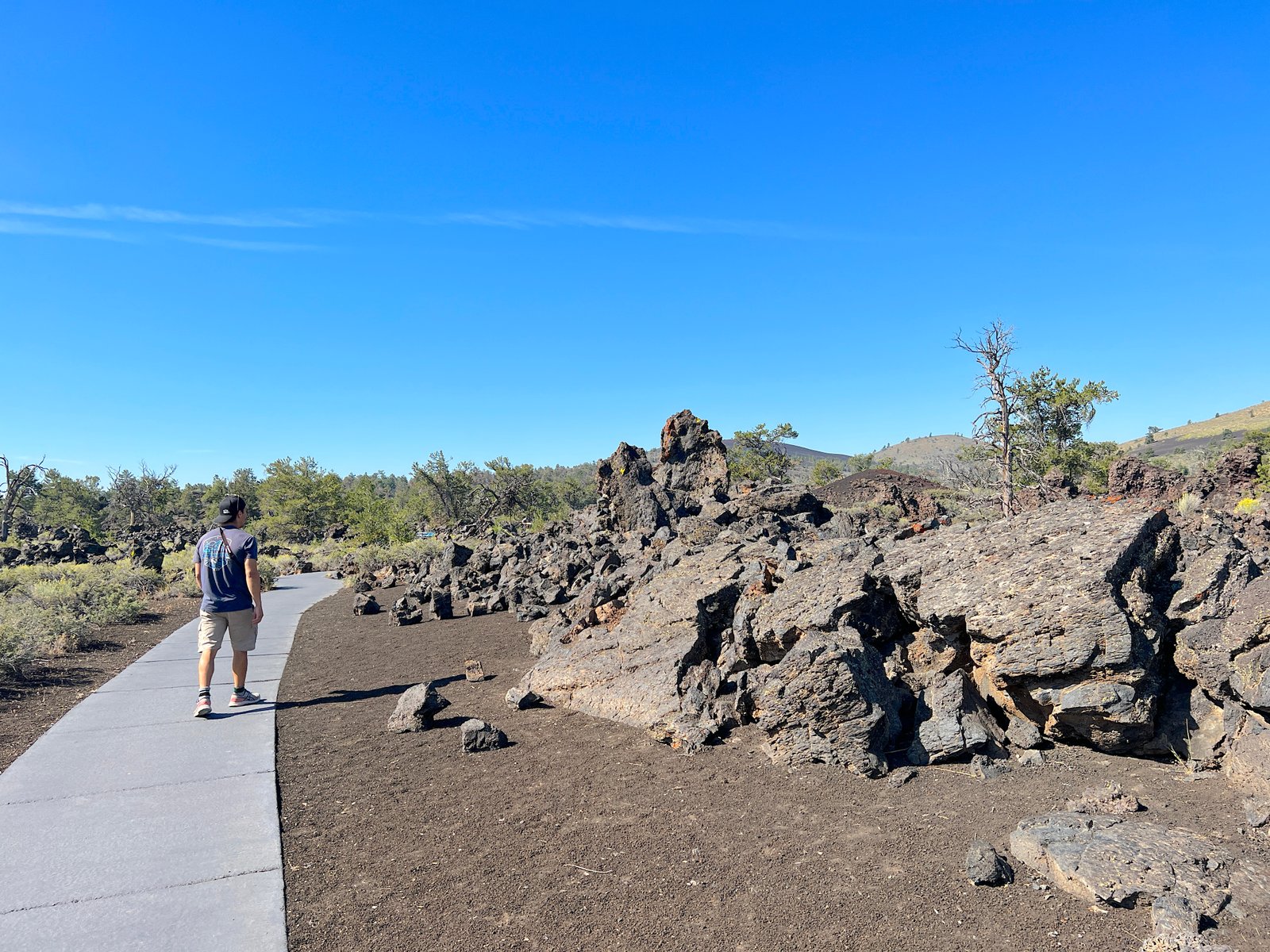
Next, head down the loop road to the Devils Orchard Nature National Recreation Trail. This area features an eerie landscape of cinders dotted with ancient, gnarled limber pine trees and unusual lava fragments.
- Trail Distance: 0.5-mile paved loop trail.
- Geology Insights: Interpretive signs along the path explain how air pollution and climate change impact these delicate high-desert ecosystems.
Stop 4: Summit Inferno Cone for Panoramic Views
- Suggested Time: 11:30 AM – 12:15 PM
- Distance / Drive Time: 1 mile from Devil’s Orchard (2 minutes)
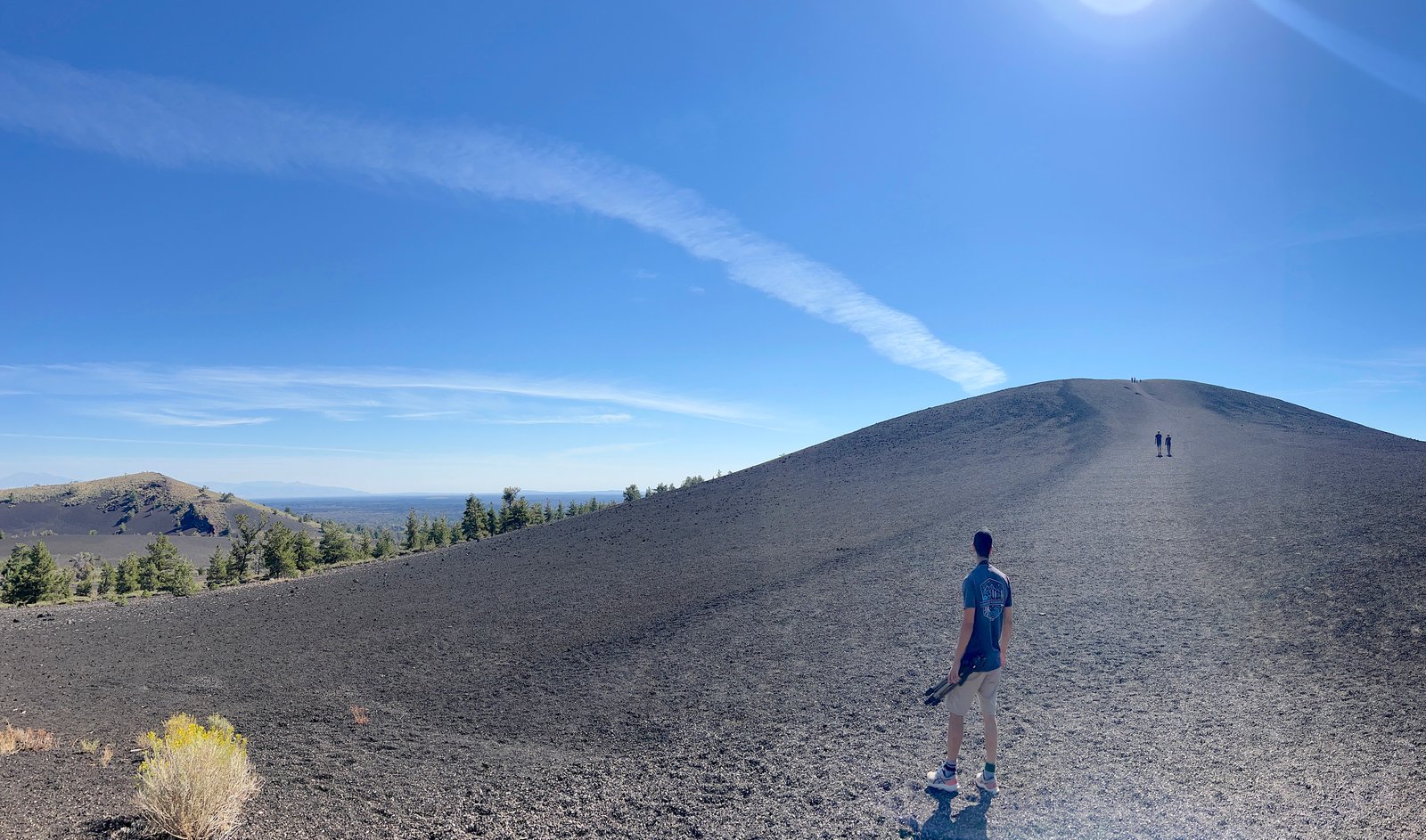
Climbing Inferno Cone is a quintessential Craters of the Moon experience. This massive black cinder cone rises abruptly above the surrounding lava plains.
- Trail Distance: 0.4 miles round-trip (steep incline on loose cinder gravel).
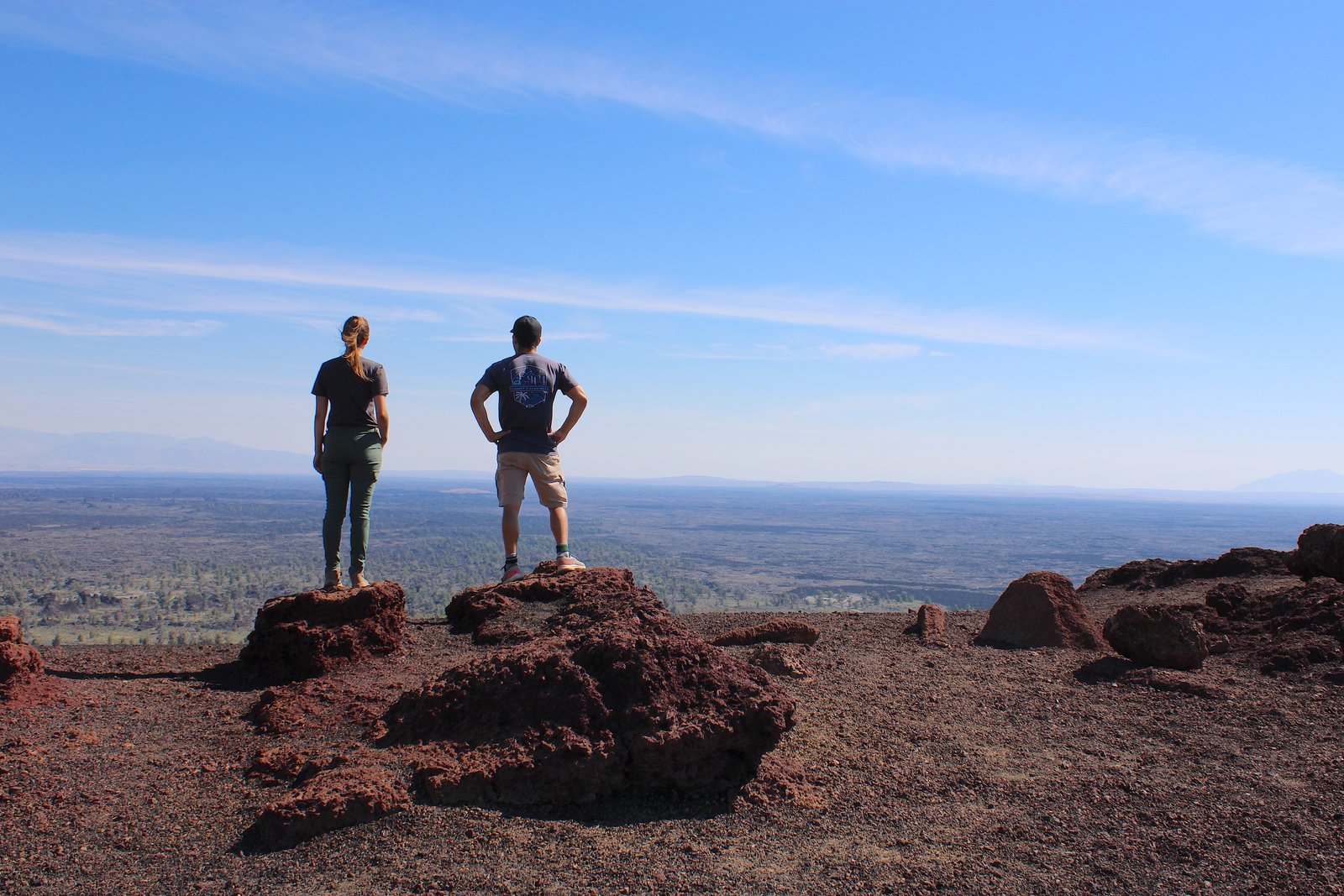
- 360-Degree Views: Once you reach the top, you’ll be rewarded with panoramic views stretching across the Great Rift, the Snake River Plain, and the distant Pioneer Mountains.
- Wind Tip: It gets extremely windy at the summit, so hold onto your hats and sunglasses!
Stop 5: Picnic Lunch at the Big Craters / Spatter Cones Area
- Suggested Time: 12:30 PM – 1:30 PM
- Location: Spatter Cones Parking Area
Take a break from hiking to refuel. Pull into the Spatter Cones parking lot, which offers covered picnic tables, vault restrooms, and trash facilities.
Reminder: There are no food vendors inside the park, so bring a packed lunch, snacks, and plenty of water in a cooler!
Stop 6: Peer Down Into the Active Vents at Spatter Cones & Big Craters
- Suggested Time: 1:30 PM – 2:15 PM
- Distance / Drive Time: Directly adjacent to the picnic area
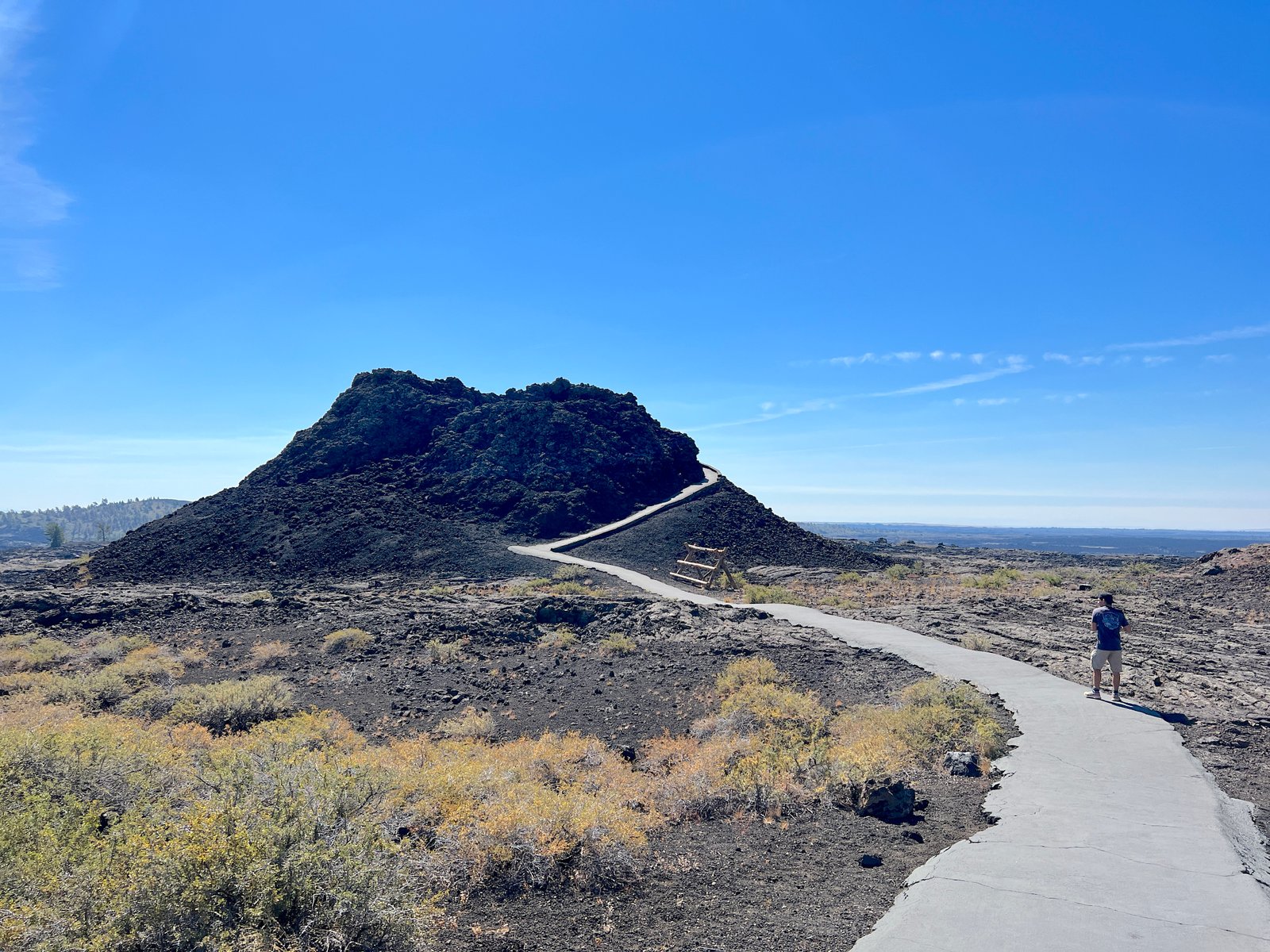
After lunch, take a short walk to the Spatter Cones. These miniature volcano towers were created when past gas emissions spattered molten lava blobs into steep-sided mounds.
- Snow in Summer: Walk up the short, paved ramp to peer directly down into the throat of a spatter cone. You can often see snow frozen deep inside the vent, even in mid-summer!
- Big Craters Extension: If you want a bit more hiking, continue up the steep trail past Spatter Cones to overlook the massive series of fissures known as Big Craters.
Stop 7: Descend Underground Along the Caves Trail
- Suggested Time: 2:30 PM – 4:30 PM
- Distance / Drive Time: 1.5 miles from Spatter Cones (4 minutes)
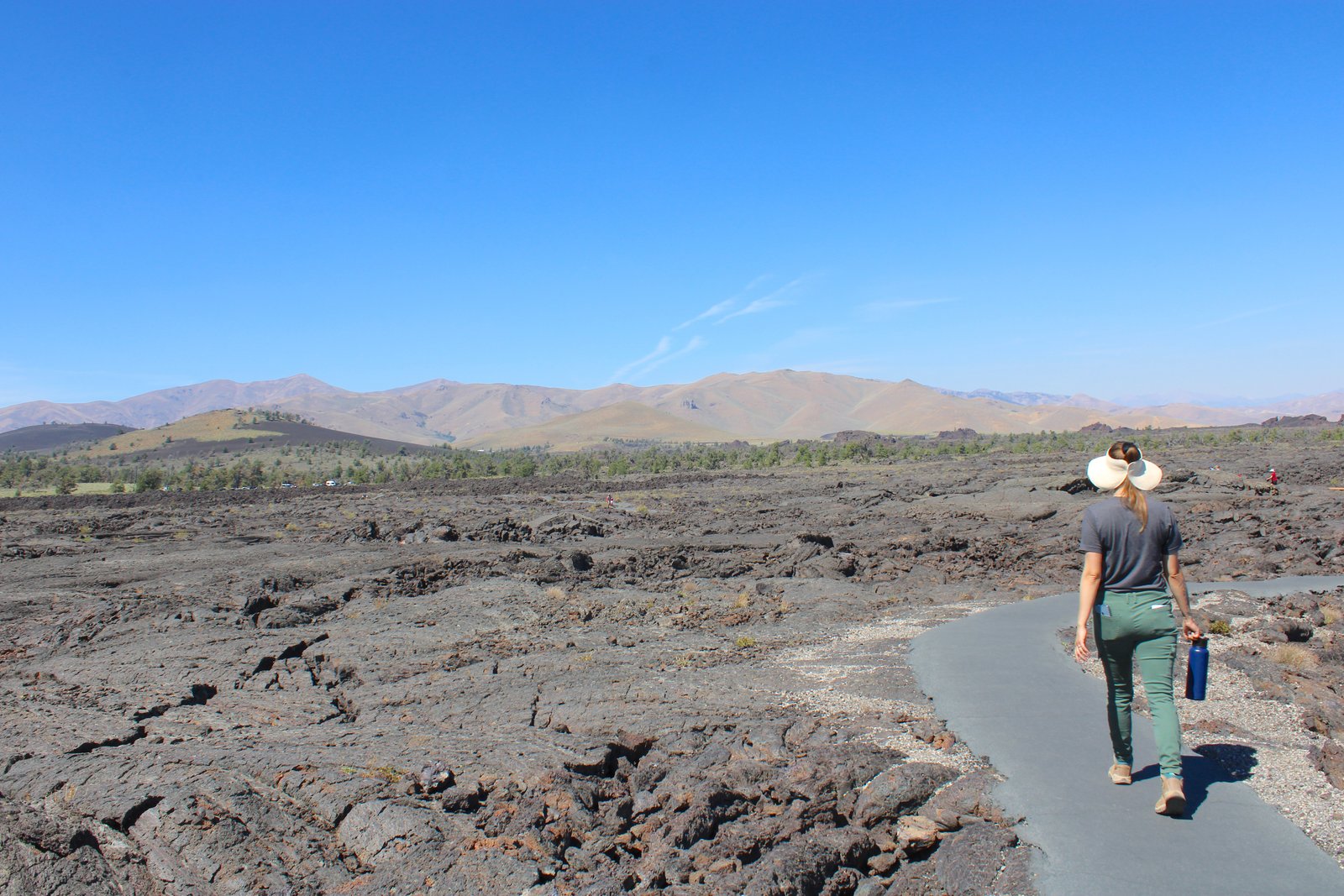
Save the subterranean caves for the hottest part of the afternoon! Drive to the end of the spur road to reach the Caves Trailhead, where a paved trail leads across an open lava field to the park’s accessible lava tube caves.
- Trail Distance: 1.6 miles round-trip.
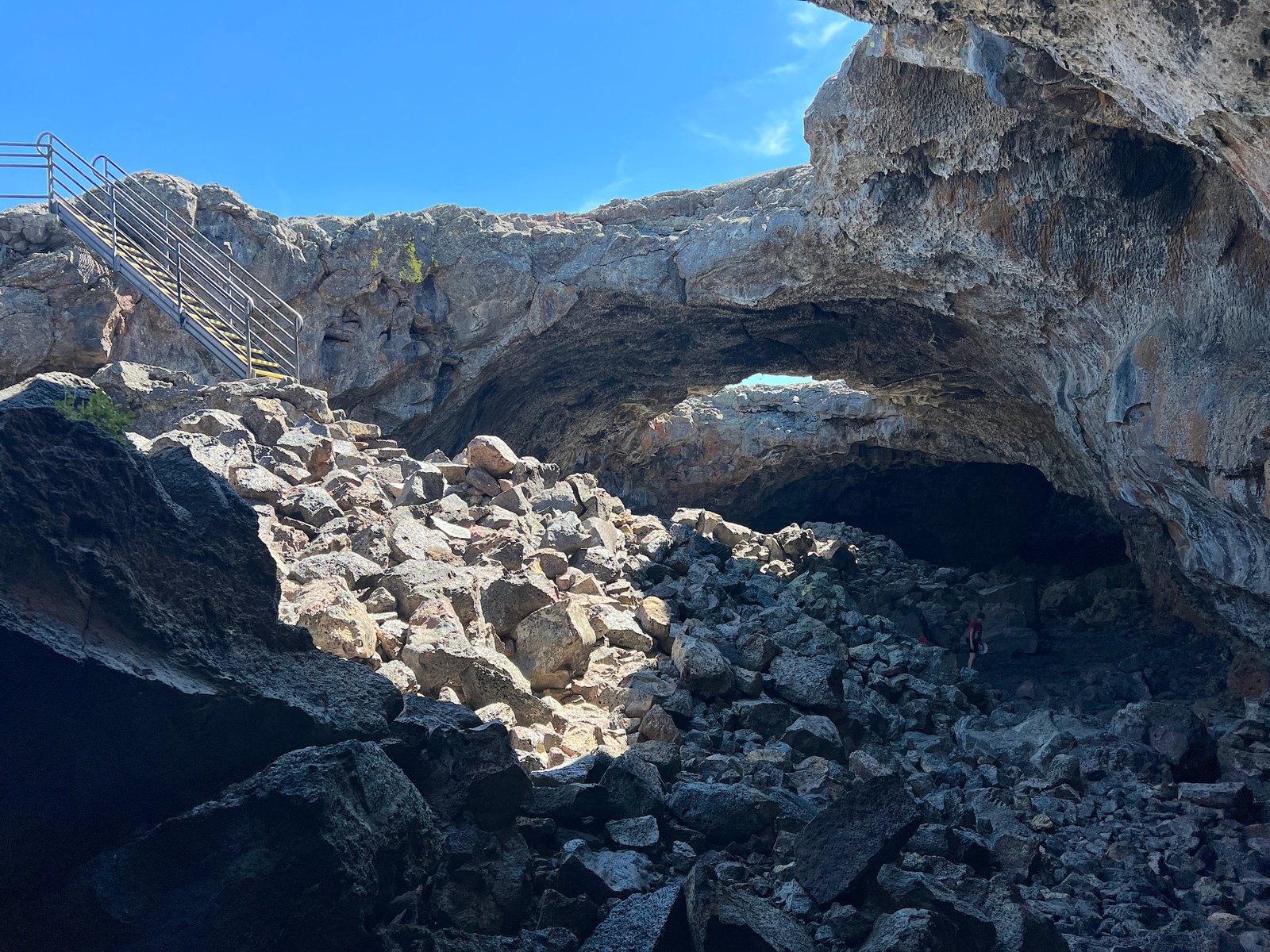
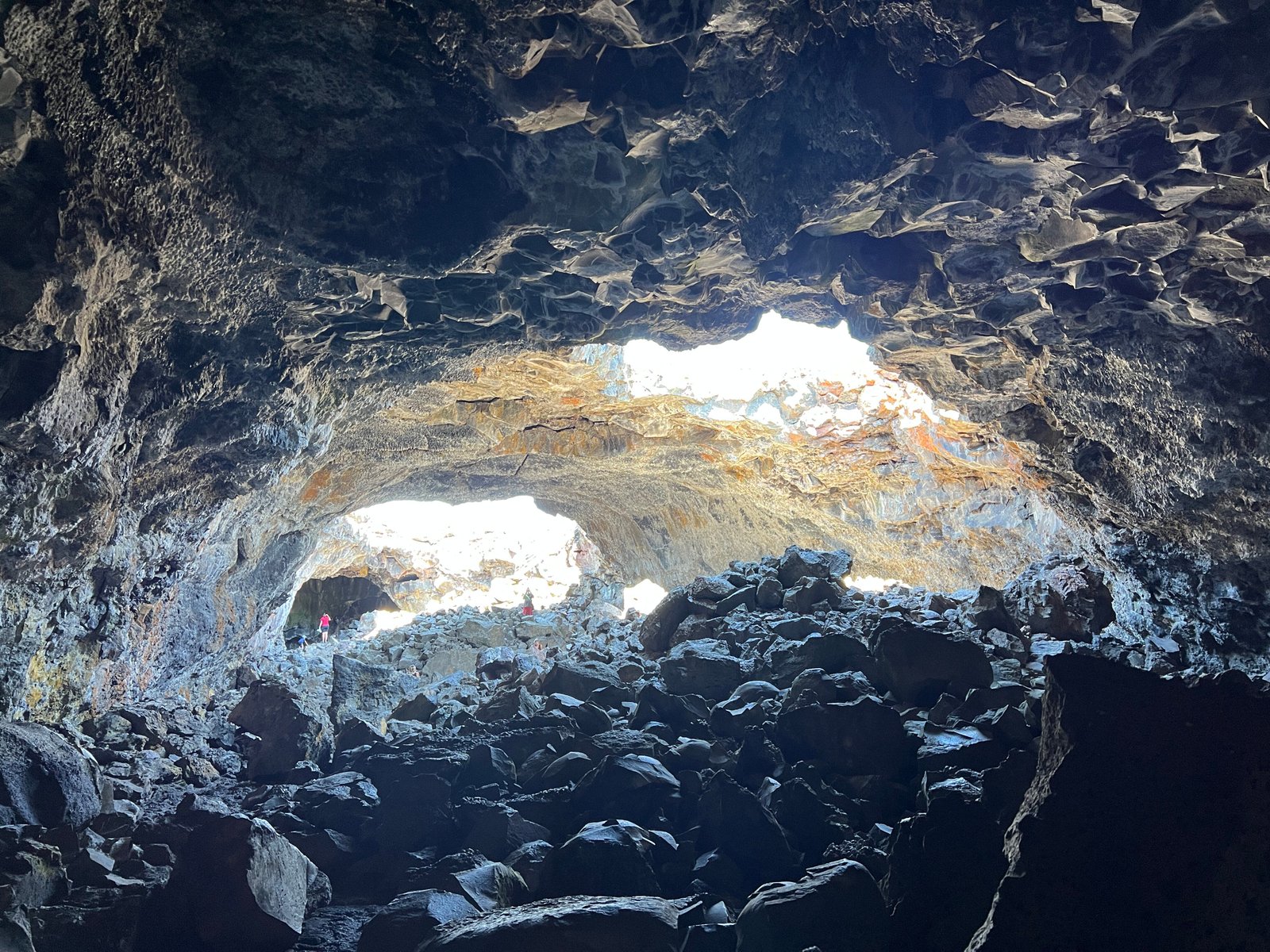
- Exploring Indian Tunnel: Indian Tunnel is the largest, most impressive, and easiest cave to explore in the park. A metal staircase descends directly into the massive lava tube. Because portions of the ceiling have collapsed, natural skylights illuminate much of the tunnel. You can walk all the way through to the far end, which requires a short scramble over rock piles to exit out the top.
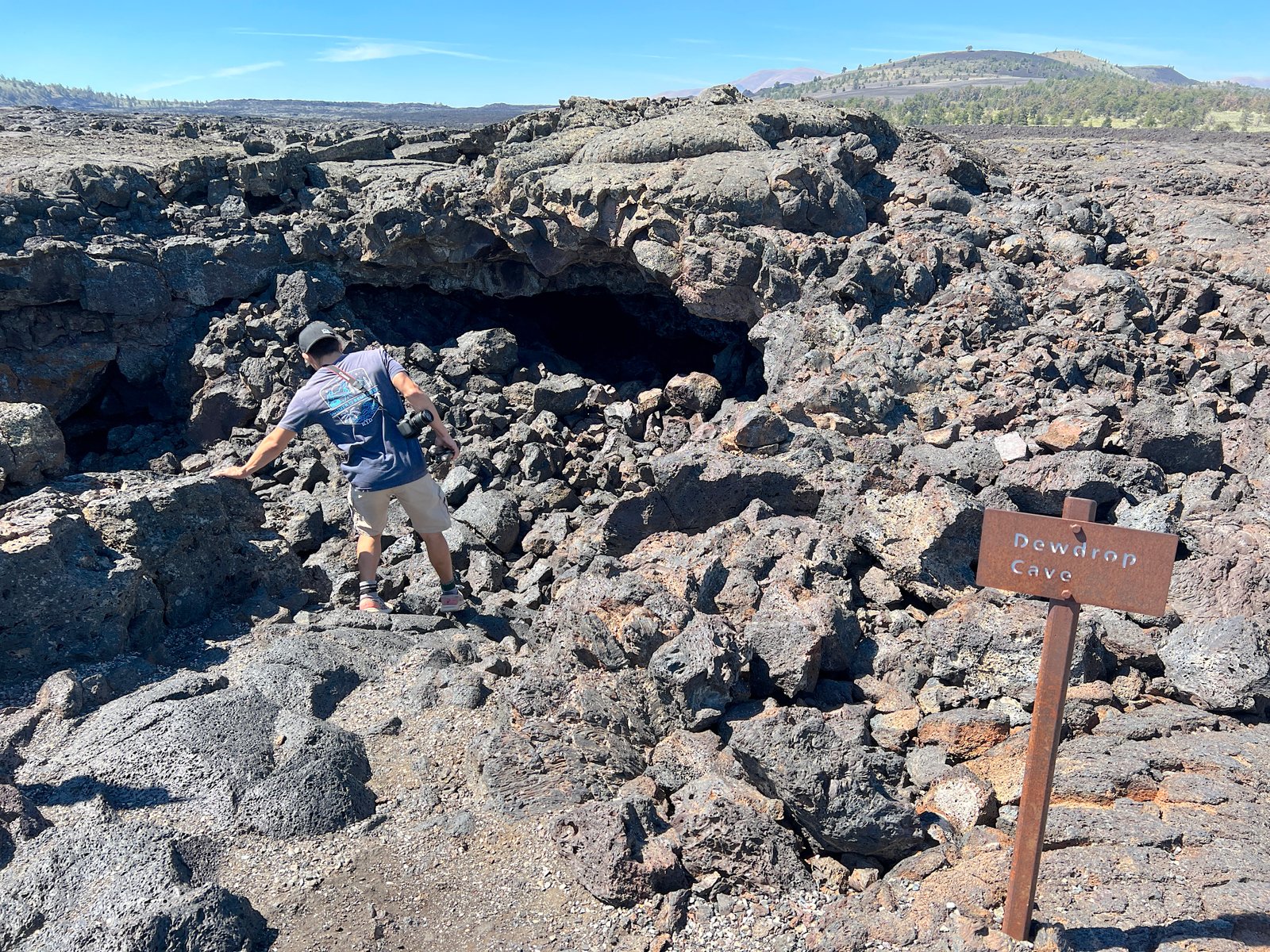
- Other Open Caves: You can also check out Dewdrop Cave, a smaller opening right off the main trail that gives you a quick look down into a collapsed ceiling vault.
- Safety & Gear Required: Even though Indian Tunnel has natural light, a bright flashlight or headlamp is still strongly recommended for footing. Sturdy closed-toe shoes are essential for walking across the uneven, jagged rock floor. Remember to get your free cave permit at the Visitor Center before heading out!
Stop 8 (Optional): Explore the Tree Molds Trail
- Suggested Time: 4:45 PM – 5:45 PM
- Distance / Drive Time: 2 miles from Caves Trailhead (5 minutes)
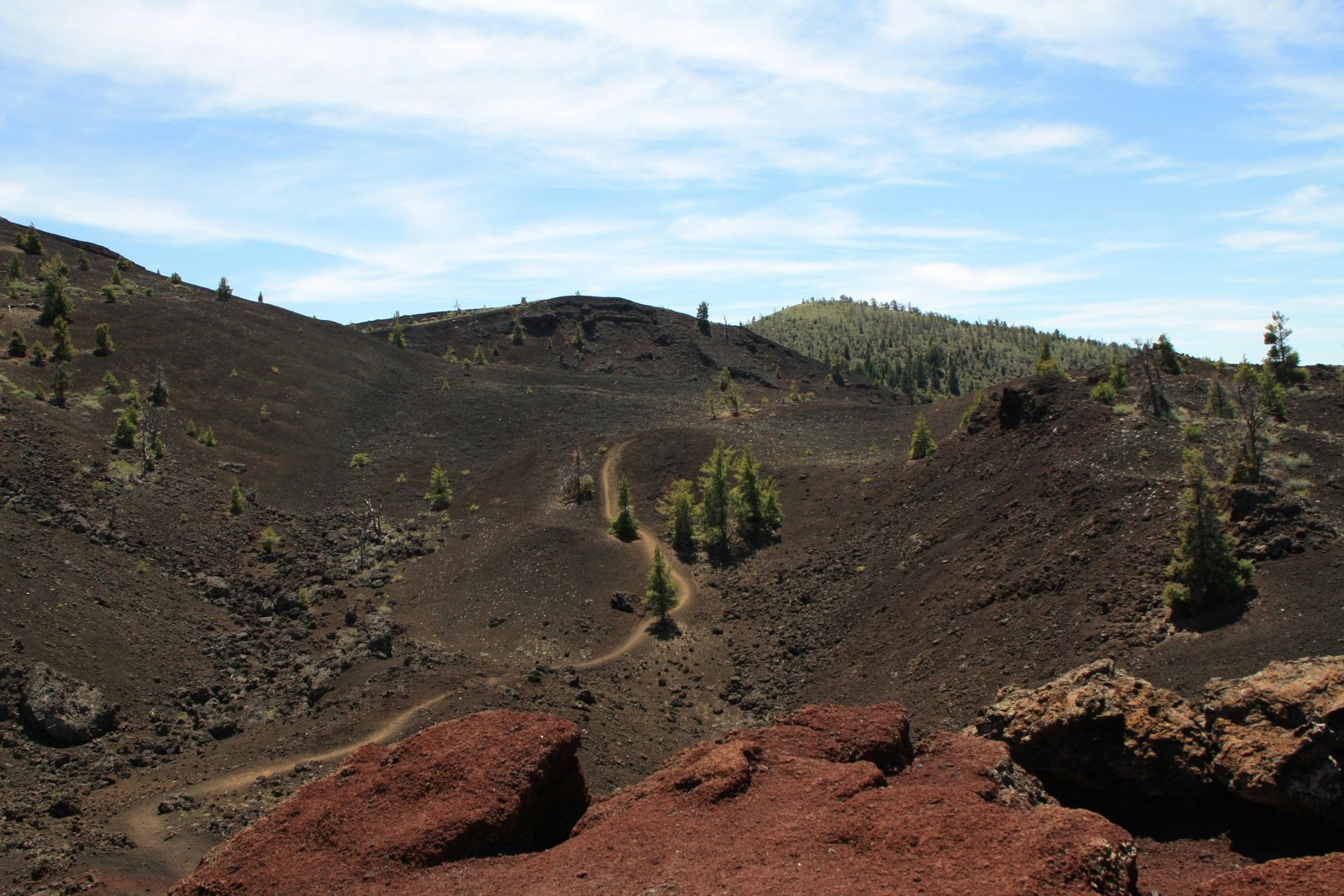
If you still have energy left before dinner, drive out to the Tree Molds Trail area on the southern tip of the Loop Road.
- Trail Distance: 2.0 miles round-trip.
- Unique Fossils: Look for the impressions left behind when lava flows engulfed living trees. The molten rock cooled around the damp trunks, leaving hollow lava molds of tree bark behind.
Stop 9: Sunset & Stargazing Across the Basalt Fields
- Suggested Time: 8:00 PM – Late
- Best Locations: Inferno Cone Overlook or Lava Flow Campground
Wrap up your day by watching the sun set over the high desert. As daylight fades, the dark basalt landscape turns deep shades of purple and charcoal. Stick around after nightfall to witness why Craters of the Moon is a world-renowned International Dark Sky Park—the lack of light pollution makes the Milky Way vividly visible to the naked eye!
Essential Tips for Visiting Craters of the Moon
Navigating a landscape made of pitch-black basalt and high-desert terrain requires a bit of extra preparation. Keep these key insider tips in mind to make your visit safe and smooth:
- Protect Your Gear from Sharp Rock: The ‘a’ā lava rock found throughout the park is razor-sharp. Wear sturdy closed-toe shoes with good tread—flip-flops or flimsy sneakers will easily tear on the rough basalt or cause ankle twists on loose cinder slopes.
- Beat the Sun & Basalt Heat: Black rock absorbs sunlight like a sponge, pushing ground temperatures past 170°F on summer afternoons. Start exposed hikes like Inferno Cone early in the morning, wear sun-protective clothing, and slather on sunscreen.
- Bring a Dedicated Flashlight or Headlamp: Cell phone flashlights are far too dim for safely navigating uneven rock floors inside dark lava tube caves. A bright headlamp leaves your hands free to balance if you stumble.
- Hydrate More Than You Think: The park sits at an elevation of nearly 6,000 feet in an arid desert environment. Moisture evaporates quickly in dry heat, so carry at least 2 to 3 liters of water per person for a full day of exploring.
- Prepare for Sudden Mountain Wind: High winds are extremely common across the Snake River Plain, especially at the summit of Inferno Cone. Hold onto loose items like hats and sunglasses, and keep an extra layer in your pack in case temperatures drop quickly.
What to Pack: Craters of the Moon Packing List
Packing the right gear makes all the difference when moving between hot, sun-exposed cinder cones and chilly underground lava caves:
Trail & Cave Gear
- Sturdy Hiking Boots or Shoes: Essential for traction on loose volcanic cinders and protecting feet against sharp lava edges. Mike and I have been wearing Columbia Newton Ridge Plus Hiking Boots for over five years, and they are still our favorite hiking boots for rocky and uneven trails. Available in both men’s and women’s styles, they offer dependable ankle support, excellent traction, and all-day comfort.
- Bright Flashlight or Headlamp: Required for cave safety inside Indian Tunnel and Dewdrop Cave.
- Daypack (15L–25L): To hold your water, cave permit, snacks, and extra layers hands-free.
- Trekking Poles: Optional, but extremely helpful for stability when descending steep cinder slopes like Inferno Cone. The Montem Ultra Strong Hiking Poles have helped us on trails all over the U.S., and they are a great budget-friendly option to keep in your pack just in case.
Sun Protection & Clothing
- Lightweight, Breathable Layers: Moisture-wicking long-sleeve shirts offer high UV protection without overheating you. The Soothfeel Women’s UPF 50+ Sun Protection Hoodie has become my go-to for easy sun coverage. I throw it over whatever I’m wearing, and it keeps me cool while staying extremely comfortable. I bring this on every trip where I’m going to be out in the sun.
- Light Jacket or Windbreaker: Great for windy hilltops and the consistently cool, ~50°F temperatures inside the lava caves. The Columbia Women’s Benton Springs Full Zip Jacket is a reliable option to cut the chill. It’s lightweight, soft, and easy to layer.
- Wide-Brimmed Sun Hat & UV Sunglasses: Shade is practically non-existent along the trails. I’ve had my FURTALK Wide Brim Sun Hat for over five years now, and it’s still my favorite for full face and neck protection. It’s adjustable, packable, and folds up small to throw in your daypack.
- Broad-Spectrum Sunscreen & Lip Balm: High altitude and intense desert sun make sunburns happen fast. Earth Mama’s Mineral Sunscreen is our favorite family‑friendly option—an SPF 40, water‑resistant, clean formula that comes in both a lotion and an easy on‑the‑go stick. It’s gentle enough for kids, effective for adults, and perfect if you prefer non-toxic ingredients.
Hydration & Food
- Reusable Water Bottles / Hydration Bladder: Fill up at the Visitor Center before heading out on the 7-Mile Loop Road. We always bring our Simple Modern Water Bottle Jugs on hikes because they keep water ice-cold for hours, even when sitting in a hot car or out in the sun.
- Packed Lunch & High-Energy Snacks: Trail mix, fruit, and sandwiches (remember, there are no restaurants or grocery stores inside the monument!).
- Small Cooler: Keeps food and extra drinks cold in your car during hot summer days.
Frequently Asked Questions About Craters of the Moon
Is Craters of the Moon National Monument worth visiting?
Yes! Craters of the Moon is one of the most unique and otherworldly landscapes in the United States. Walking through massive basalt lava fields, climbing steep cinder cones, and exploring subterranean lava tube caves feels like stepping onto another planet. Because all primary attractions are located along a short 7-mile loop road, it is an easy and rewarding stop on any Idaho road trip.
How much time do you need at Craters of the Moon?
One full day (3 to 6 hours) is the perfect amount of time to explore Craters of the Moon. This gives you enough time to drive the 7-Mile Loop Road, hike up Inferno Cone, explore Indian Tunnel cave, and stop at every major viewpoint.
Do you need a permit to explore the caves?
Yes, a free cave permit is required for anyone entering the lava tube caves. Permits can be picked up at the Robert Limbert Visitor Center after answering a quick screening question regarding White-Nose Syndrome to protect local bat populations.
Can you drive through Craters of the Moon in the winter?
The 7-Mile Loop Road is closed to motorized vehicles from mid-November through mid-April due to snow. However, the park remains open for winter recreation. The park grooms the loop road for cross-country skiing and snowshoeing, and visitors can even borrow snowshoes for free at the Visitor Center.
Are dogs allowed in Craters of the Moon?
Pets are allowed on paved park roads, parking pullouts, and inside Lava Flow Campground, but must remain on a leash at all times. Dogs are strictly prohibited on all hiking trails and inside caves. Keep in mind that black basalt rock gets dangerously hot during summer afternoons, which can burn dog paws.
How did Craters of the Moon get its name?
Local tales and early explorers called the region the “Valley of the Moon” due to its eerie resemblance to lunar craters.The name became widely recognized after adventurer Robert Limbert published a 1924 National Geographic article featuring the area, leading President Calvin Coolidge to establish it as a National Monument that same year.
Why did NASA astronauts train at Craters of the Moon?
In 1969, Apollo 14 astronauts (including Alan Shepard and Edgar Mitchell) visited Craters of the Moon to study volcanic geology. Because the terrain closely mimics lunar basalt, learning to identify specific volcanic rocks helped prepare them for collecting rock samples on the actual Moon.
Whether you are embarking on a cross-state road trip across southern Idaho, heading toward Yellowstone and Grand Teton National Parks, or simply looking to explore a landscape unlike anywhere else on Earth, Craters of the Moon National Monument is well worth the trip.
Walking across raw, ocean-like lava flows, scrambling up steep cinder cones, and stepping down into underground lava tube caves offers a rare glimpse into the powerful volcanic forces that shaped the American West. Spending just one day along the 7-Mile Loop Road allows you to experience the park’s absolute best highlights while making memories that feel truly out of this world.
Helpful Planning Links & Resources
To make your trip planning as seamless as possible, save these official links and resources before hitting the road:
- Official NPS Park Website: Check current road conditions, visitor center hours, and seasonal alerts.
- Recreation.gov Campground Info: View details for the first-come, first-served camping sites.
- Cave Permits & Bat Conservation Info: Learn more about free cave permits and White-Nose Syndrome guidelines.
- Visit Idaho Tourism Hub: Find more road trip inspiration, regional events, and nearby attractions on the official.
More Idaho Adventures
Planning a trip through Idaho? Check out these other Idaho adventures and travel guides to help you discover more of the state’s scenic trails, outdoor activities, and hidden gems.