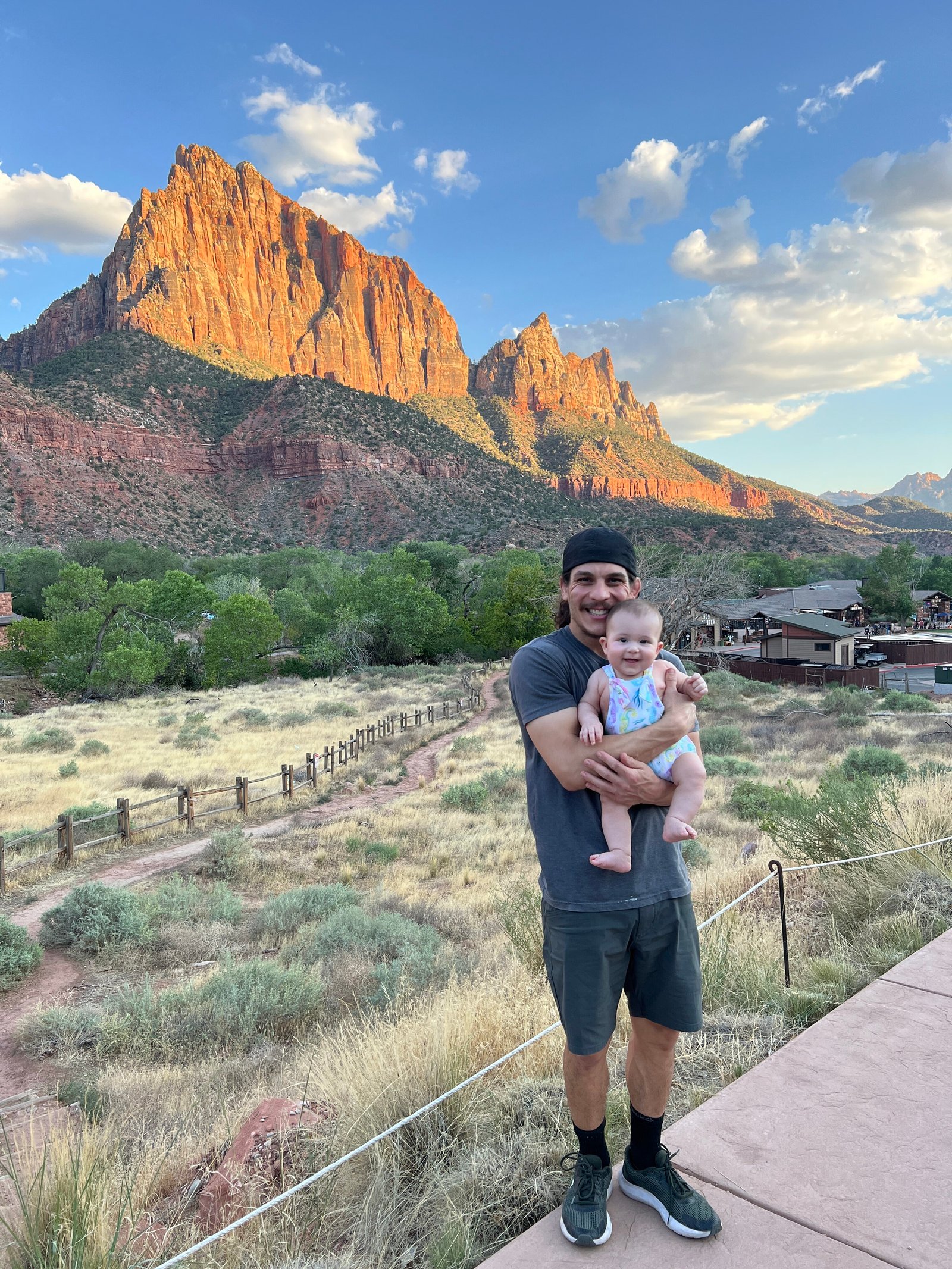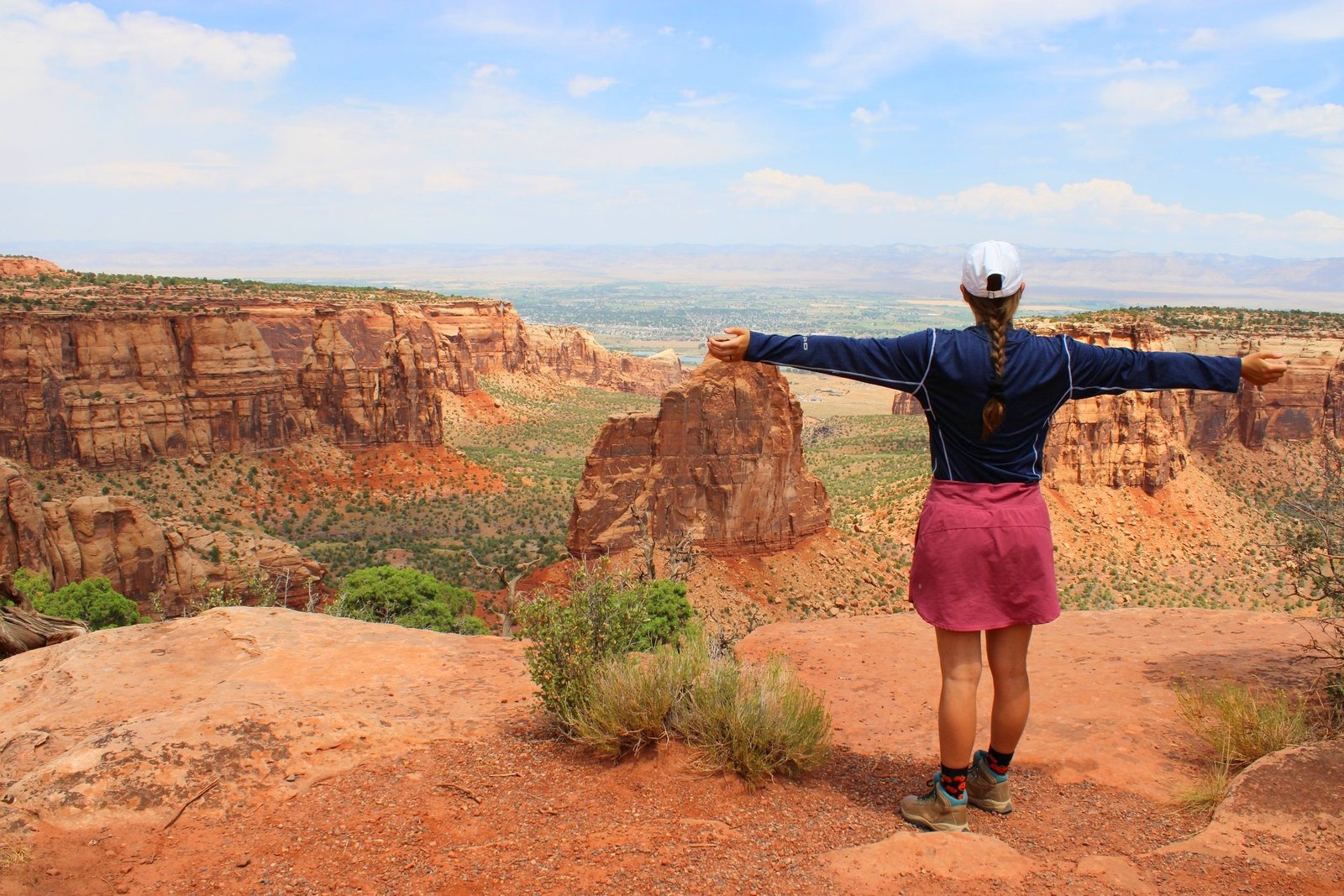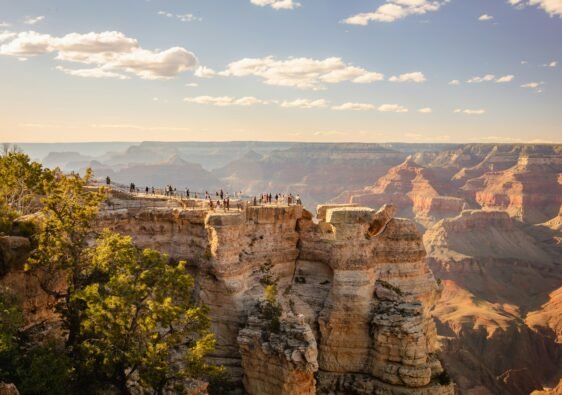

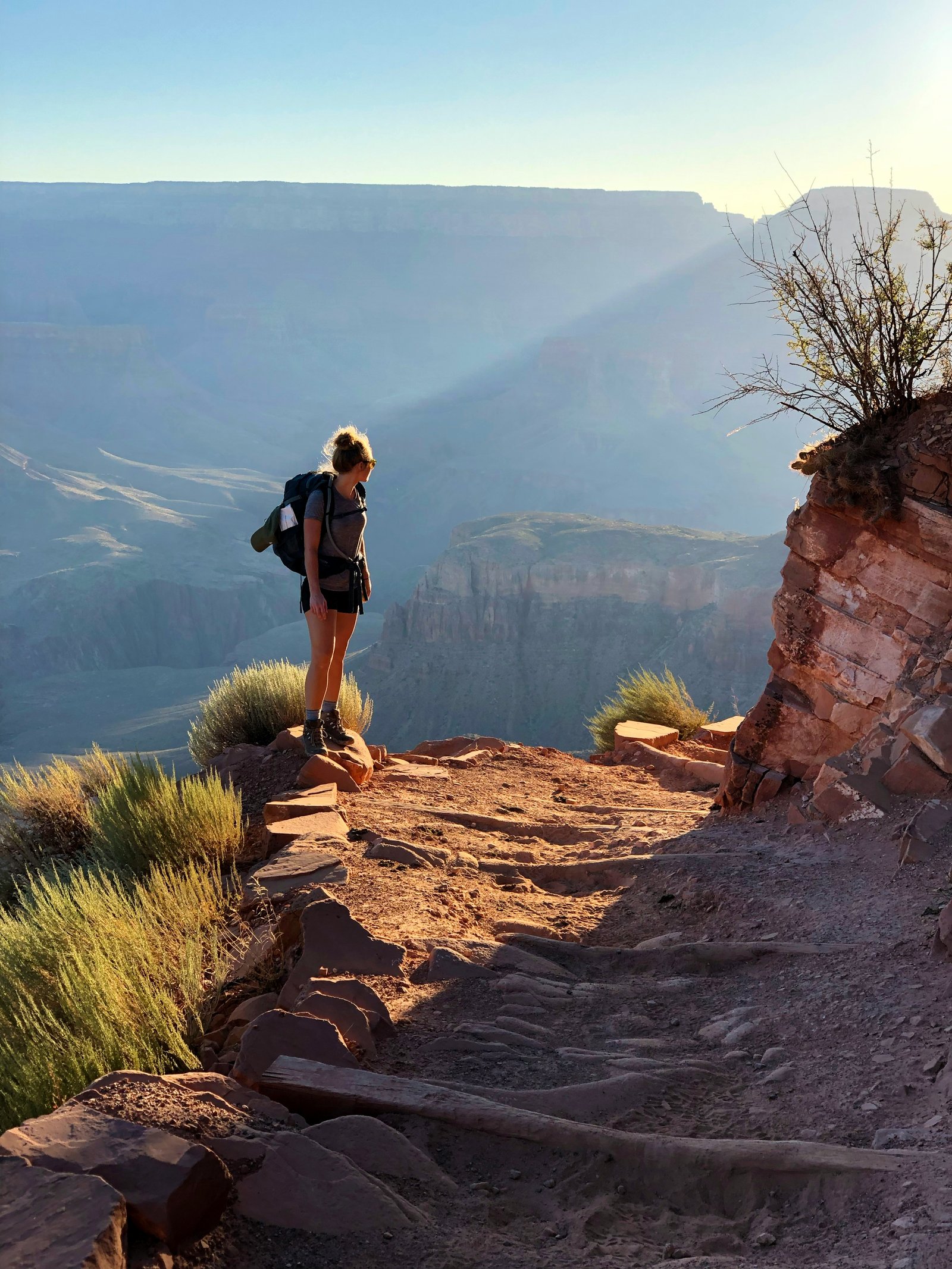
Standing on the rim of the Grand Canyon is one of those moments that stays with you forever — but the experience is so much better when you’re prepared. Whether you’re visiting for a scenic road trip, tackling popular trails like South Kaibab or Bright Angel, or exploring lesser‑known viewpoints, having the right gear makes a huge difference in comfort, safety, and how much you enjoy your time in the park.
This Grand Canyon packing list breaks down exactly what to bring for both your trip and your hikes, based on real desert conditions: intense sun, dry air, big temperature swings, and rugged terrain. You’ll find essentials for hydration, clothing, day‑hike gear, photography, and practical items that first‑timers often forget. My goal is to help you feel confident, prepared, and ready to fully enjoy one of the most incredible landscapes in the world.
This post contains affiliate links, so we may earn a small commission when you make a purchase through links on our site at no additional cost to you.
Quick Overview
This Grand Canyon packing list gives you everything you need to feel prepared, comfortable, and confident on your trip — whether you’re visiting for scenic viewpoints, day hikes, or a full vacation. Here’s what this guide covers:
- Why Packing Matters in the Grand Canyon — How desert conditions, elevation, sun exposure, and limited shade make smart packing essential.
- Essential Gear for Every Grand Canyon Visitor — Hydration, sun protection, layers, navigation basics, and safety items.
- Clothing to Pack (Season by Season) — What to wear in spring, summer, fall, and winter so you stay comfortable from sunrise to sunset.
- Day‑Hike Gear Breakdown — Water, electrolytes, snacks, first‑aid basics, trekking poles, emergency items, and monsoon‑season essentials.
- What to Pack for Rim Viewing + Scenic Drives — Camera gear, comfortable shoes, water, cooler, and small extras that make rim time easier.
- Packing List for Overnight Trips — Toiletries, warm layers, food, charging gear, and practical items for staying comfortable at the park.
- Optional but Helpful Items — Cooling towels, hydrosol mist, SPF lip balm, lightweight blankets, and small comfort items.
- What NOT to Bring — Bulky clothing, cotton layers, single‑use bottles, and anything that adds unnecessary weight.
- Final Tips for a Smooth Grand Canyon Trip — Hydration, early starts, respecting heat and elevation, and links to more planning resources.
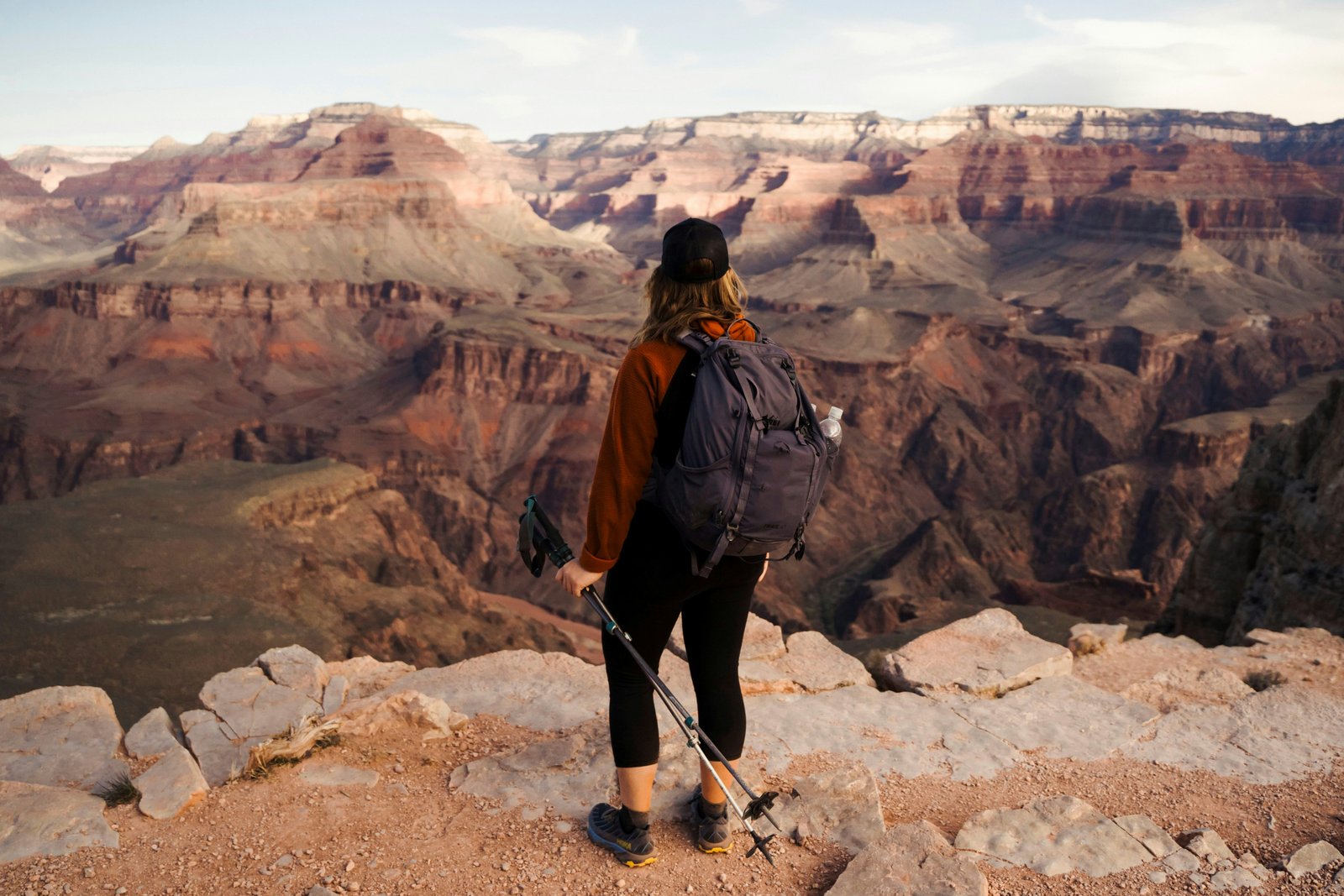
Why Packing Matters in the Grand Canyon
Packing well isn’t just about comfort at the Grand Canyon — it’s about staying safe in a place where the environment can change quickly and resources are limited. The canyon’s desert climate, elevation, and rugged terrain make it essential to bring the right gear, even if you’re only planning short hikes or scenic rim walks.
Extreme Sun + Dry Desert Climate
The Grand Canyon sits at high desert elevation, which means strong sun exposure and very dry air. Hydration, sun protection, and moisture‑wicking clothing make a huge difference in how you feel throughout the day.
Temperature Swings (cold mornings, hot afternoons)
It’s normal to start your day in a jacket and end it in a sun shirt. Packing layers helps you stay comfortable from sunrise viewpoints to warm mid‑day hikes.
Limited Shade and Water Access
Most trails and viewpoints offer little to no shade, and water sources are limited or seasonal. Carrying your own water and sun protection is essential, even for easy rim walks.
Importance of being self‑sufficient even on short hikes
Cell service is unreliable, distances are bigger than they look, and conditions can shift quickly. A few simple items — water, snacks, a small first‑aid kit, and a headlamp — make short hikes safer and more enjoyable.
Packing well also makes your day at the Grand Canyon smoother, whether you’re exploring the South Rim’s classic viewpoints or the quieter, more remote North Rim. My one‑day guides for both areas break down what to see, how to plan your time, and what to expect so you can pair smart packing with a stress‑free visit.
Essential Gear for Every Grand Canyon Visitor
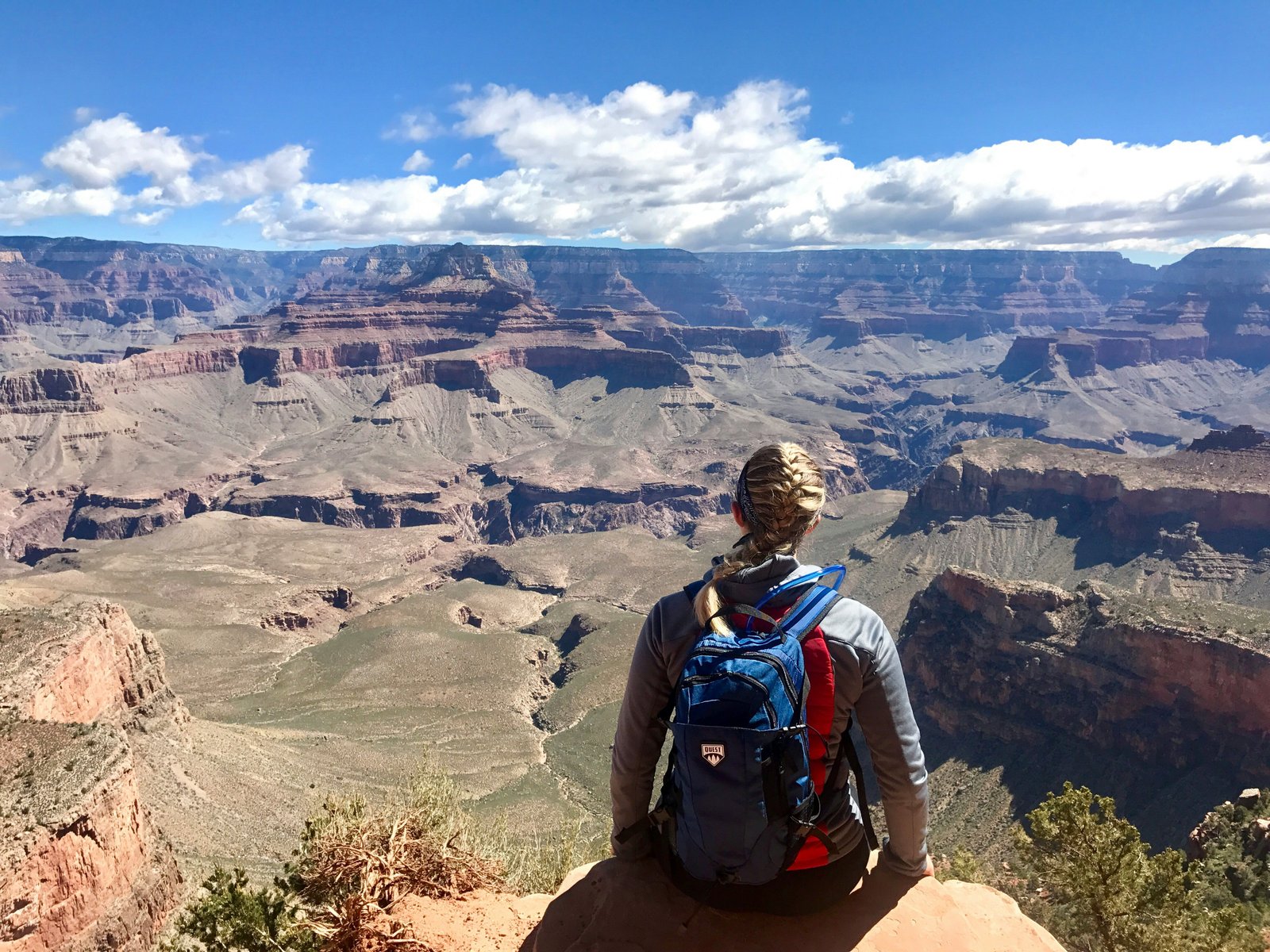
The Grand Canyon’s environment is beautiful but demanding, so a few key items make a huge difference in comfort and safety. These essentials are the things every visitor should have, whether you’re exploring viewpoints along the rim or heading out on a day hike.
Hydration (the #1 priority)
The canyon’s dry air and strong sun mean you’ll need more water than you expect. Bring at least 2–3 liters per person, plus electrolytes to help you stay hydrated during hikes and hot afternoons. We have been using Simple Modern Insulated Water Bottles for years and love that they keep water ice cold and come in various sizes. Plus LMNT electrolyte packets are always nice to have on hand.
Sun Protection
UV exposure is intense year‑round. A wide‑brimmed hat, sunglasses, sunscreen, and SPF lip balm help prevent sunburn and heat fatigue — especially on trails with no shade. I LIVE in my Soothfeel UPF Sun Protection Jacket. It keeps my skin feeling cool even on the hottest days and its extremely comfortable for all day use.
Comfortable, Sturdy Footwear
Even short walks involve uneven terrain. Supportive hiking shoes or boots help prevent slips, sore feet, and blisters. We have been using the same Columbia hiking boots (they come in both men’s and women’s versions) since we started hiking back in 2021 and they have held up great. Hiking poles can also be helpful for balance on uneven sections of trail or when walking longer distances along the Rim Trail.
Lightweight Daypack
A small, comfortable pack keeps your water, snacks, layers, and safety items organized. Choose something breathable with a chest strap for stability if you plan to go on trails.
Layers for Changing Temperatures
Mornings can be chilly, afternoons warm, and evenings cool again. A light jacket or fleece ensures you’re comfortable throughout the day.
Navigation + Safety Basics
Cell service is unreliable, so download offline maps before you arrive. A small first‑aid kit, headlamp, and extra snacks help you stay prepared for unexpected delays or longer-than-planned hikes.
Snacks + Fuel
The canyon’s elevation and dry heat can make you burn through energy quickly. Pack high‑calorie snacks to keep you fueled throughout the day.
Clothing to Pack for the Grand Canyon (Season by Season)
The Grand Canyon’s weather shifts fast — not just day‑to‑day, but hour‑to‑hour. Packing the right clothing makes a huge difference in comfort, especially with the canyon’s dry air, strong sun, and big temperature swings.
Spring (March–May)
Spring is one of the best times to visit, but mornings can be cold and afternoons warm.
What to pack
- Moisture‑wicking short‑sleeve or long‑sleeve tops
- Light fleece or softshell jacket
- Breathable hiking pants or shorts
- Wide‑brim hat + sunglasses
- Light gloves for chilly sunrise viewpoints
- Sturdy hiking shoes or trail runners
Why it matters
Temperatures can swing 30+ degrees in a single day. Layers keep you comfortable from cold mornings to warm mid‑day hikes.
Summer (June–August)
Expect intense sun, high UV, and very hot afternoons — especially below the rim.
What to pack
- Lightweight, breathable sun shirt
- Moisture‑wicking shorts or hiking pants
- Wide‑brim hat (non‑negotiable)
- Sunglasses
- Cooling towel
- Light socks + breathable hiking shoes
Why it matters
Sun protection is essential. Clothing that covers skin while staying cool helps prevent heat exhaustion and sunburn.
Fall (September–November)
Fall is warm during the day with crisp mornings and evenings.
What to pack
- Moisture‑wicking tops
- Light jacket or fleece
- Hiking pants or shorts
- Sun hat + sunglasses
- Optional: light beanie for sunrise/sunset
Why it matters
Fall feels similar to spring — comfortable but variable. Layers help you adjust easily as temperatures change.
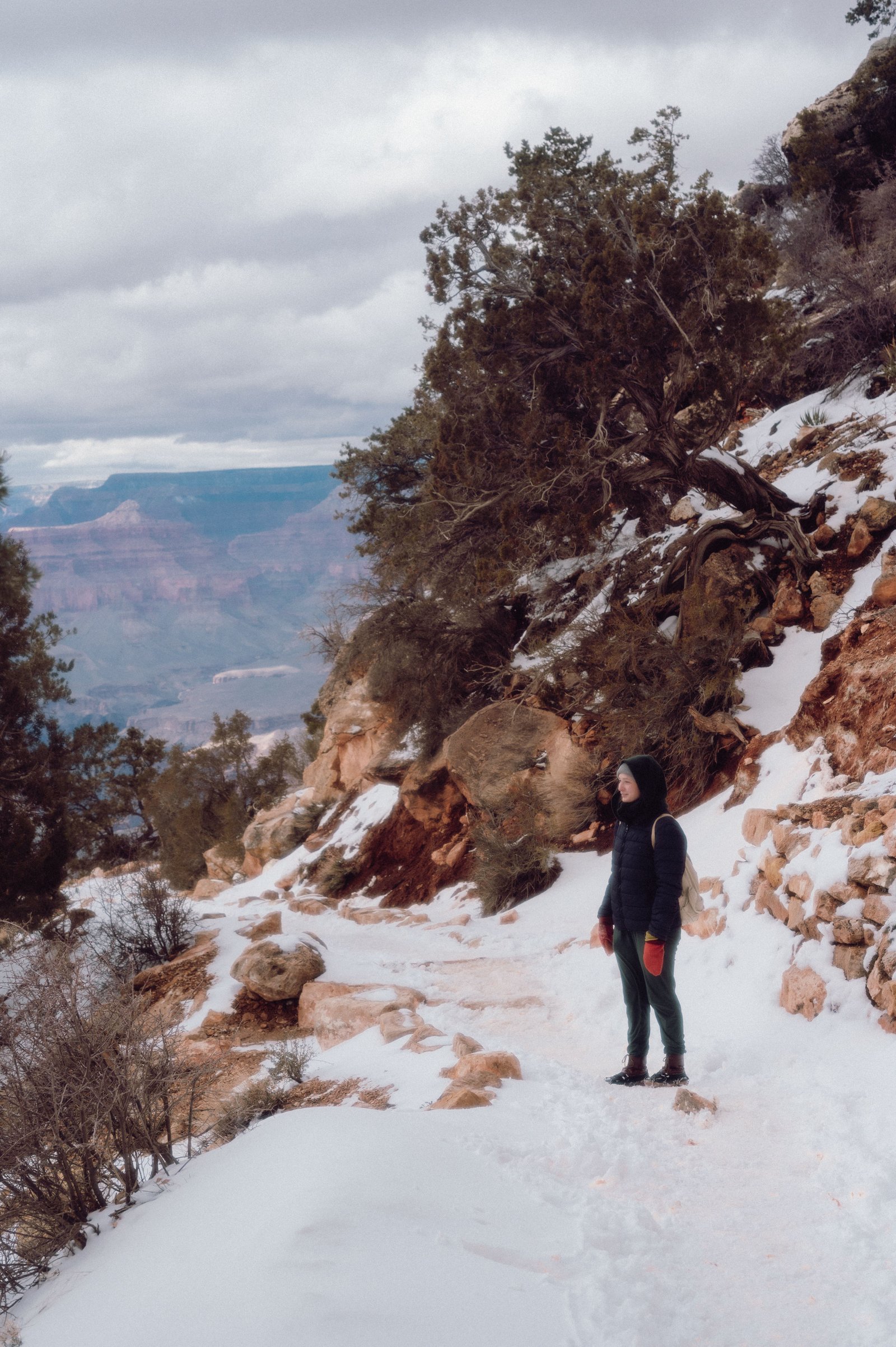
Winter (December–February)
Expect cold mornings, possible snow on the rim, and chilly winds.
What to pack
- Warm base layers
- Insulated jacket or fleece
- Hiking pants
- Beanie + gloves
- Thermal socks
- Waterproof hiking shoes if snow is in the forecast
Why it matters
The rim can be icy, windy, and below freezing. Proper layers keep you warm while still allowing movement on trails.
Year‑Round Clothing Essentials
These items work in every season and should be part of every Grand Canyon packing list:
- Moisture‑wicking tops (avoid cotton)
- Breathable hiking pants or shorts
- Sturdy hiking shoes or trail runners
- Wide‑brim hat
- Sunglasses
- Light jacket or fleece
- Comfortable hiking socks
Day‑Hike Gear Breakdown
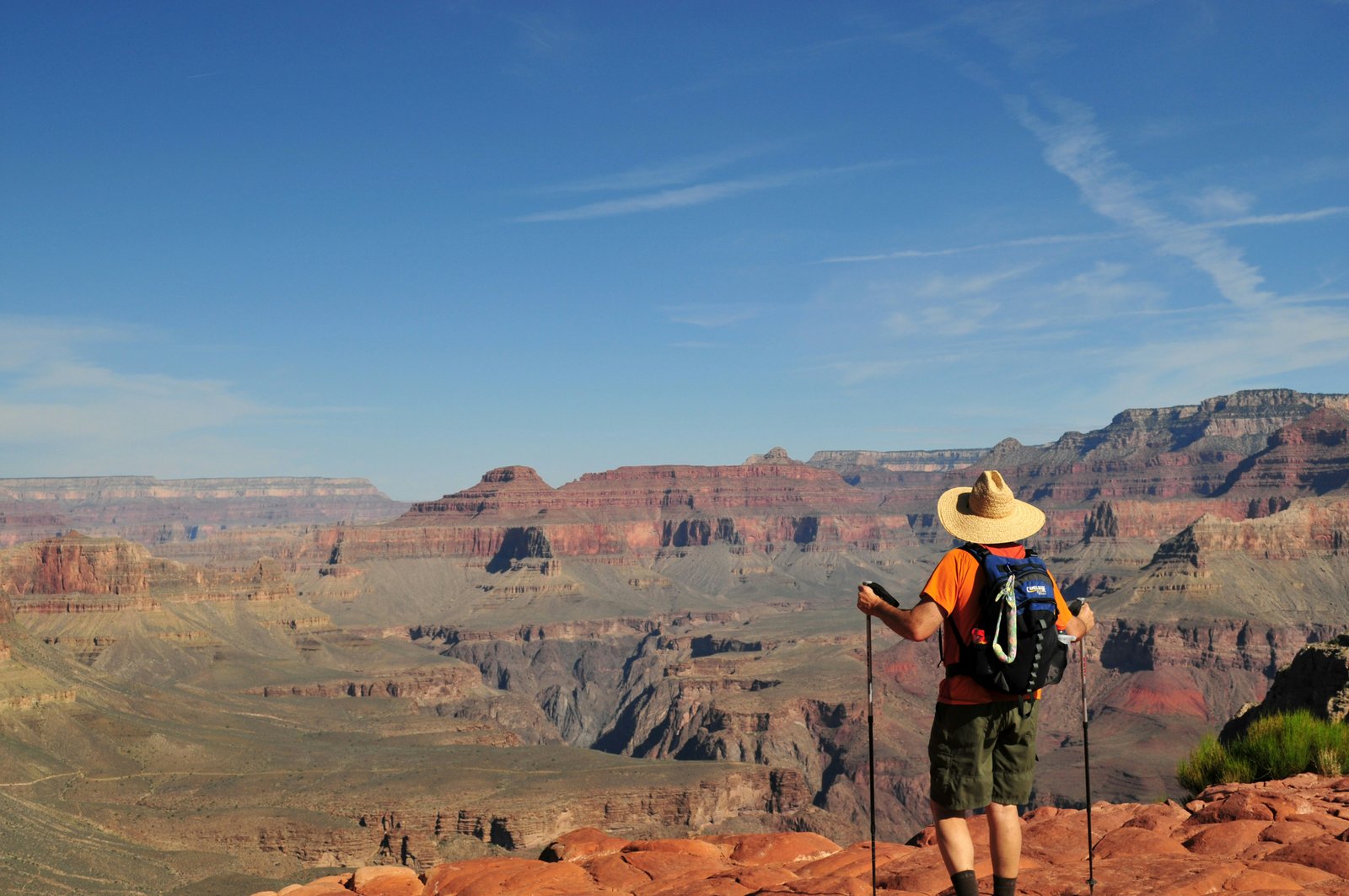
Day hikes in the Grand Canyon come with steep trails, strong sun, and limited water access, so having the right gear makes a big difference in comfort and safety. The canyon’s dry air and changing conditions mean you’ll want to carry items that keep you hydrated, protected, and prepared for the terrain.
If you’re looking for beginner‑friendly trails to put this gear to use, our Best Easy Hikes in the Grand Canyon guide highlights the most accessible routes on both the South Rim and North Rim. It’s a great place to start if you want beautiful views, manageable distances, and a smooth introduction to hiking in the canyon.
Water + Hydration System
Hydration is the most important part of any Grand Canyon hike. The dry air and steep trails mean you’ll drink more than you expect.
- 2–3 liters of water per person
- Hydration bladder or multiple refillable bottles
- Electrolyte packets (critical for hot days and steep climbs)
Why it matters:
Dehydration happens fast in the canyon. Electrolytes help prevent fatigue, headaches, and heat‑related issues.
Sun Protection
The canyon offers almost no shade, even early and late in the day.
- Wide‑brim hat
- Sunglasses
- High‑SPF sunscreen
- SPF lip balm
- Lightweight sun shirt (great for summer)
Why it matters:
UV exposure is intense year‑round. Covering your skin keeps you cooler and prevents sunburn.
Navigation + Safety Basics
Cell service is unreliable, and trails can feel longer than they look.
- Offline maps downloaded to your phone
- Small first‑aid kit
- Band‑aids + blister care
- Headlamp (always — even for morning hikes)
- Whistle (lightweight and useful in emergencies)
Why it matters:
A headlamp is one of the most forgotten but most important items. Delays happen, and canyon trails get dark quickly.
Food + Fuel
You burn through energy quickly with the canyon’s elevation and dry heat.
- High‑energy snacks (nuts, bars, dried fruit)
- Lunch for longer hikes
- Extra snacks (you’ll always want more)
Why it matters:
Even short hikes feel strenuous. Fuel helps keep your energy steady on steep climbs.
Clothing + Layers
Temperatures swing dramatically throughout the day.
- Moisture‑wicking top
- Breathable hiking pants or shorts
- Light jacket or fleece
- Hiking socks
- Sturdy hiking shoes or trail runners
- Optional: trekking poles for steep descents
Why it matters:
Layers help you stay comfortable from chilly mornings to warm afternoons.
Practical Extras
Small items that make a big difference.
- Portable charger
- Small trash bag (Leave No Trace)
- Hand sanitizer
- Reusable bag
- Lightweight camera gear if you’re photographing
Why it matters:
These items keep you prepared, organized, and ready for unexpected changes.
What to Pack for Rim Viewing + Scenic Drives
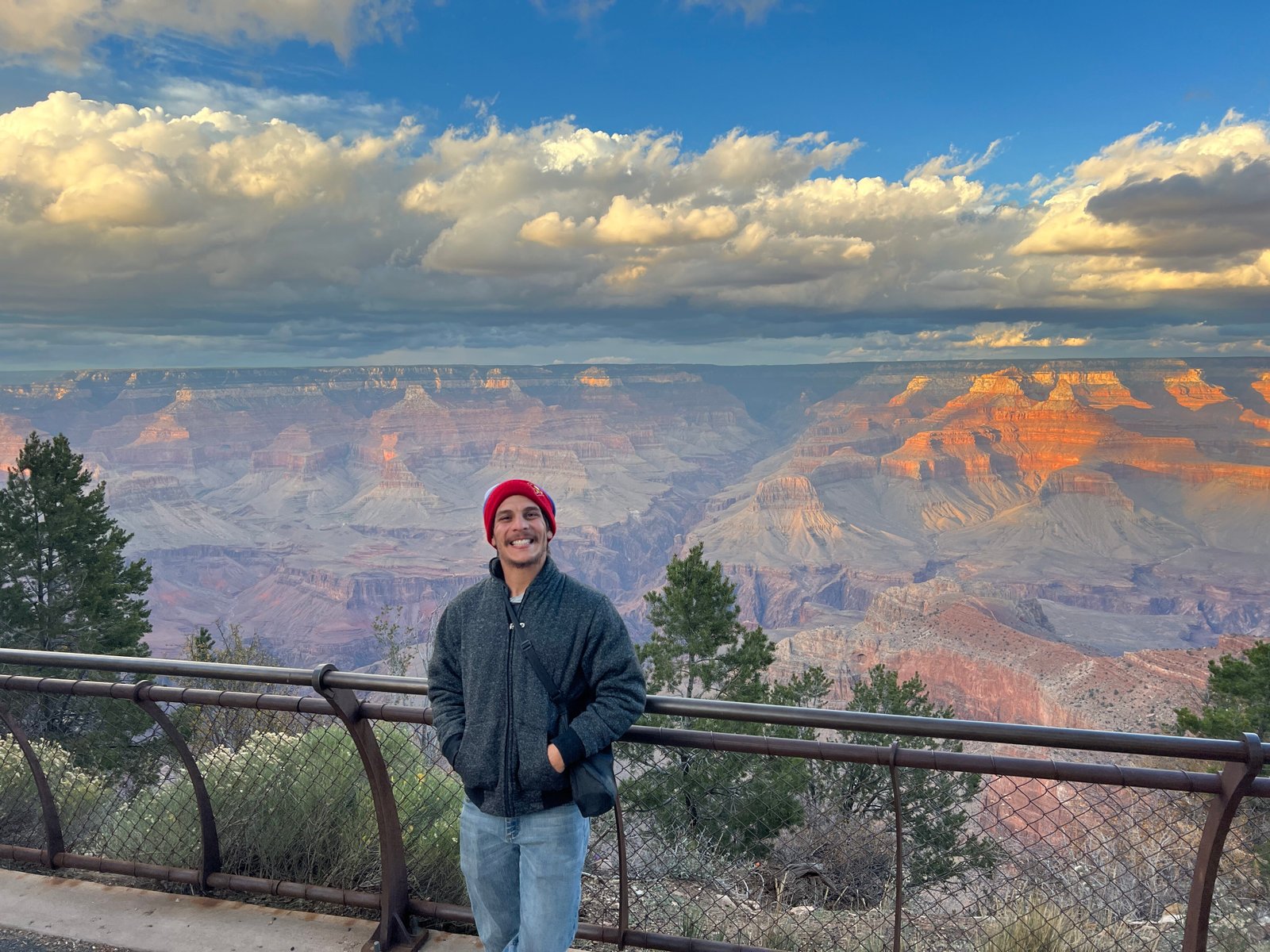
Rim viewpoints and scenic drives at the Grand Canyon are easy and accessible, but the environment is still pure high desert — strong sun, wind, and long stretches without services. Packing a few comfort and convenience items makes these stops much more enjoyable, especially when you’re hopping in and out of the car all day.
If you want even more ideas for what to see and do while exploring the canyon, our Best Things to Do at the Grand Canyon guide highlights the top viewpoints, activities, and easy experiences to add to your day.
Comfort + Sun Protection
Rim viewpoints offer incredible views but almost no shade, and the sun reflects off the canyon walls all day.
- Wide‑brim hat
- Sunglasses
- High‑SPF sunscreen
- SPF lip balm
- Lightweight sun shirt
Why it matters:
Even if you’re not hiking, you’ll be standing in full sun at most viewpoints. Sun protection keeps you comfortable during long photo stops.
Hydration + Snacks
You’ll be surprised how thirsty you get just walking between viewpoints.
- Water bottles for each person
- Electrolyte packets
- Easy snacks (granola bars, nuts, fruit)
Why it matters:
There are long stretches with no services, and heat builds quickly on exposed overlooks.
Layers for Changing Temperatures
The rim can be windy and cool, especially in the morning or evening.
- Light jacket or fleece
- Comfortable walking shoes
- Optional: beanie for sunrise or sunset
Why it matters:
Wind gusts are common at overlooks, and temperatures drop fast once the sun dips.
Photography Essentials
Rim viewing is where most people take their favorite Grand Canyon photos.
- Camera or phone
- Extra battery or portable charger
- Lens cloth (dust is constant)
- Optional: lightweight tripod
Why it matters:
Dust and wind can drain batteries and dirty lenses quickly. A simple cloth keeps photos sharp.
Car + Convenience Items
These make scenic drives smoother and more enjoyable.
- Reusable bag for trash
- Hand sanitizer
- Small cooler for drinks
- Printed or downloaded map
- Cash/card for entrance stations or shuttle stops
- Portable charger
Why it matters:
Cell service is spotty, and having a few convenience items keeps the day running smoothly.
Optional but Helpful
- Binoculars for wildlife and distant viewpoints
- Cooling towel for hot afternoons
- Blanket for sunrise or sunset viewing
Why it matters:
These aren’t essential, but they make long days at the rim more comfortable.
Packing List for Grand Canyon Overnight Trips
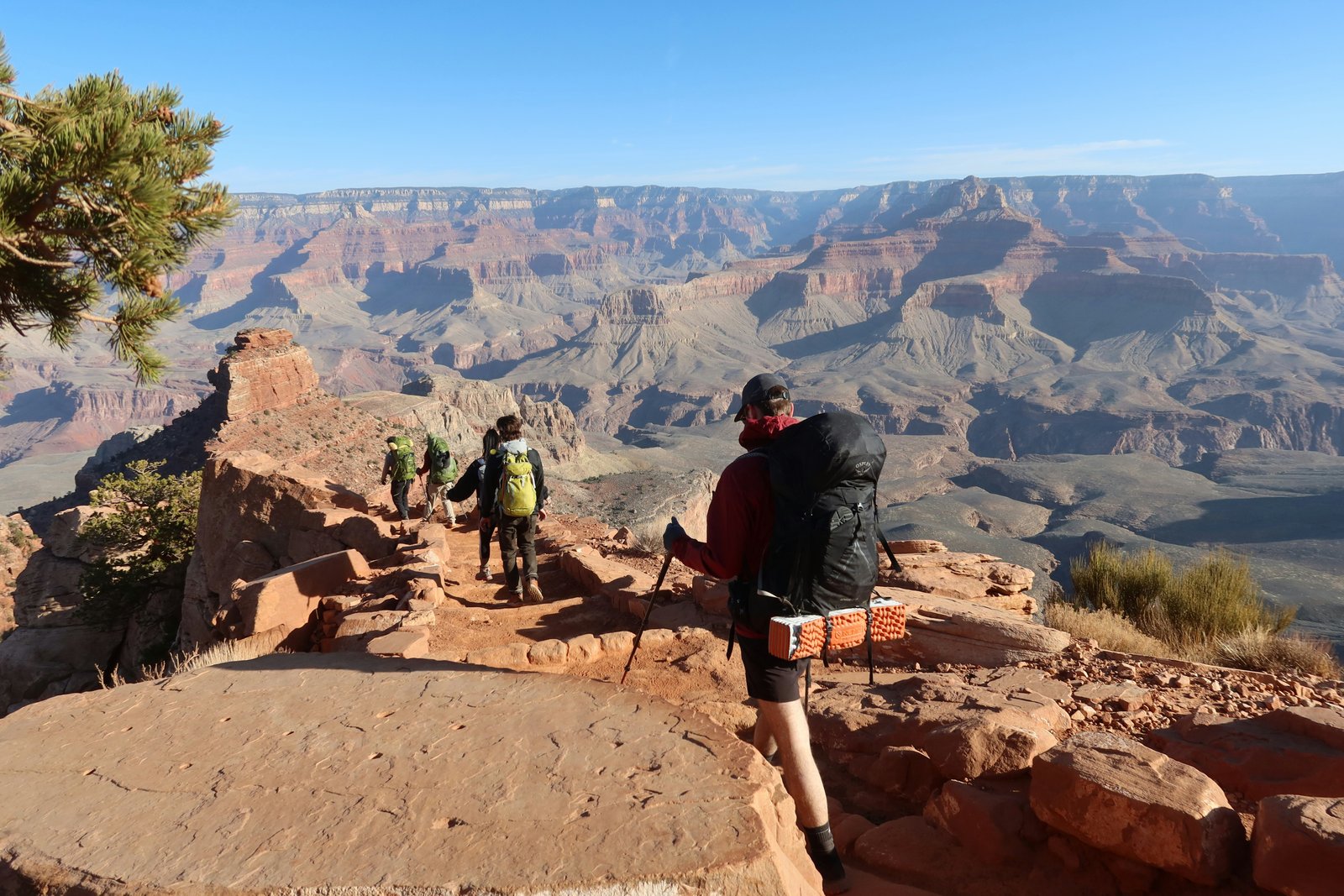
Overnight trips at the Grand Canyon require a bit more planning than day visits. Whether you’re staying in a lodge, campground, or nearby hotel, these items make your nights comfortable, organized, and stress‑free — especially with the canyon’s cold desert evenings and limited services.
Toiletries
Pack simple, travel‑friendly essentials since bathrooms and water access can vary.
- Toothbrush + toothpaste
- Face wash + moisturizer
- Natural deodorant
- Lip balm with SPF
- Hydrosol or facial mist (great for dry desert air)
- Travel‑size shampoo/conditioner
- Hand sanitizer
Why it matters:
The canyon’s dry climate can leave skin feeling tight and dehydrated, so lightweight, hydrating products help you stay comfortable.
Reusable Water Containers
Hydration doesn’t stop when the hike ends.
- Refillable bottles for camp or lodge
- Larger jug or container for refilling throughout your stay
Why it matters:
Water stations aren’t available everywhere, and having your own containers makes it easy to stay hydrated between hikes.
Warm Layers for Cold Desert Nights
Even in summer, nights at the rim can be surprisingly chilly.
- Fleece or insulated jacket
- Warm socks
- Light beanie
- Cozy sleepwear
Why it matters:
Desert temperatures drop fast after sunset, and warm layers keep evenings comfortable whether you’re stargazing or relaxing at camp.
Snacks and Simple Meals
Food options can be limited depending on where you’re staying.
- Easy breakfasts (oatmeal, granola, fruit)
- Simple dinners (instant meals, sandwiches, wraps)
- High‑energy snacks for the next day’s hike
Why it matters:
Having your own food gives you flexibility and ensures you’re fueled for early mornings and long days.
Charging Gear
Keep your devices ready for photos, maps, and communication.
- Phone charger
- Portable power bank
- Camera battery charger
Why it matters:
Cold nights drain batteries faster, and outlets may be limited in campgrounds.
Travel Documents + Park Pass
Keep everything organized and easy to access.
- America the Beautiful Pass or park entry receipt
- ID
- Reservation confirmations (lodge, campground, shuttle)
- Printed or downloaded maps
Why it matters:
Cell service is unreliable, so having documents saved or printed prevents check‑in issues and helps you navigate without signal.
Optional but Helpful Items
These aren’t essential for every visitor, but they can make your Grand Canyon trip smoother, more comfortable, and more enjoyable — especially if you’re spending long days exploring viewpoints, hiking, or driving between overlooks. Think of this section as the “nice‑to‑have” extras that elevate the experience.
Cooling + Comfort Items
- Cooling towel
- Compact blanket for sunrise/sunset
- Small travel pillow for long drives
Why they help:
Afternoons can be hot, mornings cold, and scenic drives long. These small comfort items make transitions easier.
Extra Sun + Heat Protection
- Lightweight long‑sleeve sun shirt
- Additional sunscreen
- Extra electrolytes
Why they help:
If you’re out all day, having backups keeps you protected and hydrated without needing to find services.
Photography + Viewing Extras
- Binoculars
- Lightweight tripod
- Extra camera batteries
- Lens cloth
Why they help:
Dust, wind, and long distances make these items surprisingly useful for capturing clear photos and spotting wildlife.
Car + Convenience Items
- Small cooler for drinks
- Reusable bag for trash
- Wet wipes
- Extra water jug
Why they help:
Services can be spread out, and having your own supplies keeps the day running smoothly.
Trail + Rim Add‑Ons
- Trekking poles (especially for steep trails)
- Gaiters for dusty paths
- Extra socks
- Small sit pad for breaks
Why they help:
These items add comfort and stability, especially if you’re doing multiple hikes or spending long periods at viewpoints.
What NOT to Bring to the Grand Canyon
Some items simply don’t belong at the Grand Canyon. The desert environment, limited services, and rugged terrain mean certain things become unnecessary weight or just get in the way. This section covers what not to pack so you can keep your load light, practical, and focused on what you’ll actually use.
Bulky or Heavy Clothing
Avoid packing thick hoodies, heavy jackets, or bulky layers.
Why not:
Desert temperatures change quickly, and heavy layers become uncomfortable. Lightweight, packable layers work better and take up less space.
Too Many Shoes
You don’t need multiple pairs of hiking boots or extra casual shoes.
Why not:
One sturdy pair of hiking shoes or trail runners is enough for most visitors. Extra shoes add weight and rarely get used.
Large Coolers
Oversized coolers are unnecessary unless you’re camping.
Why not:
They take up valuable car space and are awkward to haul between viewpoints. A small cooler is plenty for drinks and snacks.
Full‑Size Toiletry Bottles
Skip big bottles of shampoo, conditioner, or lotion.
Why not:
Travel sizes are easier to pack, and the dry desert air means you’ll use minimal product anyway.
Excessive Camera Gear
Leave behind heavy lenses, large tripods, and bulky camera bags.
Why not:
Wind, dust, and long walking distances make lightweight gear much more practical. A simple setup captures beautiful photos without the hassle.
Disposable Plastic Water Bottles
Avoid buying packs of single‑use bottles.
Why not:
They create unnecessary waste and are harder to carry. Reusable bottles or a hydration bladder are better for both convenience and the environment.
Unnecessary Camping Gear (if you’re not camping)
Things like stoves, lanterns, or sleeping pads aren’t needed for lodge or hotel stays.
Why not:
They take up space and won’t be used unless you’re in a designated campground.
Valuables You Don’t Need
Jewelry, expensive accessories, or anything you’d worry about losing.
Why not:
Dust, wind, and crowded viewpoints make it easy for small items to get misplaced.
Final Tips for a Smooth Grand Canyon Trip
A little preparation goes a long way at the Grand Canyon. These final tips help you avoid common mistakes, stay comfortable in the desert climate, and make the most of your time at the rim and on the trails.
- Start Early (or Stay Late) – Sunrise and early morning offer cooler temperatures, fewer crowds, and beautiful light. Sunset is equally stunning — just bring warm layers.
- Hydrate Constantly – Drink water before you feel thirsty, and add electrolytes throughout the day. The dry air dehydrates you faster than you expect.
- Download Maps Before You Arrive – Cell service is spotty across the park. Offline maps ensure you can navigate trails, scenic drives, and shuttle routes without relying on signal.
- Plan for Temperature Swings – Even in summer, mornings can be cool and evenings chilly. Layers keep you comfortable from dawn to dusk.
- Use the Shuttle System When Possible – Shuttles make it easy to reach popular viewpoints without parking stress. They’re especially helpful on the South Rim.
- Give Yourself More Time Than You Think – Distances are bigger than they look, and viewpoints are spread out. Build in extra time for photos, breaks, and unexpected stops.
- Respect Trail Warnings – The canyon’s steep trails and extreme heat can be dangerous. Turn around if you feel tired, overheated, or low on water.
- Embrace Slow Moments – Some of the best experiences come from simply sitting at a viewpoint, watching the light change across the canyon walls.
- Utilize Last Minute Resources at the General Store – While it’s best to arrive fully prepared, the South Rim General Store is a reliable backup for essentials like food, drinks, camping supplies, and basic hiking gear if you forget something or encounter unexpected weather.
Exploring the Grand Canyon is one of those experiences that stays with you long after you’ve left the rim, and packing well makes every moment more enjoyable. With the right gear, layers, and a few thoughtful extras, you’ll be ready for sunrise viewpoints, scenic drives, and any trail you decide to tackle. If you’ve visited before or have your own favorite packing tips, feel free to share your experience — it helps future travelers plan with confidence.
FAQ: Grand Canyon Packing + Trip Prep
How much water should I bring?
Plan for 2–3 liters per person for day hikes and at least one full bottle for rim viewing and scenic drives. The dry desert air makes you lose moisture quickly.
Do I need hiking boots?
Sturdy hiking shoes or trail runners are usually enough for rim walks. Boots are helpful for rocky and steep trails.
Is sunscreen really necessary year‑round?
Yes. UV exposure is strong in every season, even on cool or cloudy days. A wide‑brim hat and sunscreen on exposed skin is essential.
What should I wear in the summer?
Lightweight, breathable clothing and a sun shirt work best. Avoid cotton, and pack electrolytes for hot afternoons.
Are there places to refill water?
Yes — but only at select locations. Always check current water station availability and carry more than you think you’ll need.
Do I need offline maps?
Absolutely. Cell service is unreliable across the park, and offline maps make navigating trails and shuttle routes much easier.
What’s the biggest mistake first‑time visitors make?
Underestimating the heat and overestimating how far they can hike. Start early, pace yourself, and turn around if you feel tired or low on water.
Helpful Links
Plan your visit, check conditions, and navigate the park with confidence.
- Grand Canyon National Park Official Website – Current conditions, alerts, maps, and visitor info https://www.nps.gov/grca/index.htm
- South Rim Shuttle Schedules – Updated routes and seasonal changes https://www.nps.gov/grca/planyourvisit/shuttle-buses.htm
- North Rim Visitor Information – Hours, services, and seasonal closures https://www.nps.gov/grca/planyourvisit/north-rim.htm
- Backcountry Permits – For overnight trips below the rim https://www.nps.gov/grca/planyourvisit/backcountry-permit.htm
- Current Water Availability – Locations of operational water stations https://www.nps.gov/grca/planyourvisit/water.htm
- America the Beautiful Pass – Annual national parks pass details https://www.nps.gov/planyourvisit/passes.htm